What to Check Before a Summer Road Trip
Planning a summer road trip? Use this practical UK car checklist to check tyres, fluids, lights, battery, air conditioning, luggage and warning signs before setting off.
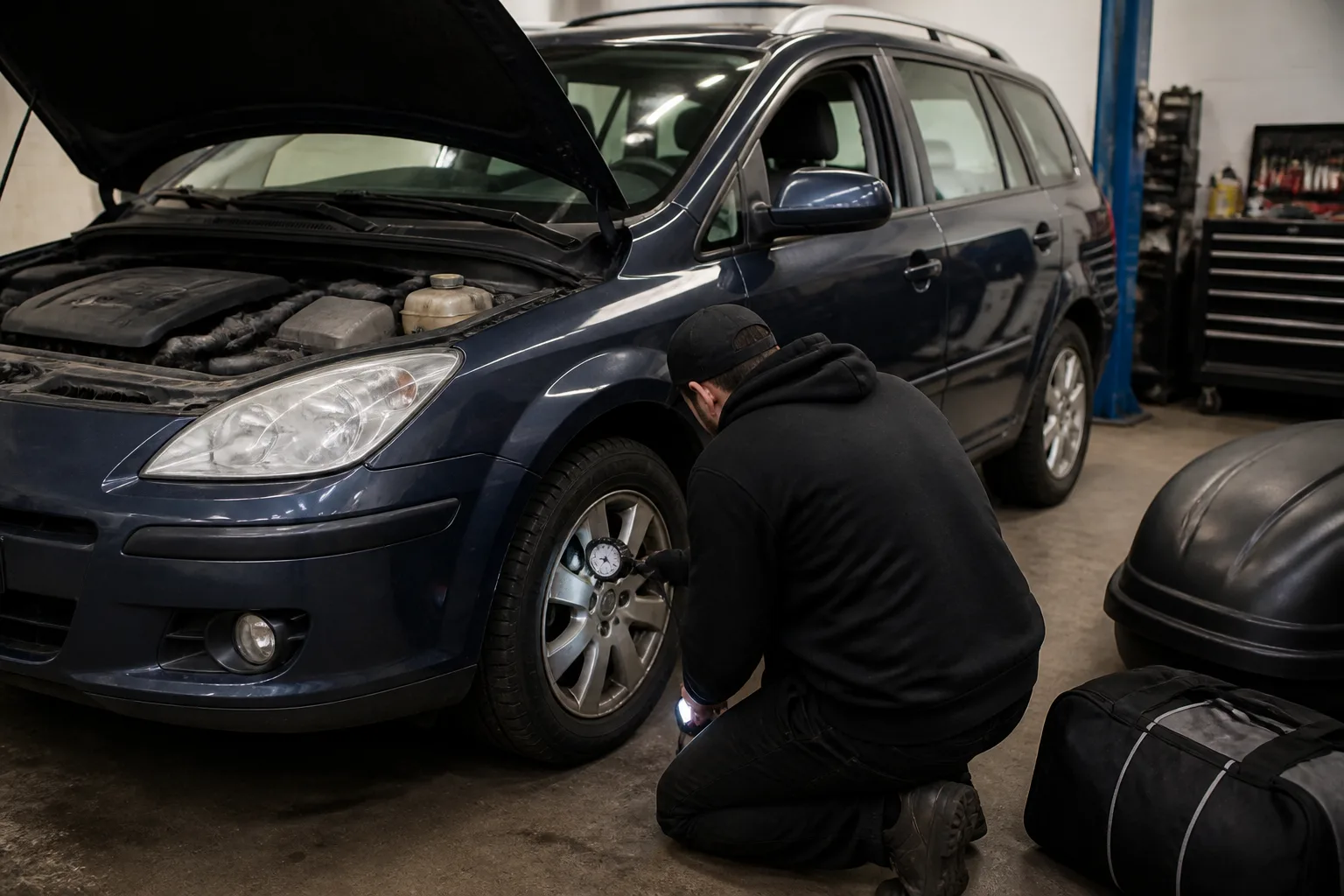
A summer road trip is easier to enjoy when your car is ready for the distance, traffic and warmer weather. A vehicle that is used mainly for short local journeys may face very different demands on a long motorway run, particularly when it is carrying passengers and luggage.
Before you set off, allow time for a few simple checks. You do not need to dismantle anything or carry out safety-critical repairs yourself. The aim is to spot obvious problems early and arrange professional help if something does not look or feel right.
Check the tyres carefully
Tyres are one of the most important parts of your car to inspect before a long journey. Check all four road tyres and the spare, if your vehicle has one. Look for cuts, cracks, bulges, objects in the tread and uneven wear across the tyre.
Uneven wear can sometimes point to an alignment, suspension or inflation issue. A bulge or significant damage is not something to monitor on a long trip. It may affect the tyre's ability to handle heat, speed and load, so arrange a professional inspection before travelling.
Check the tyre pressures when the tyres are cold. Use the vehicle manufacturer's recommended figures, normally found in the handbook, on a label around the driver's door area or inside the fuel flap. Some cars have different recommended pressures when heavily loaded, so check the guidance rather than relying on a general figure.
Do not forget the spare wheel or tyre repair kit. If your car uses a repair kit, check that it is present and within its usable date where applicable. It is also sensible to make sure you know where the locking wheel nut key is kept.
For more detail, see our guide to how hot weather affects your tyres.
Look at the brakes and steering
Pay attention to how the car behaves during ordinary driving before your trip. A brake pedal that feels unusually soft, a car pulling to one side under braking, grinding noises or strong vibration should not be ignored. Steering that feels loose, unusually heavy or inconsistent also deserves attention.
These symptoms can have several possible causes, and it is not possible to identify the fault reliably from a description alone. If braking or steering does not feel right, avoid setting off on a long journey until the car has been checked. Continued driving may be unsafe, especially in busy traffic or at motorway speeds.
You can make a basic visual check for obvious problems, but do not work underneath the vehicle on the roadside or attempt brake and steering repairs unless you are properly equipped and qualified.
Check the engine oil and other fluids
Check the engine oil level on level ground, with the engine switched off and allowed to cool as needed for your vehicle. Follow the handbook instructions, as the correct method varies between cars. The level should be within the marked range on the dipstick or displayed correctly by the vehicle's electronic system.
If the oil level is low, use only the specification recommended for your engine. Adding the wrong oil, or continuing to drive when the level falls repeatedly, can create further problems. A sudden drop in oil level or signs of an oil leak should be investigated rather than simply topped up and forgotten.
Also check the coolant level in the expansion tank when the engine is cold. Never remove a hot coolant cap, as the system may be pressurised and could cause burns. Low coolant, a visible leak, an overheating warning or steam from the engine bay requires professional attention. Stop safely and switch off the engine if the temperature rises or an overheating warning appears while driving.
Screenwash is easy to overlook but useful on a long journey. Fill it with a suitable screenwash rather than plain water alone, and check that the washers and wipers clear the screen properly. Poor visibility is a serious problem in summer too, particularly when roads are covered with insects, dust or sudden rain.
Test the lights and electrical equipment
Check the headlights, brake lights, indicators, rear lights, hazard lights and number plate lights. Ask someone to confirm that the brake lights work, or use a reflection where practical. Replace failed bulbs only if your vehicle's design allows this safely and straightforwardly. Some modern cars need a different approach or may display a warning when a light has failed.
Make sure the horn works and check that the windscreen wipers are not split, loose or leaving large unwiped areas. Test the demister and ventilation controls as well. These features are useful if the weather changes or the windows mist up in heavy traffic.
Make sure the battery is ready
Summer temperatures do not remove the need to check the battery. Starting problems can still happen, particularly if the battery is older, the car is used mostly for short trips or electrical equipment has been left on.
Look for obvious damage or corrosion around the battery, but do not disconnect cables or attempt electrical repairs without the correct knowledge. If the engine turns slowly when starting, the battery warning light appears or the car has recently needed a jump start, arrange a check before travelling. A battery and charging-system test can help identify whether the issue is with the battery, alternator or another part of the starting system.
Our guide to how cold weather affects your car battery explains why battery condition matters throughout the year, not just in winter.
Check the air conditioning and cabin comfort
Test the air conditioning before the day of departure. It should produce noticeably cooler air after it has been running for a short while, although the exact performance depends on the vehicle and conditions.
If it is not cooling properly, produces an unusual smell or makes a new noise, have it assessed rather than waiting until you are on the motorway. Air conditioning problems can have several causes, including a need for servicing or a fault elsewhere in the system.
Check that the cabin filter, if accessible as part of routine servicing, is not overdue for replacement. A clean filter can help air circulation, but filter replacement may not solve a wider ventilation or cooling fault.
Check the car's load and luggage
Heavy luggage changes how the car handles and brakes. Keep the load within the vehicle manufacturer's limits, spread it sensibly and secure loose items so they cannot move around during braking. Do not obstruct the driver's view through the windscreen or mirrors.
If the car is heavily loaded, use the manufacturer's guidance for tyre pressures and headlamp adjustment. Roof boxes and bicycle carriers can also affect the vehicle's height, handling, fuel use and wind sensitivity. Check that they are correctly fitted before leaving and remember the added height when using car parks or low entrances.
Keep essential items easy to reach, such as a phone charger, water, medication, driving documents and any equipment needed for passengers. Avoid placing heavy objects on the parcel shelf, where they could become dangerous in a sudden stop.
Check warning lights and recent changes
Do not ignore dashboard warning lights because the car appears to be driving normally. An amber warning may indicate that the vehicle needs attention, while a red warning can require you to stop as soon as it is safe. The handbook should explain the meaning of the symbols and the appropriate response.
Think about anything that has changed recently. New noises, vibrations, unusual smells, fluid spots, poor starting, changes in fuel consumption or a warning message are useful information for a garage. They may have more than one possible cause, so do not assume a long journey will clear the issue.
When a garage check makes sense
A basic owner check is useful, but it cannot replace an inspection when you have concerns about tyres, brakes, steering, suspension, overheating, warning lights or fluid loss. A routine service can also be a sensible way to review the car before a demanding journey, particularly if the service is due or the vehicle has not been checked for some time.
As an independent garage, Ashton's Garage can help assess the areas that matter before your journey and explain any work that may be needed in plain language. If you are preparing for a longer trip from Salisbury or the surrounding area, you can find more information about vehicle servicing in Salisbury and choose the appropriate next step without guessing at the cause of a problem.
For a wider seasonal list, you may also find our summer car maintenance checklist useful. Give yourself enough time to deal with any concerns before the day you travel, rather than relying on a quick check immediately before departure.
Frequently asked questions
How long before a summer road trip should I check my car?
Carry out basic checks several days before travelling, not just on the morning of departure. This gives you time to arrange help if you find a tyre concern, warning light, fluid leak or starting problem.
Should I check tyre pressures before a long journey?
Yes. Check them when the tyres are cold and use the vehicle manufacturer's recommended figures. If the car is heavily loaded, look for the manufacturer's loaded-vehicle pressure guidance.
What should I do if my car overheats during a road trip?
Pull over safely, switch off the engine and allow it to cool. Do not remove a hot coolant cap. If the warning returns, coolant is leaking or steam is visible, arrange professional assistance rather than continuing to drive.
Is a service necessary before every summer holiday?
Not necessarily, but a service or inspection is worth considering if the vehicle is due one, has not been checked recently or has developed any new symptom. A longer, heavily loaded journey can expose problems that are less obvious on short local trips.
Related advice
How to Clear Your Windscreen Safely in Winter
Learn how to clear frost, ice and condensation from your windscreen safely in winter, using the right tools and avoiding damage to the glass, wipers and paintwork.
How Often Should Wiper Blades Be Replaced?
Wiper blades do not have a fixed expiry date, but most need checking regularly and replacing when they stop clearing the windscreen properly. Learn what affects their lifespan and which warning signs should not be ignored.
How to Prepare Your Car for Frost
A practical guide to getting your car ready for frosty mornings, including checks for the battery, tyres, fluids, visibility and door seals.