Will a Noisy Exhaust Fail an MOT?
A noisy exhaust can lead to an MOT failure, but the outcome depends on why it is noisy and whether the exhaust is secure, leaking or affecting emissions. Here is what to check before your test.
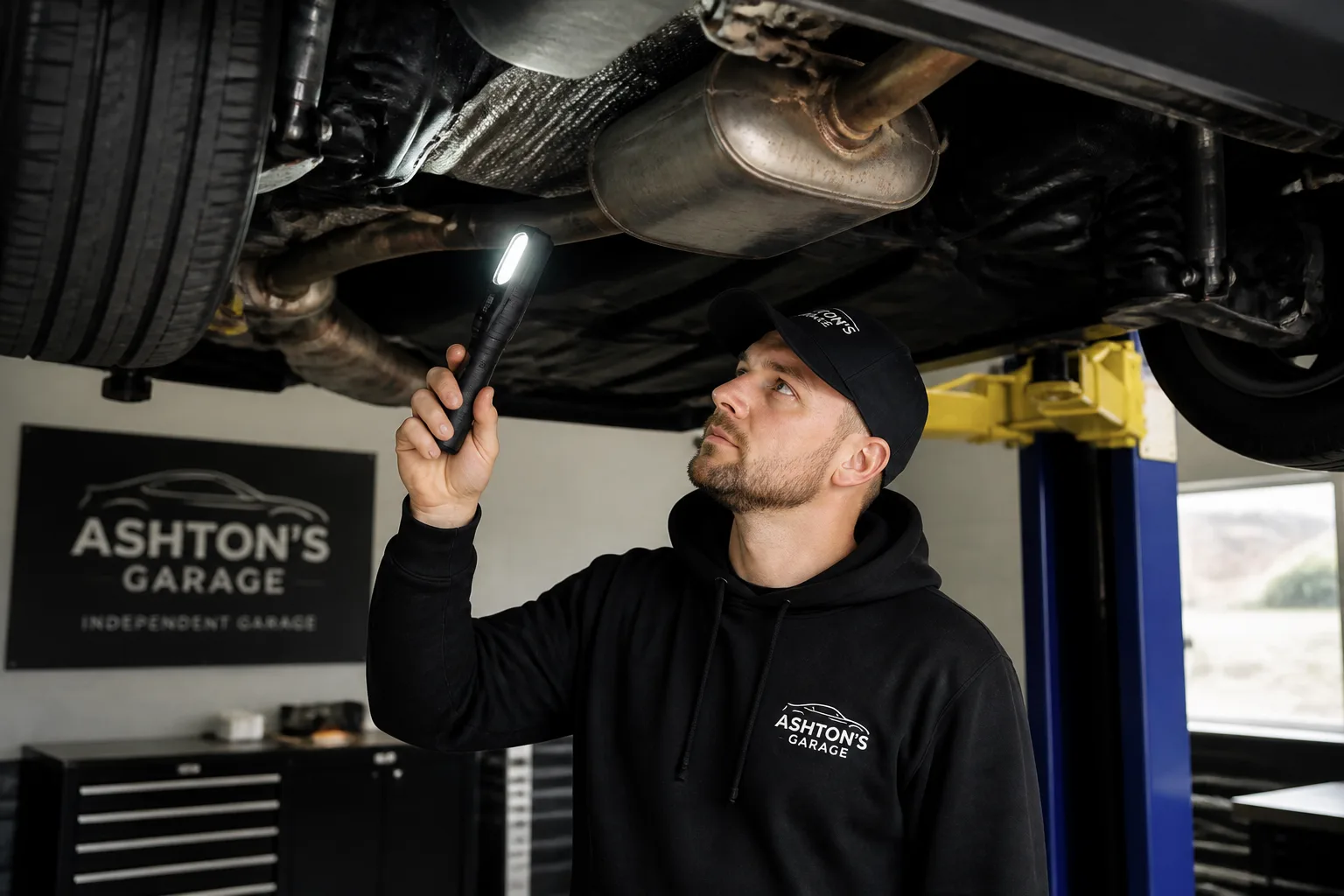
A noisy exhaust can fail an MOT, but noise on its own does not tell you exactly what the tester will find. The sound may come from a small leak, a damaged silencer, a loose heat shield or an exhaust section that has started to separate. Some causes are mainly irritating, while others can affect roadworthiness, emissions or the security of the system.
The sensible approach is not to assume that a louder exhaust is harmless or that it will automatically fail. If the noise is new, getting worse or accompanied by rattling, fumes or a visible hanging part, arrange a professional inspection before the MOT.
Why can a noisy exhaust fail an MOT?
During an MOT, the exhaust system is considered as part of the vehicle's condition and operation. A tester may identify a problem if the system is insecure, damaged, leaking or excessively noisy. The exact result depends on the condition found on the day and how serious the defect is.
An exhaust is designed to carry combustion gases safely away from the engine and passenger area while reducing noise. It also works with the vehicle's emissions control equipment. If part of the system has corroded through or a joint has opened, the exhaust note may become deeper, louder or harsher. That change can be a useful warning that the system needs attention.
A very loud exhaust may also attract attention because it could have a missing or damaged silencer. On some vehicles, an altered exhaust may be noisier than the original design. The MOT is not simply a test of whether you like the sound. It is concerned with the condition, security and effect of the exhaust system.
Common reasons for exhaust noise
A hole or split in the exhaust
Rust, impact damage and normal wear can create a hole in a pipe or silencer. This often produces a louder, more booming sound, particularly when accelerating. A small leak may develop into a larger failure, so a recent change in noise is worth investigating rather than ignoring.
A failed silencer
The silencer reduces exhaust noise. If its internal parts have deteriorated or the casing has rusted, the vehicle may sound noticeably louder. A damaged silencer can also become insecure, especially if the brackets or surrounding metal have weakened.
A loose heat shield
A thin metal heat shield can become loose and create a metallic rattle. This may sound like an exhaust fault even when the main pipe and silencer are intact. It still deserves attention because loose components can worsen or detach.
A damaged mounting or bracket
Rubber mounts and brackets support the exhaust beneath the vehicle. If one breaks, the exhaust can move more than it should and knock against the body or nearby components. A hanging or badly supported exhaust is more concerning than noise alone and should be inspected promptly.
A modified exhaust
Aftermarket exhaust parts are not automatically a problem, but they must remain properly fitted and suitable for the vehicle. Removing or altering noise-control components can make the car excessively loud and may create other compliance or emissions concerns.
What else might the MOT tester look for?
Noise is only one possible symptom. The tester will also be concerned with whether the exhaust is securely attached, whether there are significant leaks and whether the vehicle's emissions are within the applicable test requirements. A car can therefore fail for an exhaust-related issue even when the noise itself is not the main problem.
Exhaust fumes entering the passenger compartment are particularly serious. Carbon monoxide is an invisible and dangerous gas, so do not continue using a vehicle if you can smell exhaust inside it or if you suspect fumes are entering the cabin. Stop in a safe place and seek professional advice.
An emissions warning light, poor running or an unusual smell may point to an engine or emissions fault rather than a simple hole in the tailpipe. It is not possible to confirm the cause from the sound alone. Proper diagnosis may involve visual inspection, checking the exhaust system and using suitable diagnostic equipment where appropriate.
Can a noisy exhaust still pass an MOT?
Yes, it is possible, depending on the reason for the noise and the condition of the vehicle. A harmless rattle from a heat shield may be treated differently from an exhaust that is badly leaking, insecure or excessively noisy. However, a pass is not something that can be guaranteed without seeing the vehicle.
It is also worth remembering that an MOT is a point-in-time inspection. An exhaust that is beginning to corrode may not have failed on the day, but it could still need attention soon. If the tester records an advisory, that means the issue has been noted even if it did not result in a failure. Our guide to what an MOT advisory means explains why these comments should not simply be forgotten.
What can you safely check before the test?
Without getting underneath or attempting repairs, you can listen for when the noise occurs and note whether it is present at idle, under acceleration or over bumps. You can also look from the side of the vehicle, with the engine switched off and the car parked safely, for an obviously hanging component or a new gap where part of the exhaust appears to have separated.
Do not touch the exhaust after the vehicle has been running. Exhaust components become extremely hot. Do not crawl underneath a car supported only by a jack, and do not try to secure, remove or repair an exhaust at home if you are not equipped and trained to do so.
If the noise is accompanied by fumes, a strong smell, scraping, a visible loose section or a sudden change in the way the vehicle drives, avoid unnecessary journeys. A loose exhaust can move further or fall away, and fumes can present a health risk. Professional inspection is the safer option.
What happens if the exhaust fails the MOT?
The MOT result will explain the defect identified by the tester. The appropriate repair depends on whether the problem is a damaged pipe, silencer, mounting, heat shield or a wider emissions fault. Sometimes one component can be replaced; in other cases, corrosion may mean more of the system needs assessment.
A garage should explain what has failed, whether the vehicle is safe to drive and what work is needed. This is where a proper inspection matters. Replacing parts based only on the noise can waste money if the actual cause is elsewhere.
If your MOT is due soon, you may find our guide to how early you can book an MOT useful. It is also sensible to understand the rules around driving after a failure, covered in can you drive your car after an MOT failure?
How Ashton's Garage can help
At Ashton's Garage, we can inspect a noisy exhaust, identify the likely source and explain whether it needs repair before an MOT. Our approach is to assess the system properly rather than guess from the sound, using practical workshop checks and suitable diagnostic equipment where needed. We will explain what needs attention and what can safely wait.
If your exhaust has recently become louder or is rattling, you can arrange an MOT with Ashton's Garage in Salisbury and raise the exhaust concern when making the booking. If there are fumes, a hanging part or signs that the exhaust may be unsafe, seek an inspection before driving further.
Frequently asked questions
Is a loud exhaust an automatic MOT failure?
No. The result depends on the cause and condition of the exhaust. A tester may identify problems such as excessive noise, leaks, insecure components or related emissions issues.
Can an exhaust rattle fail an MOT?
It can, particularly if the rattle is caused by a loose or insecure exhaust component. A loose heat shield may have a different outcome, but it should still be checked rather than ignored.
Can I drive with a noisy exhaust before my MOT?
It depends on the cause and severity. Avoid driving if there are fumes, a hanging component, scraping or a sudden major change in noise. Arrange professional advice when continued driving may be unsafe.
Will a hole in the exhaust fail an MOT?
A hole may lead to an MOT failure if it creates a significant leak, excessive noise or another safety or emissions concern. The vehicle needs to be inspected to judge the condition properly.
Should I repair a noisy exhaust before booking an MOT?
If the noise is new, worsening or linked with fumes, damage or insecurity, an inspection before the MOT is sensible. It can identify the fault and clarify whether repair is needed first.
Related advice
MOT Retest Rules: What Happens After a Failure?
Failed your MOT? Learn what the result means, when a retest may be free or reduced-price, what happens if repairs are needed, and when it may be unsafe to drive.
How to Prepare Your Car for an MOT
A few sensible checks before your MOT can help you spot obvious problems, avoid preventable failures and understand when your car needs professional attention.
What Does a Major MOT Defect Mean?
A major MOT defect means the vehicle has failed because the tester found a problem that could affect safety, the environment or compliance. Here is what the result means and what to do next.