MOT Retest Rules: What Happens After a Failure?
Failed your MOT? Learn what the result means, when a retest may be free or reduced-price, what happens if repairs are needed, and when it may be unsafe to drive.
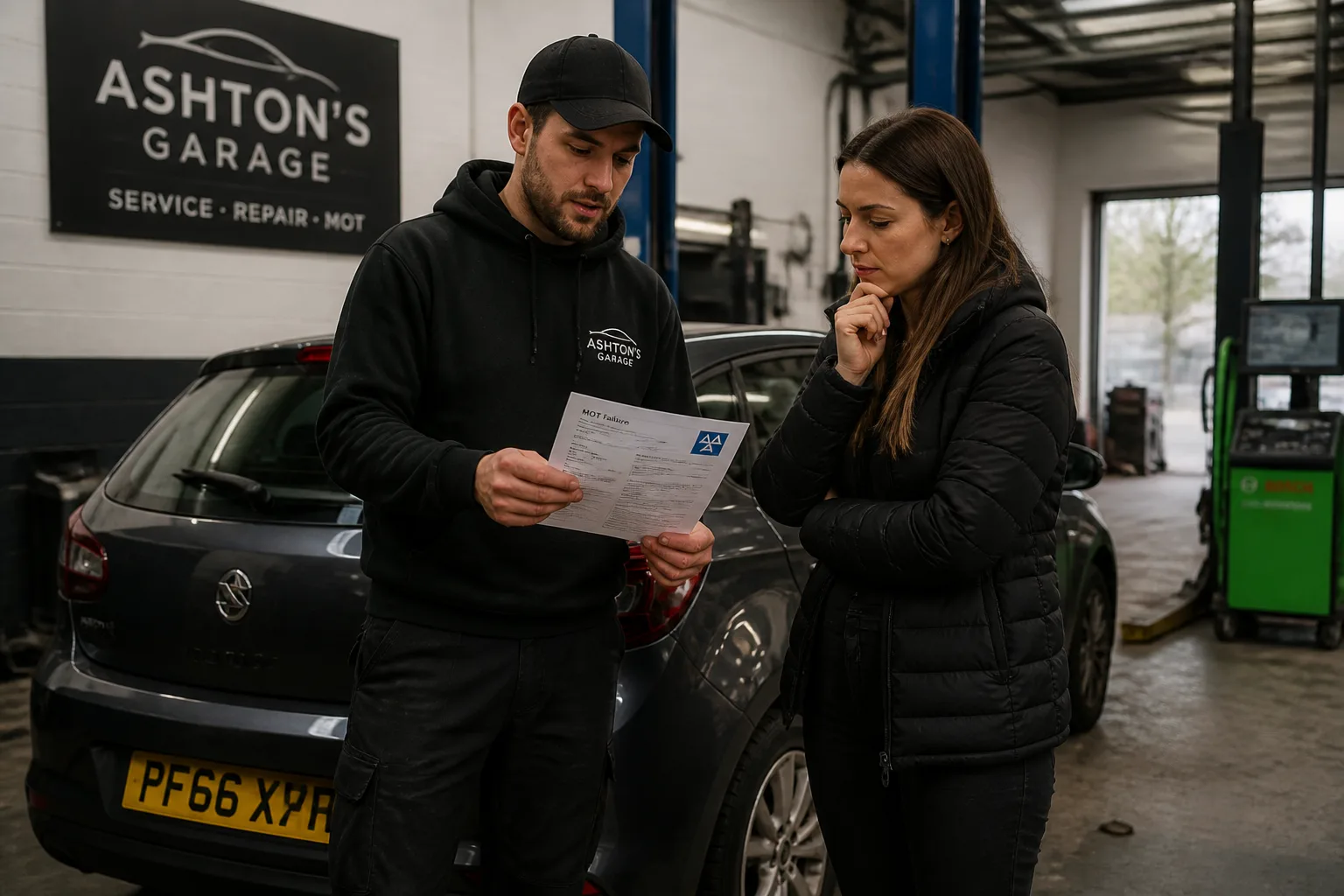
An MOT failure can be frustrating, particularly if you were expecting to collect the car and carry on with your day. The result does not necessarily mean the vehicle needs major work, but it does mean that one or more items have been judged not to meet the required standard at the time of the test.
The next step depends on the defects recorded, where the vehicle is repaired and when it is presented for a retest. Understanding the MOT retest rules can help you avoid an unnecessary fee and, more importantly, avoid driving a car that may not be roadworthy.
What does an MOT failure mean?
A failed MOT means that the tester found at least one defect serious enough to prevent the vehicle from receiving a pass. The MOT test is a safety and compliance check, not a full mechanical inspection, so a failure report should be treated as a clear list of items requiring attention rather than a complete diagnosis of every possible problem.
Some faults are relatively straightforward to investigate. Others may need proper testing with workshop equipment before the correct repair can be identified. For example, a warning light, a braking issue or a problem with steering components may have more than one possible cause. Replacing a part based only on an assumption can add cost without resolving the underlying issue.
Read the wording on the MOT result carefully. It should identify the failed items and may also include advisories. An advisory is not itself a failure, but it indicates that the tester has noticed a developing issue or a component that may need attention in future. Our guide to what an MOT advisory means explains how to interpret that part of the report.
What happens after an MOT failure?
Once the test is complete, you normally have two practical choices. The vehicle can stay at the test centre while the failed items are repaired, or it can be taken away for repair and returned for a retest. The correct choice will depend on the type of defect, the facilities available and whether the vehicle is safe and legal to drive.
If the vehicle has a serious braking, steering, tyre or structural problem, do not assume it is safe to drive simply because it still starts and moves. Ask the tester or a qualified garage for advice. A vehicle that presents a safety risk should be repaired or recovered rather than driven on the road.
Repairing the vehicle at the test centre
When a vehicle is left at the test centre for repair and receives a partial retest within 10 working days, GOV.UK says there is no retest fee. A partial retest means that the tester checks the relevant failed items again after the repair, rather than repeating the entire MOT in every case.
It is worth confirming the arrangements directly with the test centre. The time limit and the scope of the retest matter, particularly if more work is found to be necessary during the repair.
Taking the vehicle away for repair
If you take the vehicle away, certain listed failure items may qualify for a free partial retest if the vehicle is returned to the same test centre by the end of the next working day. This does not apply automatically to every MOT failure, so check the result and ask the original test centre what applies before making arrangements.
If the vehicle is returned later, repaired elsewhere or needs a different type of retest, a reduced fee may be available in some circumstances. The exact charge depends on the situation and the test centre. It is sensible to ask about the likely retest fee before authorising work or booking the return test.
Can you drive a car after it fails its MOT?
A failed MOT does not provide a simple yes-or-no answer for every vehicle. You may be able to drive it away in some circumstances, but that does not mean it is safe to continue using it for normal journeys. You must also consider whether the previous MOT has expired and whether the vehicle has a defect that makes it unsafe.
If the tester identifies a dangerous fault, or if the car has symptoms such as poor braking, unstable steering, damaged tyres, severe suspension problems or a serious fluid leak, stop using it and arrange professional advice or recovery. Do not rely on a previous MOT pass as evidence that the car is currently safe.
For less urgent defects, ask the test centre whether the vehicle can be driven to a repairer and what restrictions or risks you should understand. If you are uncertain, professional inspection is the safer option. Our separate guide covers whether you can drive your car after an MOT failure in more detail.
What should you do before booking the retest?
Start with the failure report rather than guessing from the symptom. Check which items failed, whether any advisories were recorded and whether the report gives enough information to identify the required repair. If the wording is unclear, ask the test centre to explain what was found.
A garage should then inspect the affected systems and confirm what needs attention. This is especially important where a fault could have several causes. Proper diagnosis may involve visual checks, measurements, electronic fault-code testing or other appropriate workshop equipment. The aim is to repair the failed item correctly, not simply to make the symptom disappear long enough for another test.
Keep the failure report available when arranging repairs. It helps the garage focus on the relevant area and can make it easier to discuss the work and the expected retest process. If additional faults are found, a good garage should explain which work is essential for the MOT and which items are advisory or recommended for longer-term maintenance.
How long do you have to arrange an MOT retest?
The fee arrangements depend on the circumstances of the retest, including whether the car stayed at the test centre and how quickly it is returned. The free partial retest period for a vehicle left at the test centre is within 10 working days. For a vehicle taken away, the supplied GOV.UK guidance refers to certain listed items being eligible for a free partial retest when returned to the same centre by the end of the next working day.
That means it is best not to delay without checking the details. If a repair needs parts or specialist investigation, speak to the original test centre and the repairing garage so you understand the likely retest arrangement and any possible charge.
If you are planning ahead for a future test, our guide to how early you can book an MOT may also help. It is generally easier to deal with developing faults before the test becomes urgent.
How Ashton’s Garage can help after an MOT failure
An MOT failure report gives you a starting point, but it does not always explain why a component has failed or what repair is appropriate. At Ashton’s Garage, our approach is to inspect the reported issue, use suitable diagnostic and workshop equipment, and explain clearly what needs attention. We can also advise whether the vehicle should be driven or recovered before repair.
If your car has failed and you would like the defects checked or the required work arranged, you can contact Ashton’s Garage about an MOT retest in Salisbury. We will help you understand the next sensible step without assuming that every failure requires the same repair.
Frequently asked questions
Is an MOT retest always free after a failure?
No. A free partial retest may apply when the vehicle is left at the test centre for repair and retested within 10 working days. Certain listed items may also qualify if the vehicle is returned to the same centre by the end of the next working day. Other circumstances can involve a reduced or applicable retest fee.
Can I take my car somewhere else to repair it after an MOT failure?
You can ask another garage to inspect and repair the vehicle, but the retest fee arrangements may depend on where and when the vehicle is returned. Check the failure report and confirm the position with the original test centre before arranging the retest.
Should I drive a car that has failed its MOT?
That depends on the defect and the vehicle’s legal position. If it has a dangerous fault or symptoms affecting braking, steering, tyres or structural safety, do not drive it. Arrange professional advice or recovery. If you are unsure, ask the test centre or a qualified garage before using the vehicle.
What is a partial MOT retest?
A partial retest checks the relevant failed items after they have been repaired, rather than necessarily repeating every part of the original MOT. The exact arrangements depend on the failure and the test centre.
Related advice
How to Prepare Your Car for an MOT
A few sensible checks before your MOT can help you spot obvious problems, avoid preventable failures and understand when your car needs professional attention.
What Does a Major MOT Defect Mean?
A major MOT defect means the vehicle has failed because the tester found a problem that could affect safety, the environment or compliance. Here is what the result means and what to do next.
Can Worn Tyres Fail an MOT?
Worn, damaged or incorrectly fitted tyres can lead to an MOT failure. Learn what the tester checks, what an advisory means and when your car should be inspected before driving.