
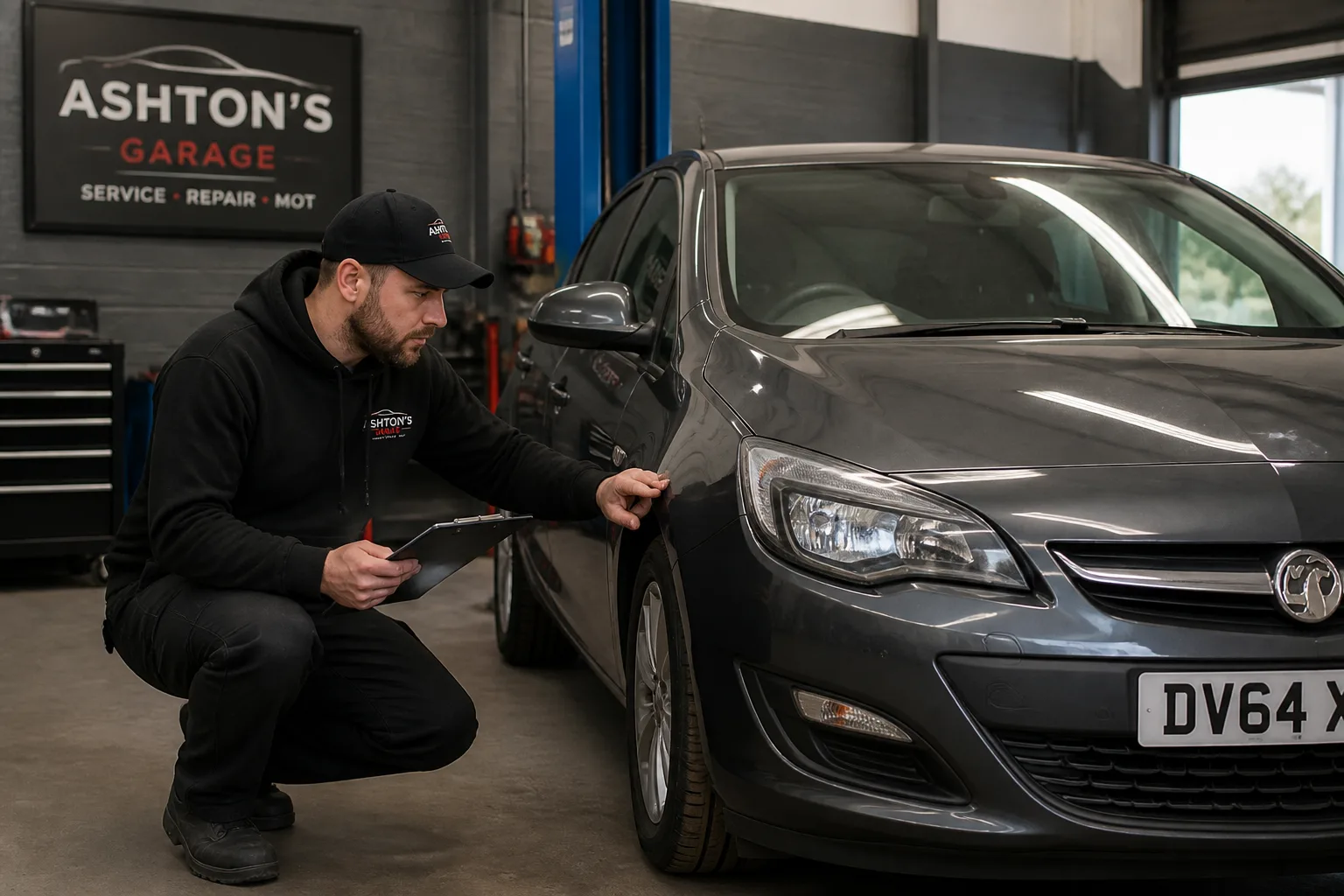
Finding out that your car has failed its MOT can be worrying, particularly if you need it for work, school runs or everyday travel. The important point is that an MOT failure does not automatically give the same answer in every situation. Whether you can drive the car depends on the status of its existing MOT, the defect recorded on the test result and whether the vehicle is still roadworthy.
In simple terms, a failed car may be taken away from the test station only where its existing MOT is still valid and no dangerous defect has been listed. Even then, it must still meet the minimum standard required to be used safely on the road. If a dangerous defect is recorded, the car must be repaired before it is driven.
Can you drive a car that has failed its MOT?
Sometimes, yes. If the vehicle still has a valid MOT and the test result does not list a dangerous defect, it may be possible to drive it away. However, this is not the same as being told that the car is in good condition or that you can carry on using it without arranging repairs.
A failed MOT identifies a problem that needs attention. Some failures may not create an immediate hazard in every situation, while others can affect braking, steering, tyres, visibility or the vehicle’s structure. The test result should therefore be read carefully rather than treated as a simple pass-or-fail label.
There is also a difference between being legally able to take a car away from the test and making a sensible decision to drive it. If you are unsure what a listed defect means, ask the test station or a qualified garage to explain it before setting off.
When must you not drive after an MOT failure?
You should not drive the car if the MOT result lists a dangerous defect. A dangerous defect indicates that the vehicle presents a serious risk and needs repair before it is driven. Continuing to use it could put you, your passengers and other road users at risk.
You should also stop and seek professional advice if the car is showing symptoms that could make it unsafe, even if you do not yet understand the wording on the report. Examples include a brake pedal that feels unusually soft, steering that feels loose or unpredictable, a tyre with visible damage, severe pulling to one side, or signs that the engine is overheating.
These symptoms cannot be assessed accurately from a distance. Do not assume that a vehicle is safe simply because it drove into the MOT station. If there is a possible braking, steering, tyre, overheating or structural problem, arrange a professional inspection and avoid driving it until you have been advised that it is safe.
What does a failed MOT result tell you?
The MOT report should show why the car failed and whether any defects were classed as dangerous. It may also include other observations about items that need attention. The exact wording matters, so keep the report available when speaking to a garage.
An MOT is a safety and emissions test at a particular point in time. It is not a complete diagnosis of every mechanical problem and it does not replace normal servicing. A car can fail because of one clearly identified item, but checking and repairing the underlying issue may require further investigation.
For a useful explanation of the test itself, see our guide to what is checked during an MOT. Understanding the areas covered can make the failure report easier to follow, without encouraging you to carry out safety-critical repairs yourself.
What should you do after an MOT failure?
1. Read the result carefully
Start by checking the listed reason for failure and whether a dangerous defect is recorded. If any wording is unclear, ask for an explanation. It is better to clarify the risk before moving the car than to guess based on a short description.
2. Check the status of the existing MOT
Whether the existing MOT is still valid is part of the decision about taking the vehicle away. If you are not sure of the date or status, check the official MOT record and discuss the result with the test station or garage. Do not rely on memory or assume that a failed test automatically extends the MOT.
3. Consider how the car feels and sounds
A safe basic check is to look for obvious warning signs before moving the car. You can check whether warning lights remain on, whether there are visible tyre problems or fluid leaks, and whether the car has developed unusual noises or handling changes. Do not crawl under the vehicle, remove components or attempt repairs unless you are properly equipped and competent to do so.
If anything suggests a risk to braking, steering, tyres, overheating or the vehicle’s structure, do not continue driving. Professional recovery or inspection may be the safer option.
4. Arrange the right next step
Depending on the result, the next step could be a repair assessment, a further inspection or arranging for the vehicle to be moved safely. A garage should be able to explain which work is needed, whether the car is safe to move and what should happen before it is used again.
Can you drive to a garage after an MOT failure?
This depends on the points above, not simply on the fact that the vehicle has failed. If the existing MOT is valid, no dangerous defect is listed and the vehicle remains roadworthy, it may be possible to drive it to a garage. You still need to take the failure seriously and use the shortest sensible journey for the purpose of dealing with the problem.
If a dangerous defect is listed, or if the car has symptoms that make its safety doubtful, do not drive it to a garage. Ask about a suitable way to have it inspected or transported instead. A garage cannot confirm from a phone call that a particular vehicle is safe to drive, especially where the report relates to brakes, steering, tyres or structural condition.
For more background on MOT timing, our guide explains how early you can book an MOT. If your MOT has already expired, see what happens if your MOT expires before making plans to use the car.
How Ashton’s Garage can help
After an MOT failure, the useful question is not only “Can I drive it?” but also “What condition is it really in, and what needs to happen next?” At Ashton’s Garage, our practical approach is to assess the reported issue properly, use appropriate workshop equipment and explain the findings in straightforward language.
That may mean confirming the failed item, identifying related wear or checking whether a reported symptom points to a wider problem. We will not pretend to diagnose a vehicle without inspecting it, and we will make clear where continued driving could be unsafe.
If you need help understanding an MOT failure or arranging the next step, you can contact Ashton’s Garage about an MOT inspection or follow-up. We can help you make a sensible decision based on the actual report and the condition of the vehicle.
Frequently asked questions
Does an MOT failure automatically mean I cannot drive the car?
No. If the existing MOT is still valid, no dangerous defect is listed and the vehicle remains roadworthy, it may be possible to take it away. The failure still needs to be dealt with promptly.
Can I drive a car with a dangerous MOT defect?
No. A dangerous defect means the vehicle should be repaired before it is driven. Arrange professional advice or a safe way to move the vehicle rather than driving it on the road.
Can I drive to a garage after a failed MOT?
Only if the existing MOT is valid, no dangerous defect is recorded and the vehicle is still safe and roadworthy. If braking, steering, tyre, overheating or structural safety is in doubt, do not drive it.
What should I do if I do not understand the MOT failure?
Ask the test station or a qualified garage to explain the wording and the risk. Keep the MOT result available, as it helps the garage assess what needs checking.
Is a failed MOT a complete diagnosis of the car?
No. It records the reasons for the test result, but it is not a full mechanical diagnosis or a substitute for servicing. Further inspection may be needed to identify the cause or any related issue.
Related advice
MOT Retest Rules: What Happens After a Failure?
Failed your MOT? Learn what the result means, when a retest may be free or reduced-price, what happens if repairs are needed, and when it may be unsafe to drive.
Should You Service Your Car Before an MOT?
Servicing your car before an MOT is not always necessary, but it can be sensible when maintenance is due or you have noticed a problem. Here is how to decide what your car needs before its test.
How to Prepare Your Car for an MOT
A few sensible checks before your MOT can help you spot obvious problems, avoid preventable failures and understand when your car needs professional attention.