How to Prepare Your Car for an MOT
A few sensible checks before your MOT can help you spot obvious problems, avoid preventable failures and understand when your car needs professional attention.
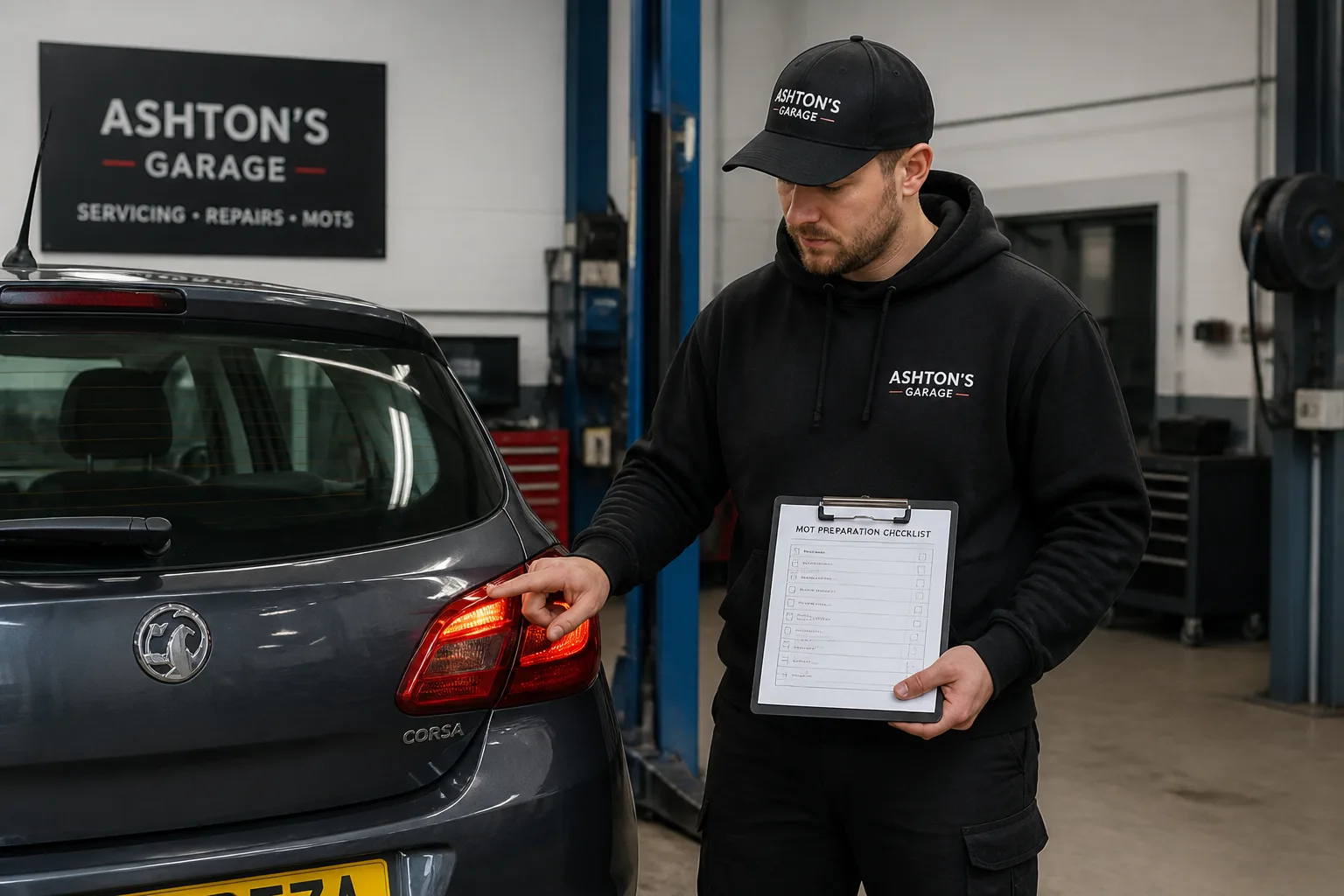
Preparing your car for an MOT does not mean trying to repair it yourself. It means carrying out a few sensible owner checks, making sure the vehicle is presented in a suitable condition and dealing with warning signs before the test if necessary.
An MOT is a safety and environmental check carried out against specific testing standards. It is not a full mechanical inspection or a substitute for regular servicing. A car can pass its MOT and still need maintenance, just as a vehicle with a minor maintenance issue may not necessarily fail. Knowing that distinction helps you prepare without expecting the test to find every possible fault.
Start with the simple checks
Before taking the car to its appointment, walk around it in good daylight if possible. Look for obvious damage, missing parts or anything that has changed since you last used the vehicle. You do not need specialist tools to identify many basic problems.
Check the lights
Ask someone to operate the controls while you check the exterior lights, or use reflections in a window where practical. Check the headlights, sidelights, indicators, brake lights, rear fog light and number plate lights. Make sure lenses are not badly cracked or obscured by dirt.
A failed bulb may be straightforward to replace, but do not assume that a light problem is always just a bulb. If a light is flickering, has condensation inside it or stops working again, it may need proper diagnosis.
Look at the tyres
Check that each tyre appears properly inflated and inspect the visible tread and sidewalls. Look for cuts, bulges, exposed cords or other damage. Uneven wear can be a sign that the vehicle needs attention rather than simply needing more air.
Tyre condition is important for both the MOT and your safety on the road. If a tyre has a bulge, serious cut or looks structurally damaged, avoid driving unnecessarily and arrange professional advice. Do not try to make a damaged tyre suitable by inflating it further.
Check the windscreen and wipers
Clean the windscreen and check for chips or cracks, particularly in the area swept by the wipers and in the driver's forward view. Also check that the wiper blades clear water effectively and that the washer system works with enough fluid in the reservoir.
A small chip may not automatically mean a failure, but its position and size can matter. If you are unsure whether damage is significant, have it assessed rather than waiting until the test.
Make sure the controls and warning signs are dealt with
Check the horn, seat belts and doors. Seat belts should latch securely and retract properly. Doors, bonnet and boot should close and latch as intended. Remove anything that could obstruct access to these items or prevent the tester from carrying out the inspection safely.
Pay attention to dashboard warning lights. A warning light that remains illuminated after the engine starts should not be ignored, especially if it relates to the brakes, airbag, steering, engine management or another safety system. Some warning lights may result in a test issue, but the more important point is that they can indicate a fault requiring proper diagnosis.
If the brake pedal feels unusually soft, the steering feels loose, the car pulls sharply to one side, the engine is overheating or you notice a serious fluid leak, do not treat the MOT as a simple pass-or-fail appointment. Stop using the car if it may be unsafe and seek professional inspection. Remote advice cannot establish the condition of a safety-critical system.
Check fluid levels without attempting repairs
It is sensible to check that the engine oil, coolant and screenwash are at suitable levels according to the vehicle handbook. Only check under-bonnet items when the car is parked safely and the engine has cooled where necessary. Do not remove a coolant cap from a hot engine.
Low fluid levels, fresh stains beneath the vehicle or a strong smell may point to a problem that needs more than topping up. A small amount of screenwash is one thing, but repeatedly losing coolant or brake fluid should be treated as a fault. A garage can identify the cause using the appropriate equipment instead of relying on guesswork.
Clear the car and bring the right information
Remove personal items from the boot and passenger area, while leaving the vehicle's usual equipment in place. The tester may need access to the boot, seat belts and other parts of the car. Make sure the locking wheel nut key, if your vehicle has one, is available. It may be needed if a wheel has to be removed for further investigation, although an MOT is not the same as a full service or repair.
Tell the garage about anything you have noticed, such as a recent warning light, unusual noise or change in braking. A clear description can help the technician understand the concern, although the test itself still has to be carried out against the relevant testing requirements.
If you are not sure when the MOT is due, you can check the vehicle's MOT history and expiry information through the official government service. Booking early can also give you more time to deal with any work that may be needed. Our guide to how early you can book an MOT explains the practical benefit of allowing that extra time.
Understand what happens after the test
The result may be a pass, a pass with advisories or a failure. Advisories are items that have been noted as needing monitoring or attention, even though they have not prevented the vehicle from passing on that occasion. They should not automatically be treated as an emergency, but they should not be forgotten either. Our guide to what an MOT advisory means explains how to think about those recommendations.
If the car fails, ask what has failed, whether the vehicle is safe to drive and what work is required. Do not assume that every failed car can be driven away. The answer depends on the reason for the failure, the vehicle's condition and the status of its previous MOT. You can read more about driving your car after an MOT failure before making that decision.
An MOT tester should be able to explain the result in plain language. At an independent garage such as Ashton's Garage, the useful next step is to separate an immediate safety concern from routine maintenance and explain which work is genuinely necessary. Proper diagnosis and suitable workshop equipment matter when the issue is not visible from a basic check.
What you cannot prepare for with a quick driveway check
Some parts of an MOT cannot be assessed reliably without professional equipment or access to the underside of the vehicle. These include the condition of braking components, suspension and steering parts, emissions performance and areas affected by corrosion. A clean dashboard and good-looking tyres do not prove that these systems are healthy.
That is why preparation should be practical rather than overconfident. Check what you can safely see, report symptoms accurately and do not attempt to dismantle safety-critical components before the test. If the car has developed a serious noise, vibration, leak or handling change, arrange an inspection rather than hoping an MOT will make the concern go away.
A sensible final checklist
- Check the exterior lights, indicators and horn.
- Inspect tyres for obvious damage and uneven wear.
- Check the windscreen, wipers, washers and screenwash.
- Make sure seat belts, doors, bonnet and boot operate properly.
- Look for warning lights, fluid leaks and unusual changes in how the car drives.
- Remove unnecessary items and make the locking wheel nut key available if applicable.
- Tell the garage about symptoms or recent concerns.
These checks can help avoid simple, preventable problems, but they cannot guarantee a pass. If you would like your car checked and tested by a garage that will explain any findings clearly, you can arrange an MOT with Ashton's Garage.
Frequently asked questions
What should I check before an MOT?
Check the lights, horn, tyres, windscreen, wipers, washers, seat belts, doors, fluid levels and dashboard warning lights. These are basic checks only and cannot replace a professional inspection of brakes, steering, suspension or emissions.
Can I take a dirty car for an MOT?
A dirty car can make some checks more difficult, particularly if lights, number plates or windows are obscured. Cleaning the exterior and clearing the passenger area and boot is a sensible way to present the vehicle, but cleanliness alone does not affect the condition of its mechanical systems.
Should I service my car before its MOT?
An MOT and a service are different types of work. A service checks maintenance items and overall condition, while an MOT assesses whether the vehicle meets the applicable test requirements. A service may identify issues before the MOT, but it does not guarantee a pass.
What if a warning light is showing before my MOT?
Do not ignore it. Some warning lights can indicate a fault that needs diagnosis, particularly those linked to brakes, steering, airbags or engine management. If the car feels unsafe or has changed significantly, stop driving and arrange a professional inspection.
Related advice
MOT Retest Rules: What Happens After a Failure?
Failed your MOT? Learn what the result means, when a retest may be free or reduced-price, what happens if repairs are needed, and when it may be unsafe to drive.
What Does a Major MOT Defect Mean?
A major MOT defect means the vehicle has failed because the tester found a problem that could affect safety, the environment or compliance. Here is what the result means and what to do next.
Can Worn Tyres Fail an MOT?
Worn, damaged or incorrectly fitted tyres can lead to an MOT failure. Learn what the tester checks, what an advisory means and when your car should be inspected before driving.