What to Check Before Driving in Heavy Rain
Heavy rain can reduce visibility, grip and braking performance. Here is a practical pre-drive checklist covering tyres, lights, wipers, windows and the safest way to respond to standing water.
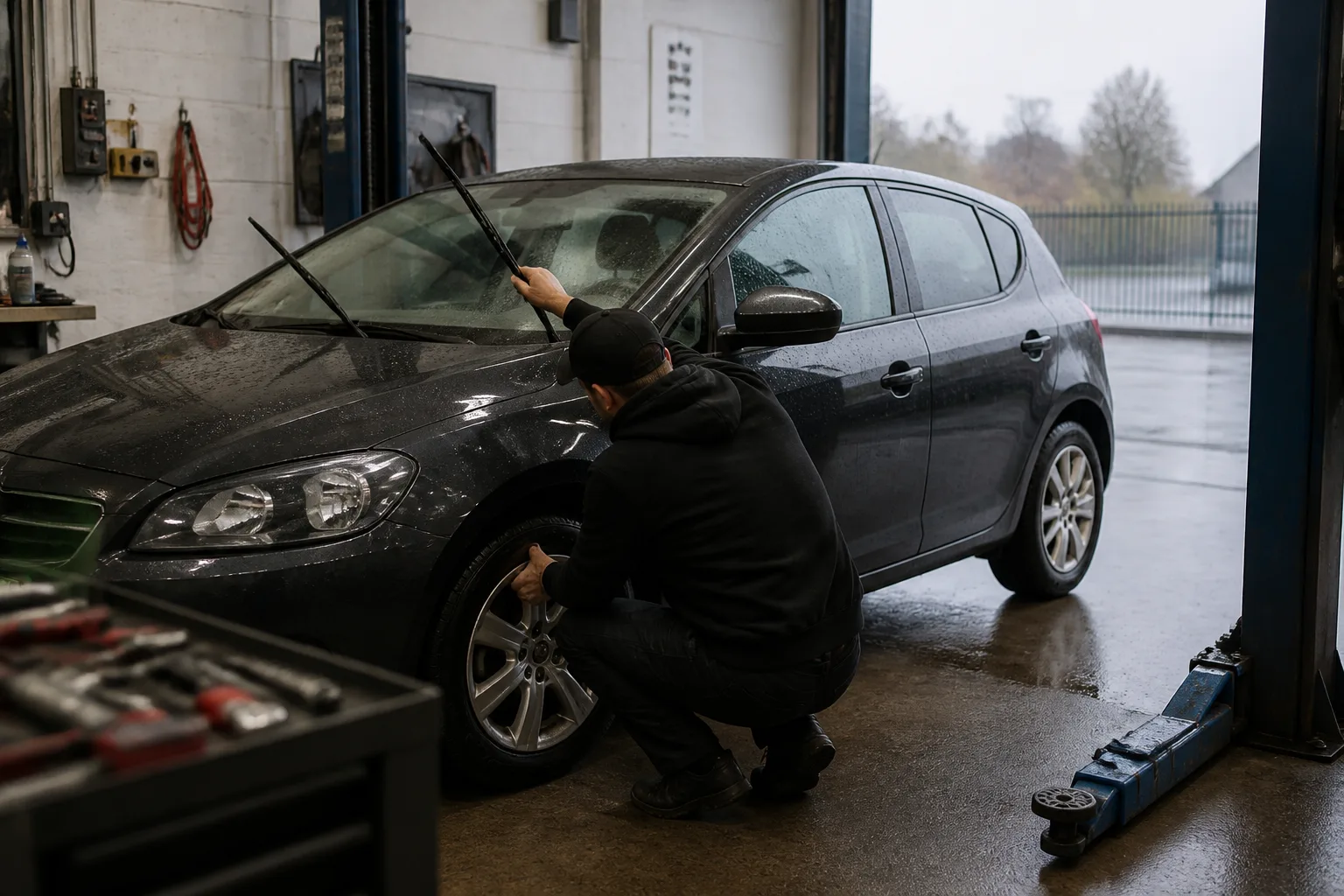
Heavy rain can make an ordinary journey more demanding within a few minutes. Visibility drops, water can collect on the road and your tyres may have less grip than usual. Before setting off, a short check of the car can help you spot problems that could make wet-weather driving less safe.
This is not about preparing for every possible fault. It is about checking the items that help you see, steer and stop properly. If you already know that your vehicle has a braking, steering, tyre or electrical problem, do not assume heavy rain will be a suitable test. Arrange a professional inspection before driving if the fault could affect roadworthiness.
Check your tyres first
Your tyres are the only part of the vehicle in contact with the road, so their condition matters particularly in wet weather. Walk around the car and look for obvious damage such as cuts, bulges, cracks or anything stuck in the tread or sidewall. A damaged tyre should not be ignored, especially before a longer journey.
Check that the tread looks even across the width of each tyre. Uneven wear can point to an alignment, suspension or inflation problem, while very worn tread may be less effective at clearing water. The legal minimum tread depth for car tyres is 1.6mm across the central three-quarters of the tread and around its complete circumference, but relying on the legal limit is not a sensible substitute for maintaining tyres in good condition.
Use the vehicle handbook or the tyre-pressure information on the car to check inflation pressures when the tyres are cold. The correct pressure may differ between the front and rear axles, and some cars have a different setting for a loaded vehicle. Do not use the maximum pressure moulded into the tyre sidewall as the recommended vehicle pressure.
If a tyre is visibly flat, badly damaged or losing pressure, avoid driving on it. A garage can check the tyre and establish whether there is a safe repairable issue or whether replacement is needed.
Make sure you can see and be seen
Rain makes it harder to see hazards and more difficult for other road users to spot your car. Before leaving, switch on the lights and check that the headlamps, rear lights, brake lights, indicators and hazard warning lights appear to be working. Ask someone to help if you cannot see the lights from the driving seat, or use reflections in a safe location.
Keep the windscreen, mirrors and windows clear of dirt and condensation. Check the screen wash level and use a proper screen wash product rather than relying on water alone. Screen wash helps remove road film and is designed to work more effectively in changing temperatures.
Inspect the wiper blades for splitting, lifting or obvious damage. When used on a wet screen, they should clear water without leaving large unwiped areas, heavy smearing or distracting judder. Smearing can be caused by worn blades, a dirty screen or contamination on the glass. If the wipers leave you struggling to see, deal with the problem before driving in severe rain.
It is also worth checking that the demister works. A misted windscreen can develop quickly when the temperature changes, and trying to drive while visibility is restricted is not a minor inconvenience.
Look for warning lights and signs of a fault
Turn the ignition on before starting the engine and take note of the dashboard warning lights. Some lights should go out after the engine starts, while others indicate a fault that needs attention. Do not dismiss a warning simply because the car appears to be driving normally.
Pay attention to any recent changes, including a soft brake pedal, pulling to one side, unusual steering effort, vibration, a burning smell or water entering the cabin. These symptoms have different possible causes and cannot be diagnosed reliably from a description alone. If a warning light relates to braking, steering, engine temperature or another safety-critical system, stop in a safe place and seek professional advice rather than continuing without understanding the risk.
Check the route and the load
Before setting off, consider whether the journey can be delayed or whether a different route would avoid known flood-prone roads. Heavy rain can leave standing water in dips, under bridges and near drainage points. Never assume that a familiar road will be clear simply because it was passable on a previous journey.
Make sure luggage and other items are secure. Loose objects can move under braking and may obstruct the pedals. Keep the view through the windscreen and windows clear, and do not overload the vehicle beyond the limits given by the manufacturer.
If you are travelling with children, pets or passengers carrying bags, allow extra time to arrange everything before moving off. Rushing at the start of a journey is an avoidable distraction.
How to drive when rain becomes heavy
Once moving, reduce your speed to suit the visibility and surface conditions. Leave more space from the vehicle ahead because wet roads can increase the distance needed to stop. Use smooth steering, braking and acceleration, and avoid sudden lane changes where water may have collected.
Be particularly cautious around standing water. It can hide potholes or other damage and may cause the steering to feel light if the tyres lose contact with the road surface. This is sometimes called aquaplaning. If the steering suddenly feels unusually light, ease off the accelerator smoothly and keep the steering steady. Avoid sharp braking or steering inputs while the tyres regain grip.
Do not drive through water if you cannot judge its depth or see how the road continues. Even shallow-looking water can be deeper than expected, and water can affect the brakes, engine air intake or electrical components. If water is rising around the vehicle, move to a safe place if possible and do not take risks to continue.
After passing through unavoidable surface water, allow the car to settle and check that the brakes feel normal before continuing. If the brakes feel weak, the car pulls, warning lights appear or the engine behaves abnormally, stop safely and arrange assistance or an inspection.
A simple heavy-rain checklist
- Look for tyre damage, uneven wear and obvious loss of pressure.
- Check the recommended tyre pressures when the tyres are cold.
- Test the lights, including indicators, brake lights and rear lights.
- Top up screen wash and clean the windscreen, mirrors and windows.
- Check that the wipers clear the screen properly without heavy smearing.
- Confirm that the demister works and that the view is unobstructed.
- Read any dashboard warning lights rather than ignoring them.
- Secure luggage and consider whether the route includes standing water.
- Allow extra following distance and drive smoothly once on the road.
Seasonal preparation is easier when it forms part of routine maintenance. Our winter car maintenance checklist covers several checks that are also useful during wet and changeable weather, while the summer car maintenance checklist may help before longer trips.
When to ask a garage to check the car
A basic visual check is useful, but it cannot confirm the condition of brakes, suspension, wheel alignment or electrical systems. Arrange an inspection if you find tyre damage, repeated pressure loss, poor visibility despite new screen wash, unusual braking behaviour, steering changes or a warning light that remains on.
If you would like the vehicle checked as part of routine seasonal preparation, you can find more information about vehicle servicing at Ashton's Garage. The aim is to identify concerns clearly and explain what needs attention, without suggesting that every wet-weather symptom has the same cause.
Preparing for heavy rain does not require complicated equipment. Check that the car can see, grip and respond properly, then give yourself more time and space on the road. If something safety-critical does not feel right, stopping and getting professional advice is the sensible option.
Frequently asked questions
Should I drive through standing water?
Avoid standing water if you cannot judge its depth or see the road beyond it. Water may conceal potholes and can affect the brakes, engine or electrical components. If the car behaves abnormally after passing through water, stop safely and seek professional advice.
How do I know if my wiper blades need replacing?
Wipers may need attention if they leave large unwiped areas, smear the screen, judder, split or lift away from the glass. Clean the windscreen first, but arrange replacement or inspection if visibility remains poor.
What should I do if the steering feels light in heavy rain?
Ease off the accelerator smoothly, keep the steering steady and avoid sharp braking or steering inputs. The feeling may be caused by reduced tyre contact with the road. If the vehicle does not return to normal or another fault appears, stop safely and arrange professional help.
Can I use water instead of screen wash?
Proper screen wash is preferable because it is formulated to remove road film and perform in changing temperatures. Check the product instructions and keep the reservoir topped up before a wet-weather journey.
When should I have my car inspected before driving in rain?
Arrange an inspection if you find tyre damage or repeated pressure loss, or if the car has braking, steering, lighting, visibility or warning-light problems. Do not continue driving if the fault may make the vehicle unsafe.
Related advice
How to Clear Your Windscreen Safely in Winter
Learn how to clear frost, ice and condensation from your windscreen safely in winter, using the right tools and avoiding damage to the glass, wipers and paintwork.
How Often Should Wiper Blades Be Replaced?
Wiper blades do not have a fixed expiry date, but most need checking regularly and replacing when they stop clearing the windscreen properly. Learn what affects their lifespan and which warning signs should not be ignored.
How to Prepare Your Car for Frost
A practical guide to getting your car ready for frosty mornings, including checks for the battery, tyres, fluids, visibility and door seals.