
What Is Included in a Major Car Service?
A major car service is a more detailed scheduled inspection and maintenance visit than a basic oil service. Find out what is usually included, what can vary between vehicles and when extra work may be recommended.
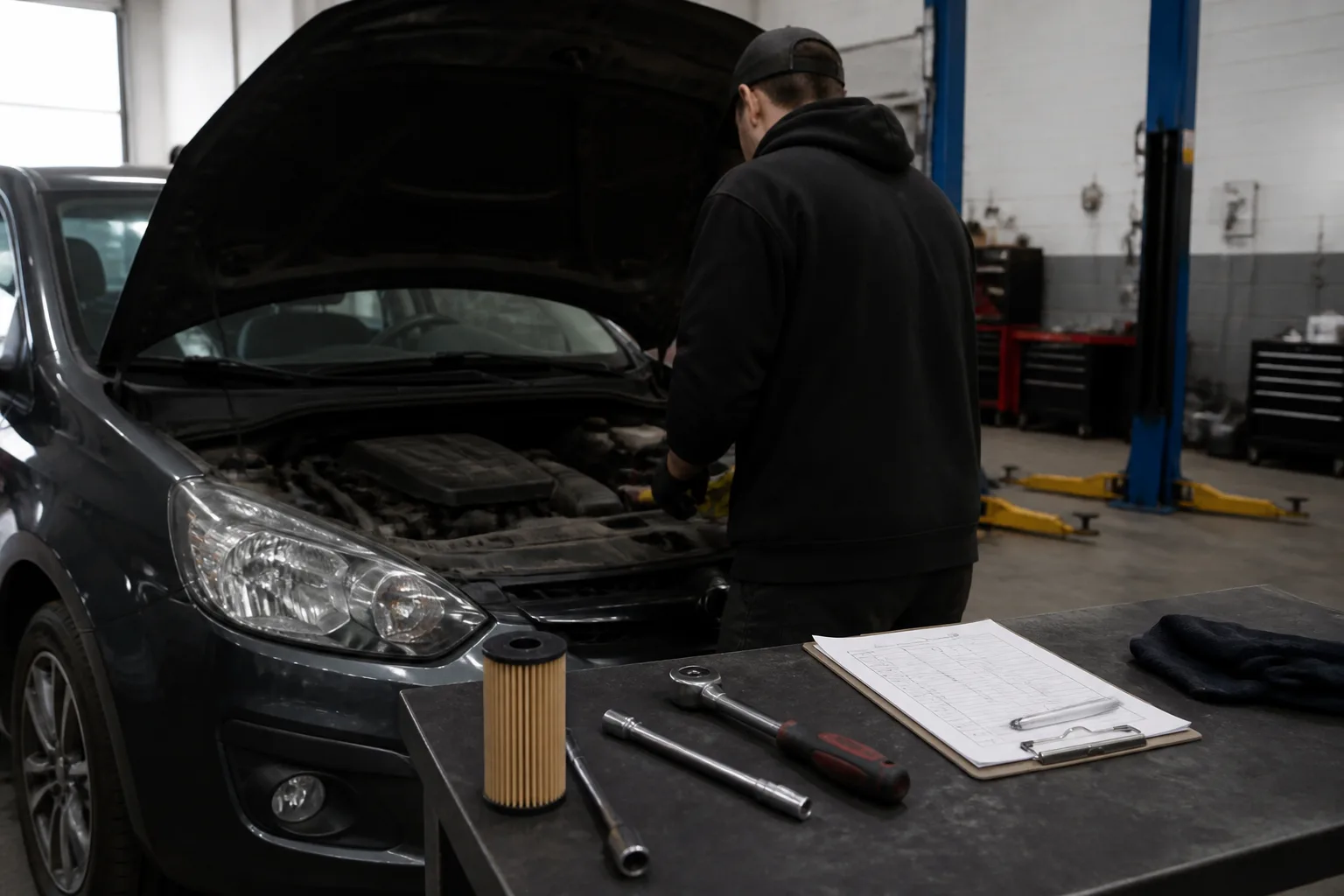
A major car service is the most detailed routine service many cars receive as part of their normal maintenance schedule. It usually includes everything covered by a basic or interim service, along with additional inspections, fluid checks and replacement items that are due at longer intervals.
There is no single universal checklist for every make and model. The exact contents depend on the manufacturer’s service schedule, the car’s age and mileage, its engine type, and how it is used. A petrol hatchback, diesel SUV and hybrid vehicle may all have different requirements.
That is why a major service should be based on the vehicle’s service information rather than a generic list alone. The garage should be able to explain which items are included, which are due according to the schedule and which are only being recommended because of a condition found during the inspection.
What is normally included in a major car service?
Although service packages differ, a major car service commonly includes the following areas.
Engine oil and oil filter replacement
Replacing the engine oil and oil filter is usually a central part of a scheduled service. Engine oil lubricates moving parts, helps carry heat away and holds contaminants in suspension so they can be trapped by the filter. Over time, the oil can lose some of its effectiveness and the filter can become loaded with debris.
The correct oil specification matters. Modern engines, including many turbocharged petrol and diesel engines, can require a particular viscosity and approval. The correct specification should be confirmed from the manufacturer’s information rather than selected by appearance or price alone.
Air, cabin and fuel filters
A major service may include replacing the engine air filter, cabin filter and, where scheduled, the fuel filter. These components are not necessarily replaced at every service.
- Engine air filter: helps prevent dust and debris entering the engine’s air intake.
- Cabin filter: filters air entering the passenger compartment and can affect ventilation and demisting performance.
- Fuel filter: helps protect the fuel system from contamination. Replacement intervals vary, particularly between petrol and diesel vehicles.
A filter may also need attention sooner if it is unusually dirty, damaged or blocked. The reason for a replacement should be clear on the service record.
Spark plugs or diesel glow plugs, where applicable
Spark plugs are a scheduled maintenance item on many petrol engines. They provide the spark needed to ignite the air and fuel mixture. Their replacement interval varies by plug type and engine.
Diesel engines do not use spark plugs. They use glow plugs to assist starting when the engine is cold, but these are not automatically replaced during every major service. They may be checked or replaced if the manufacturer’s schedule calls for it or if a fault is identified.
Fluid checks and scheduled fluid changes
A technician will usually check the levels and condition of important fluids. These may include engine coolant, brake fluid, screenwash, power steering fluid on vehicles that use it, and transmission fluid where it is accessible and covered by the service schedule.
Checking a fluid is not the same as automatically replacing it. Brake fluid, coolant, automatic transmission fluid and other fluids can have specific replacement intervals. A major service may include a fluid change if that work is due for the vehicle, but it should not be assumed from the phrase “major service” alone.
Brake, tyre and suspension checks
Routine safety checks generally cover the condition of the brakes, tyres, steering and suspension. This can include checking brake pad and disc condition, tyre tread and pressures, visible leaks, suspension components and signs of uneven wear.
These are inspections, not a guarantee that every component is within a particular remaining mileage. Brake pads, tyres and suspension parts wear according to driving conditions, mileage and the condition of the roads. If a safety-critical defect is found, the garage should explain what it is and whether the car is safe to continue driving.
Lights, wipers, belts and visible components
The exterior and interior lights, horn, wipers, washer system, mirrors, seat belts and warning indicators are commonly checked. A technician may also inspect accessible drive belts, hoses, pipes, the exhaust system and the underside of the vehicle for visible damage, corrosion or leaks.
A timing belt is an important distinction. It is not automatically replaced as part of every major service. If the manufacturer specifies a timing belt inspection or replacement by age or mileage, this should be treated as a separate scheduled job unless it has been clearly included in the quotation. Some engines use a timing chain instead, which has different maintenance considerations.
Does a major service include an MOT?
Usually, a service and an MOT are separate things. A service is planned maintenance intended to help keep the vehicle running reliably and to identify wear. An MOT is a separate roadworthiness test for vehicles that require one.
A garage may offer both during the same visit, but the two should not be confused. Passing an MOT does not mean that a car has received all the maintenance due under its manufacturer’s service schedule. Similarly, a major service does not replace an MOT.
What happens during the inspection?
The technician should start by identifying the vehicle correctly and checking the relevant service requirements. This may include the registration details, mileage, engine type, previous service information and any concerns reported by the driver.
After the scheduled checks and maintenance have been completed, the garage should record the work carried out. Any additional recommendation should be separated from the included service work. For example, a worn tyre, leaking shock absorber or weak battery may be found during inspection, but it is not automatically part of the major service package.
Some vehicles also need a service indicator reset or an electronic service record update. This should be completed in line with the vehicle’s requirements, with the invoice or service record showing the date, mileage and work performed.
What is not automatically included?
The phrase “major service” can sound more comprehensive than it is, so it is sensible to ask for the checklist before authorising work. The following may be separate items:
- Timing belt or timing chain work
- Brake pad, disc or calliper replacement
- Tyres, wheel alignment or puncture repairs
- Air conditioning servicing or refrigerant work
- Automatic gearbox servicing
- Battery replacement or electrical diagnosis
- Clutch, suspension or exhaust repairs
- Manufacturer software updates or specialist hybrid system checks
This does not mean these items are unnecessary. It means they should be assessed against the car’s schedule and condition rather than assumed to be included in the standard service price.
How is a major service different from a full service?
There is no completely consistent industry definition of “major”, “full” or “interim” service. One garage’s major service may be similar to another garage’s full service, while a manufacturer dealer may use a schedule based on time, mileage and specific replacement points.
For a useful comparison, see our guide to what is included in a full car service. It is also worth understanding the difference between an interim service and a full service, particularly if you are comparing service plans.
When should you book a major service?
Follow the service interval given by the vehicle manufacturer, using time as well as mileage where both apply. A car that covers relatively few miles can still need time-based maintenance, such as certain fluid changes or filter replacements.
Service history is also useful when buying or selling a car. A clear record shows what has been done, although it is still important to check the actual schedule because stamps alone do not confirm that every longer-interval item has been completed.
If you are unsure what is due, a garage can check the vehicle’s service requirements and explain the difference between scheduled maintenance and additional repairs. You can also read our advice on how often you should service your car and whether a low-mileage vehicle still needs servicing in our guide to servicing a car that is driven very little.
What should you ask before agreeing to a major service?
A few straightforward questions can prevent confusion:
- Which manufacturer service items are due at the current mileage and age?
- Which filters, plugs or fluids are included in the quoted service?
- Is the service based on the manufacturer’s schedule or a standard garage checklist?
- Are the MOT, timing belt and any repairs separate?
- Will any additional work be discussed before it is carried out?
A major service is most useful when it is matched to the individual vehicle, recorded properly and explained clearly. If your car is due a scheduled service and you would like the requirements checked against its age, mileage and service history, you can find details of vehicle servicing at Ashton’s Garage and contact the team for practical advice.
Frequently asked questions
How long does a major car service take?
The time varies with the vehicle, service schedule and any additional findings. A garage should be able to give an expected timescale after checking the car’s details and the work due.
Is an oil change included in a major service?
An engine oil and oil filter change is commonly included, but the exact oil specification and service contents should be confirmed with the garage for the particular vehicle.
Does a major service include changing the timing belt?
Not automatically. Timing belt replacement is normally a separate scheduled job based on the manufacturer’s age or mileage interval. It should be listed separately if it is due.
Is a major service the same as an MOT?
No. A service is planned maintenance and inspection, while an MOT is a separate roadworthiness test. They can be arranged together, but one does not replace the other.
Does a major service include repairs?
Routine service work and checks are included according to the agreed schedule. Repairs such as replacing brakes, tyres or suspension parts are normally additional and should be discussed before being authorised.
Related advice
What Does a Car Service Reminder Mean?
A car service reminder usually means your vehicle is due routine maintenance based on time, mileage or both. Find out what it means, what to do next and how it differs from a warning light.
Why Is There a Puddle Under My Car?
A puddle under your car may be harmless condensation, but it can also indicate a coolant, oil, fuel or brake fluid leak. Learn how to identify the likely fluid and when to stop driving.
Why Is My Car Leaking Oil?
A leaking car can leave anything from a small damp patch to a serious loss of engine oil. Find out the common causes, what you can safely check and when professional inspection is needed.