If your MOT is due, it is useful to know what the test actually covers. An MOT is not a full mechanical inspection or a general service. It checks important parts of the vehicle against legal road safety and environmental standards at the time of the test.
The inspection follows a set process and includes checks inside the car, around the exterior, under the bonnet, underneath the vehicle, and during emissions and brake testing. The exact result depends on the condition of your vehicle when it is presented, so a car that feels broadly normal can still have an issue that needs attention.
What does an MOT check?
The tester examines the parts covered by the MOT inspection checklist. These are the areas most closely connected with the vehicle’s safety, environmental performance and general roadworthiness.
Inside the vehicle
Some checks take place from the driver’s seat or within the cabin. These include relevant controls, visibility and equipment that the tester needs to assess as part of the inspection. The condition and operation of items such as seat belts, the driver’s view and warning-related equipment can be important here.
It is sensible to make sure the inside of the car is reasonably clear before the appointment. The tester needs to access the relevant areas and operate the vehicle safely. You should also mention any known warning light or fault when you leave the car, although this does not replace the formal MOT checks.
Exterior checks
The outside of the vehicle is checked for items that can affect safety or compliance. This includes areas such as the body condition, doors, mirrors, lights, registration plates, wheels and tyres. The tester is looking for issues that fall within the MOT requirements, rather than carrying out cosmetic detailing or assessing every aspect of the vehicle’s condition.
Tyres deserve particular attention from owners because visible damage, unusual wear or a problem with inflation may indicate that the car needs professional assessment. A basic visual check before the MOT is reasonable, but do not attempt to repair a damaged tyre or other safety-critical component yourself.
Under the bonnet
The tester checks relevant components in the engine bay and checks items covered by the MOT requirements. This can include areas connected with vehicle safety, fluid leaks and emissions-related performance.
An MOT is not, however, a test of the engine’s overall health. GOV.UK specifically states that the condition of the engine, clutch and gearbox is not covered by the MOT. A car can therefore pass its MOT while still needing servicing or separate investigation for a mechanical problem.
Underneath the vehicle
The underside of the vehicle provides important information about components that cannot be assessed properly from above. The inspection includes relevant parts such as suspension, steering, braking components, the exhaust system and the vehicle structure, where covered by the test requirements.
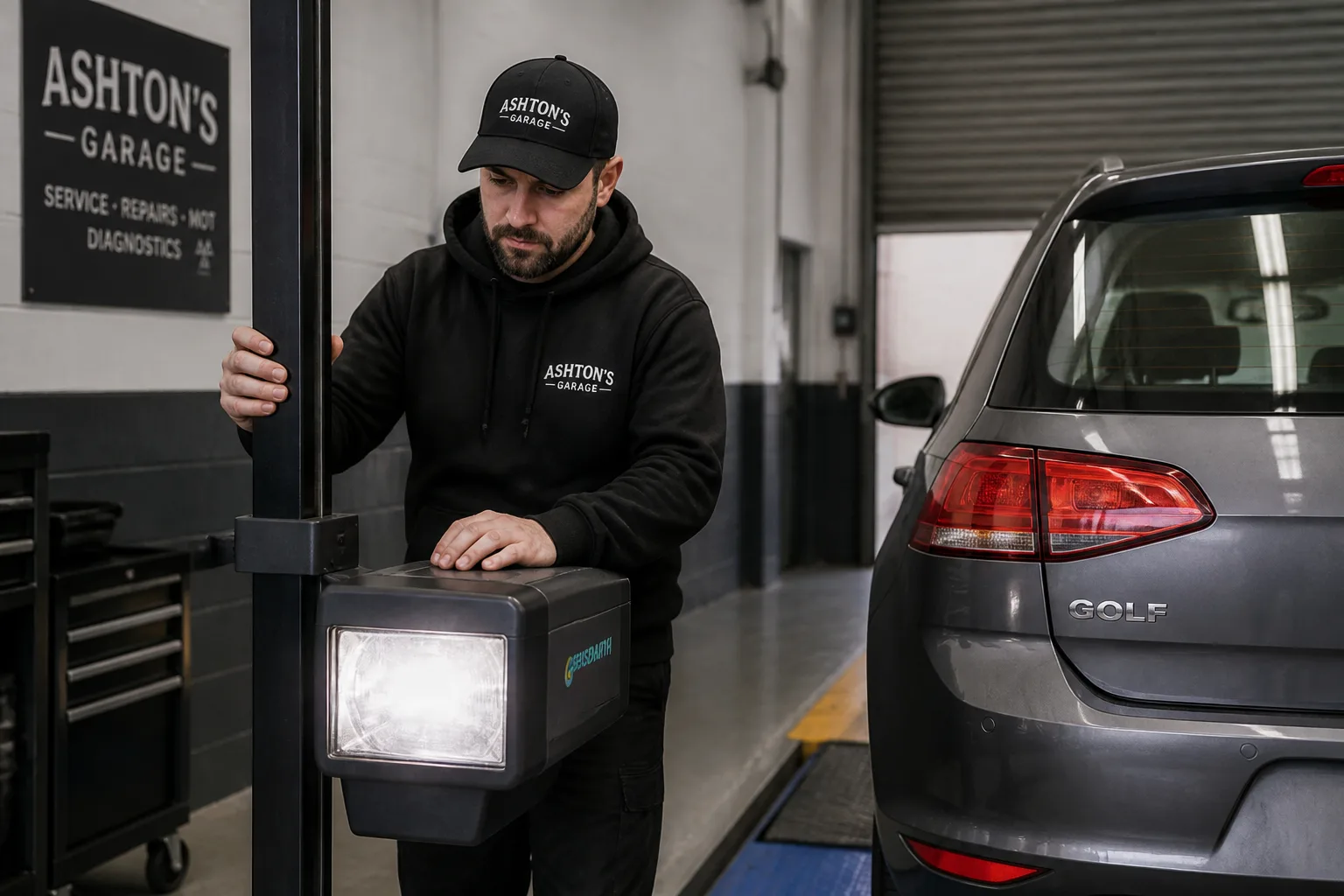
This is one reason an MOT should not be treated as a simple visual glance around the car. Proper inspection equipment and a suitable workshop setup allow the tester to assess areas that are difficult for an owner to see safely at home.
Emissions testing
The MOT includes checks related to the vehicle’s emissions. These help assess whether the vehicle meets the applicable environmental requirements for the test. Smoke, exhaust condition and measured emissions can all be relevant depending on the vehicle and the inspection process.
Emissions problems are not always obvious from the driver’s seat. A car may start and drive normally but still need further investigation if it does not meet the required standard during testing. An MOT emissions result should be explained in practical terms, particularly if further diagnosis or repair is recommended.
Brake testing
Braking performance is checked as part of the MOT. The test assesses the braking system using the appropriate equipment and procedure, rather than relying only on how the brake pedal feels during ordinary driving.
If your car is pulling to one side under braking, making unusual braking noises, vibrating heavily or showing another braking symptom, do not wait for the MOT to identify the problem. The cause cannot be diagnosed remotely, and continued driving may be unsafe. Arrange a professional inspection and, if the brakes feel seriously compromised, stop driving and seek appropriate assistance.
What is not checked during an MOT?
The MOT has a defined scope. It does not provide a complete report on every mechanical or electrical component, nor does it predict how long a part will last. In particular, the condition of the engine, clutch and gearbox is not covered by the test.
Routine servicing is separate. A service is intended to address scheduled maintenance and examine the vehicle more broadly, while the MOT focuses on the items included in the legal inspection. Having an MOT does not mean that the car has recently received an oil change, a full service or a complete mechanical health check.
The MOT also cannot guarantee that a fault will not develop shortly after the test. Wear can progress, and some problems may not fall within the inspection scope. If you have noticed a new noise, leak, warning light, starting issue or change in how the car drives, explain it to the garage rather than assuming a recent MOT has ruled it out.
Can I check anything before the MOT?
There are a few sensible owner checks that may help you identify obvious issues before the appointment. Check that the lights appear to work, the number plates are visible, the tyres look inflated and free from obvious damage, and the windscreen and mirrors give a clear view. You can also remove unnecessary items from the cabin and boot so the tester can access the required areas.
These checks are not a substitute for the MOT. Do not dismantle braking, steering, suspension or emissions components to investigate a suspected fault. If something looks damaged or the car has a safety-related symptom, professional inspection is the safer option.
What happens if the MOT identifies a problem?
The result should be discussed in relation to the particular item found and the condition of the vehicle. Some issues may need attention before the car can be used normally, while others may call for monitoring or separate repair work. If you are unsure what a result means, ask the tester to explain the issue in plain language.
Our guide to what an MOT advisory means explains why an advisory is worth taking seriously, even when it does not prevent a pass. If the vehicle does not pass, our article on driving after an MOT failure covers the main decision points. The correct answer depends on the result, the vehicle’s MOT status and whether the car is safe to drive, so avoid making assumptions.
Why the quality of the explanation matters
A useful MOT is more than a result on a screen. The garage should be able to explain what was checked, identify any relevant concern and distinguish an MOT issue from a wider servicing or repair need. Proper workshop equipment and experienced inspection help make that explanation clearer, especially when the visible symptom does not show the underlying cause.
At Ashton’s Garage, we take a practical approach to MOT work. We use the appropriate inspection equipment, explain findings in understandable terms and avoid presenting the MOT as a substitute for diagnosis or servicing. If your MOT is due and you would like the inspection carried out with clear, straightforward communication, you can arrange an MOT with Ashton’s Garage in Salisbury at a convenient time.
Frequently asked questions
Does an MOT check the engine?
An MOT checks certain items connected with safety and emissions, but it does not assess the overall condition of the engine. GOV.UK also confirms that the engine, clutch and gearbox are not covered as general mechanical components.
Are brakes checked during an MOT?
Yes. Braking performance and relevant braking components are included in the MOT inspection. If your brakes feel unsafe, make unusual noises or cause the car to pull or vibrate, arrange a professional inspection rather than waiting for the MOT.
Does an MOT include a service?
No. An MOT and a service have different purposes. The MOT checks defined road safety and environmental items, while servicing covers scheduled maintenance and broader vehicle care.
Can a car pass an MOT and still have a fault?
Yes. The MOT has a specific scope and does not assess every mechanical or electrical component. A car can pass while still needing investigation for issues involving the engine, clutch, gearbox or other parts outside the relevant inspection requirements.
What should I check before taking my car for an MOT?
You can make basic checks such as looking at the lights, tyres, number plates, windscreen and mirrors, and removing unnecessary items from the cabin and boot. Do not dismantle safety-critical components. Ask a garage to inspect anything that looks damaged or does not feel right.
Related advice
MOT Retest Rules: What Happens After a Failure?
Failed your MOT? Learn what the result means, when a retest may be free or reduced-price, what happens if repairs are needed, and when it may be unsafe to drive.
Should You Service Your Car Before an MOT?
Servicing your car before an MOT is not always necessary, but it can be sensible when maintenance is due or you have noticed a problem. Here is how to decide what your car needs before its test.
How to Prepare Your Car for an MOT
A few sensible checks before your MOT can help you spot obvious problems, avoid preventable failures and understand when your car needs professional attention.