What Is a Car Diagnostic Test?
A car diagnostic test reads information and fault codes from your vehicle's onboard systems. Find out what the test can show, what it cannot prove, and when professional checks are needed.
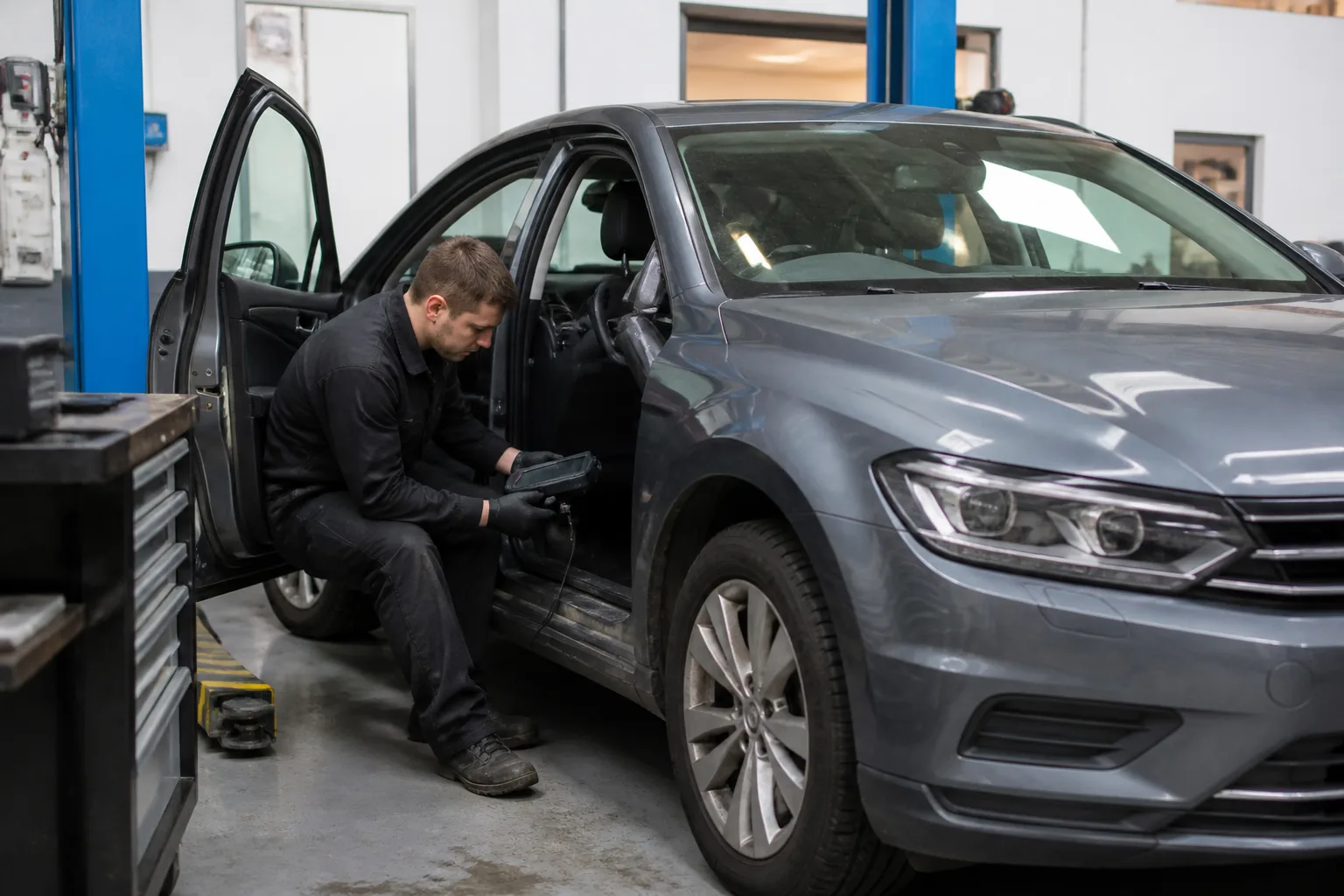
A car diagnostic test uses specialist equipment to communicate with your vehicle's onboard computers. It can retrieve stored fault codes, view live information from sensors and help a technician narrow down the cause of a warning light or running problem.
It is useful technology, but it is not the same as plugging in a machine and receiving a complete answer. A fault code points towards an area that needs checking. The underlying cause still needs to be confirmed with sensible testing and, where appropriate, a physical inspection.
What does a car diagnostic test do?
Most modern cars have several electronic control units. These monitor and manage systems such as the engine, automatic gearbox, anti-lock braking system, airbags and stability control. The exact systems available depend on the vehicle and its equipment.
A diagnostic scanner connects to the vehicle through its diagnostic socket, often called an OBD or OBD-II port. The equipment communicates with the relevant control units and may report:
- Stored or current fault codes
- Which system or circuit has detected an irregular reading
- Live data from sensors while the engine is running
- Whether a fault is intermittent or currently present
- Information about warning lights and system status
For example, an engine management warning light may be linked to an emissions sensor, an ignition problem, an air leak, a wiring issue or another fault affecting the engine control system. The code can help direct the investigation, but it does not automatically identify which component should be replaced.
When might a diagnostic test be needed?
A diagnostic check is commonly considered when a warning light appears, the engine runs unevenly, fuel consumption changes noticeably, the vehicle goes into a reduced-power mode or an electronic system stops working as expected. It may also be useful when a fault is intermittent and has not been present during a short road test.
Some warning lights are more urgent than others. A flashing engine warning light can indicate a problem that may damage the catalytic converter or affect how safely the car runs. A red brake warning light, an overheating warning, a steering warning or a serious loss of braking or control should not be treated as a routine diagnostic appointment. Stop somewhere safe and seek professional advice before continuing if the vehicle may be unsafe to drive.
For more detail about warning lights, see our guides to what the engine management light means and whether you can drive with the engine warning light on.
What happens during a diagnostic test?
1. The symptoms are discussed
A technician will usually begin by asking what you have noticed. When the warning light appeared, whether it comes and goes, how the vehicle behaves from cold and whether any work has recently been carried out can all be useful information. A clear description can prevent time being spent testing the wrong conditions.
2. The vehicle is scanned
The diagnostic equipment is connected and the relevant control units are checked. This may reveal current faults, historical faults or codes that have been logged after a temporary issue. The technician should also note whether the warning light is currently illuminated and whether the code returns after being cleared.
3. The results are interpreted
A good diagnostic process does not stop at reading the code. The technician may compare live sensor readings, inspect wiring and connectors, check fluid levels, test battery voltage, look for air or exhaust leaks, or carry out other checks suggested by the vehicle's symptoms.
4. Repairs are confirmed
After a repair or adjustment, the system may be tested again to confirm that the original problem has been addressed. This can include a road test, another scan or checking that the relevant readings have returned to a sensible range. Clearing a code without repairing the cause only removes the recorded message temporarily, and the warning may return.
Does a fault code tell you which part to replace?
Usually, no. Fault codes are best understood as clues. A code relating to a sensor may be caused by the sensor itself, but it could also result from damaged wiring, a poor electrical connection, an air leak, a power supply problem or another component producing an abnormal reading.
This is why replacing parts based only on a code can be wasteful. A diagnostic test should reduce the number of possible causes, while further checks establish which cause is actually present. The quality of the equipment and the technician's knowledge of the vehicle also matter, as a basic code reader may not access every control unit or provide the same depth of information as professional equipment.
Can a diagnostic test find every car problem?
No. A scan is most useful for faults that affect a monitored electronic system. It may not identify a worn suspension component, a damaged tyre, a mechanical rattle, a blocked filter or a problem that has not yet triggered a code. Some faults are mechanical, while others are electrical but intermittent.
A vehicle can also have a stored code without an obvious symptom, particularly if the issue happened briefly in the past. Conversely, a real problem may be present even when no fault code is stored. Visual checks, measurements, listening for abnormal noises and a road test can all form part of a proper investigation.
Will a diagnostic test turn off a warning light?
The equipment may be able to clear a warning light, but that is not the same as fixing the fault. If the cause remains, the control unit may detect it again and switch the light back on. Some warning lights will only go out once the vehicle has completed particular checks successfully, while others may need a repair followed by a reset procedure.
It is also important not to ignore a light simply because it has disappeared. An intermittent fault can return, and a stored code may still provide useful evidence of what happened. Make a note of any warning light, message or change in the vehicle's behaviour before arranging an inspection.
Can I use a cheap code reader at home?
Home code readers can be useful for basic information, especially on some engine-related systems. However, they may not read faults from the ABS, airbag or other control units, and the description shown may be brief or misleading without the vehicle-specific context.
If you use one, treat the result as an indication rather than a diagnosis. Do not erase codes before a garage has had a chance to inspect the vehicle if the problem is ongoing. Clearing them can remove useful information about when the fault occurred.
What should I tell a garage before the test?
Give as much practical detail as you can. Mention the exact warning light or dashboard message, when it appeared, whether it is steady or flashing, and whether the vehicle feels different. Details such as difficult starting, misfiring, unusual noises, reduced power or increased fuel use can help guide the checks.
If the car has recently had a battery change, service, repair or accessory fitted, mention that too. A diagnostic test is more useful when it is combined with the vehicle's history and the driver's observations.
Getting a diagnostic problem checked
A car diagnostic test is a starting point for finding an electronic or engine-related fault, not a guarantee of an instant answer. The result needs to be interpreted alongside symptoms and physical checks. If you would like a vehicle warning light or running problem investigated in Salisbury, you can find information about car repairs at Ashton's Garage.
For specific warning-light situations, you may also find our guides on flashing engine warning lights and ABS warning lights useful. If a fault affects braking, steering, overheating or the vehicle's control, do not continue driving until it has been assessed as safe.
Frequently asked questions
How long does a car diagnostic test take?
The scan itself can be relatively quick, but finding the cause of a fault may take longer. Time depends on the warning light, the vehicle system involved, whether the fault is present and what additional tests are needed.
Is a diagnostic test the same as an MOT?
No. An MOT checks whether a vehicle meets specific roadworthiness and environmental standards at the time of the test. A diagnostic scan reads electronic system information and investigates faults. One does not replace the other.
Should I drive with an engine warning light on?
It depends on the light and how the vehicle is behaving. A steady light with no noticeable change may allow you to arrange an assessment cautiously, but a flashing light, severe misfire, loss of power or other serious symptom needs prompt professional advice. Stop if continued driving may be unsafe.
Will disconnecting the battery clear a fault code?
It may affect stored information on some vehicles, but it does not repair the underlying problem and can create additional settings or system issues. It is better to have the fault recorded and investigated properly.
Can a diagnostic test find an ABS or airbag fault?
Professional equipment can often communicate with ABS and airbag control units, although coverage varies by vehicle and equipment. Because these systems are safety-critical, warning lights should be inspected rather than ignored.