
What Does the Engine Management Light Mean?
The engine management light can point to anything from a loose fuel cap to an engine or emissions fault. Learn what the warning light means, when it is safe to continue and when your car needs professional attention.
The engine management light is one of the most familiar warning symbols on a dashboard. It usually looks like a small amber engine outline and may also be called the engine warning light or check engine light.
It comes on when the vehicle's electronic control system has detected a problem. That does not automatically mean the engine is about to fail, but it does mean the car has recorded information that should not be ignored. The light can relate to the engine, exhaust emissions system, fuel system, ignition or a sensor that monitors one of these areas.
Because the same warning light can be triggered by many different faults, the light itself cannot tell you exactly what has gone wrong. A proper diagnostic check is usually needed to read the stored fault codes and assess what they mean in the context of the vehicle.
What does an engine management light look like?
In most cars, the engine management light is an amber or yellow symbol shaped like an engine. Some dashboards display words such as “check engine” instead. The exact symbol and wording can vary between manufacturers, so your owner's handbook is the best reference for the vehicle-specific warning system.
The light normally appears briefly when you switch on the ignition as the car carries out its warning-light check. It should go out after the engine starts. If it stays illuminated, or comes on while you are driving, the vehicle has detected a fault that needs further investigation.
What can cause the engine management light to come on?
There are many possible causes. Some are relatively minor, while others can affect the way the engine runs or damage the catalytic converter and other components if the car is driven for too long.
- Ignition problems: A faulty spark plug, ignition coil or related component can cause a petrol engine to misfire. A misfire means the fuel and air mixture is not being burned correctly.
- Air and fuel mixture faults: The engine relies on the correct balance of air and fuel. Problems with an air-flow sensor, fuel injector, vacuum leak or fuel pressure can upset that balance.
- Exhaust emissions faults: Oxygen sensors, the exhaust gas recirculation system, the diesel particulate filter system or the catalytic converter can all be linked to the warning light.
- Sensor or wiring faults: Modern vehicles use numerous sensors to monitor temperature, pressure, airflow and crankshaft position. A failed sensor, damaged wiring or poor electrical connection may trigger the light.
- Fuel filler cap or fuel system issue: On some vehicles, a cap that has not been fitted correctly can allow a fault in the fuel vapour system to be detected.
- Low voltage or battery-related issues: Electrical problems can sometimes cause warning lights to appear, although further testing is needed to establish whether the battery, charging system or another circuit is responsible.
These are possibilities rather than a diagnosis. Replacing a part simply because it is a common cause can waste money if the underlying problem is elsewhere.
Is it safe to drive with the light on?
It depends on how the light is behaving and how the vehicle feels. A steady amber engine management light with no other symptoms may allow you to drive carefully to a suitable garage, but it should still be checked rather than left indefinitely.
Reduce your speed and avoid heavy acceleration. Pay attention to changes in the engine's sound, performance and temperature. If the car is losing power, running roughly, producing unusual smoke or smells, or showing other warning lights, continuing to drive may not be sensible.
A flashing engine management light is more concerning. It can indicate an active misfire or another fault that may cause further damage, particularly to the catalytic converter. If the light is flashing, stop in a safe place when possible and arrange professional advice or recovery rather than carrying on as normal. Do not put yourself or other road users at risk by stopping somewhere dangerous.
The engine management light is different from warning lights for brakes, steering, oil pressure or engine temperature. Those systems can present more immediate safety or mechanical risks. If one of those warning lights appears, follow the vehicle handbook and stop as soon as it is safe if continued driving could be unsafe.
For more detail about the risks of continuing to drive, see our guide to driving with the engine warning light on. If the light is flashing, our explanation of what a flashing engine warning light means covers the situation separately.
What should you do when the light comes on?
- Check the dashboard and handbook. Confirm which warning light has appeared and whether any other messages or symbols are present.
- Notice how the car is behaving. Look for rough running, poor acceleration, unusual noises, smoke, strong smells or a change in fuel consumption.
- Check simple external signs only. If you have recently refuelled, make sure the fuel filler cap is properly secured. Do not remove hot components or attempt repairs at the roadside.
- Decide whether driving is appropriate. A steady light with normal vehicle behaviour may permit a short, careful journey for inspection. A flashing light or serious running problem needs more caution.
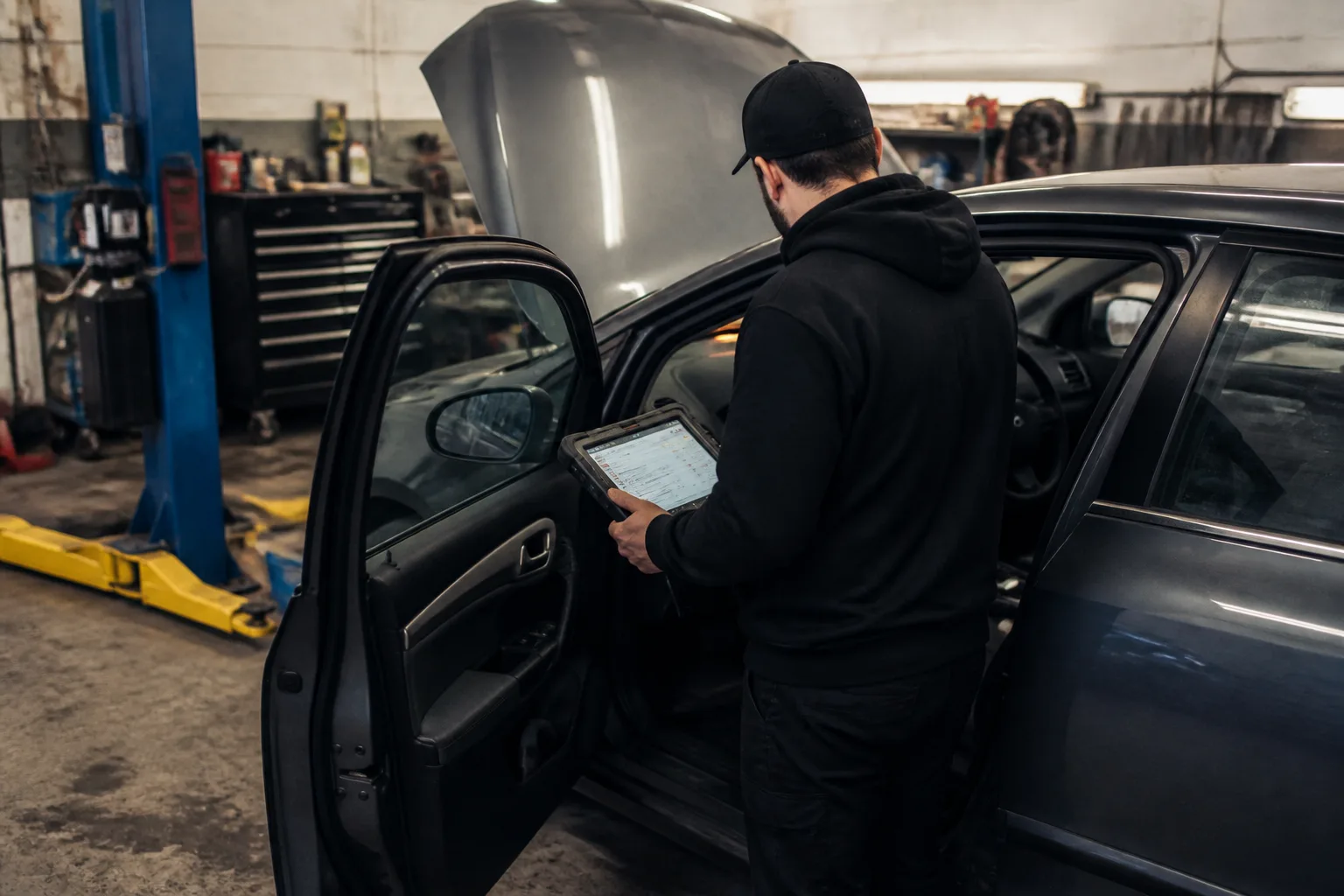
- Arrange a diagnostic assessment. A technician can scan the vehicle, interpret the fault codes and carry out further checks rather than relying on the warning light alone.
It is also worth remembering that switching the engine off may make the light disappear temporarily. That does not necessarily mean the fault has been fixed. Some problems occur only under particular temperatures, speeds or driving conditions and may return later.
What happens during a diagnostic check?
A diagnostic scan connects suitable equipment to the vehicle's onboard diagnostic system. The scan may show a fault code relating to a sensor, circuit or engine system. The code is a useful starting point, not a complete answer.
A technician may then compare the code with the vehicle's symptoms, inspect wiring and connectors, check live readings and test the relevant system. This approach helps separate a failed component from a wiring issue, air leak or secondary fault. It also avoids treating the code as permission to replace a part without confirming the cause.
If another dashboard warning has appeared, it is important to mention it. For example, an engine management light may be accompanied by an ABS warning light, which relates to a separate safety system. You can read more about why the ABS warning light may be on if both symbols are showing.
When should you contact a garage?
Arrange an inspection if the light remains on, keeps returning, or is accompanied by poor performance or unusual running. Prompt attention is particularly sensible if the vehicle is difficult to start, stalling, misfiring, losing power or producing smoke.
Ashton's Garage can assess the warning light and explain the likely next steps in plain terms. If your car needs further investigation or repair, you can find the relevant car repair service in Salisbury here. The aim is to identify the cause properly so you can make an informed decision about the vehicle, rather than guessing from the symbol alone.
Frequently asked questions
Can an engine management light turn itself off?
It can go out if the vehicle no longer detects the condition that triggered it, but that does not prove the underlying issue has been repaired. A diagnostic check may still find a stored or intermittent fault.
Does the light always mean the engine is damaged?
No. The warning can relate to sensors, emissions equipment, ignition, fuelling or electrical connections as well as major engine components. The seriousness cannot be judged from the symbol alone.
Why is the engine management light on after refuelling?
A fuel cap that is loose or not sealing correctly can be one possible cause on some vehicles. If the light remains on after checking the cap, or if the car is running poorly, arrange a proper assessment.
Can an engine management light affect an MOT?
Warning-light requirements can depend on the vehicle, the system involved and the inspection circumstances. Do not assume the car will pass simply because it drives normally. A garage can investigate the warning and advise what needs attention before an MOT.
Frequently asked questions
Can an engine management light turn itself off?
It can go out if the vehicle no longer detects the condition that triggered it, but this does not prove the fault has been repaired. A diagnostic check may still find a stored or intermittent fault.
Does the engine management light always mean the engine is damaged?
No. It may relate to sensors, emissions equipment, ignition, fuelling or electrical connections as well as major engine components. The seriousness cannot be judged from the symbol alone.
Why is the engine management light on after refuelling?
On some vehicles, a fuel cap that is loose or not sealing properly can trigger the warning. If the light stays on or the car runs poorly, arrange a professional assessment.
Is it safe to drive with the engine management light on?
A steady amber light with no change in vehicle behaviour may allow a short, careful journey for inspection. A flashing light, loss of power, rough running or other serious symptoms may make continued driving unsafe.
Related advice
What Does a Check Engine Fault Code Actually Tell a Mechanic?
A check engine fault code is a useful clue, not a complete diagnosis. Here is what a mechanic can learn from it, what it cannot prove, and why further testing is often needed.
Why Does My Car Idle Roughly?
A rough idle can be caused by anything from an ignition fault or air leak to a fuel, sensor or mechanical problem. Here is what the symptoms may mean and when to arrange a professional inspection.
Why Does My Car Hesitate When Accelerating?
Car hesitation under acceleration can be caused by problems with fuel, ignition, air supply, sensors or the gearbox. Here is what the symptoms may mean and when to arrange a professional inspection.