
What Does a Flashing Engine Warning Light Mean?
A flashing engine warning light usually needs more urgent attention than a steady light. Learn what it can indicate, when to stop driving and what to do next.
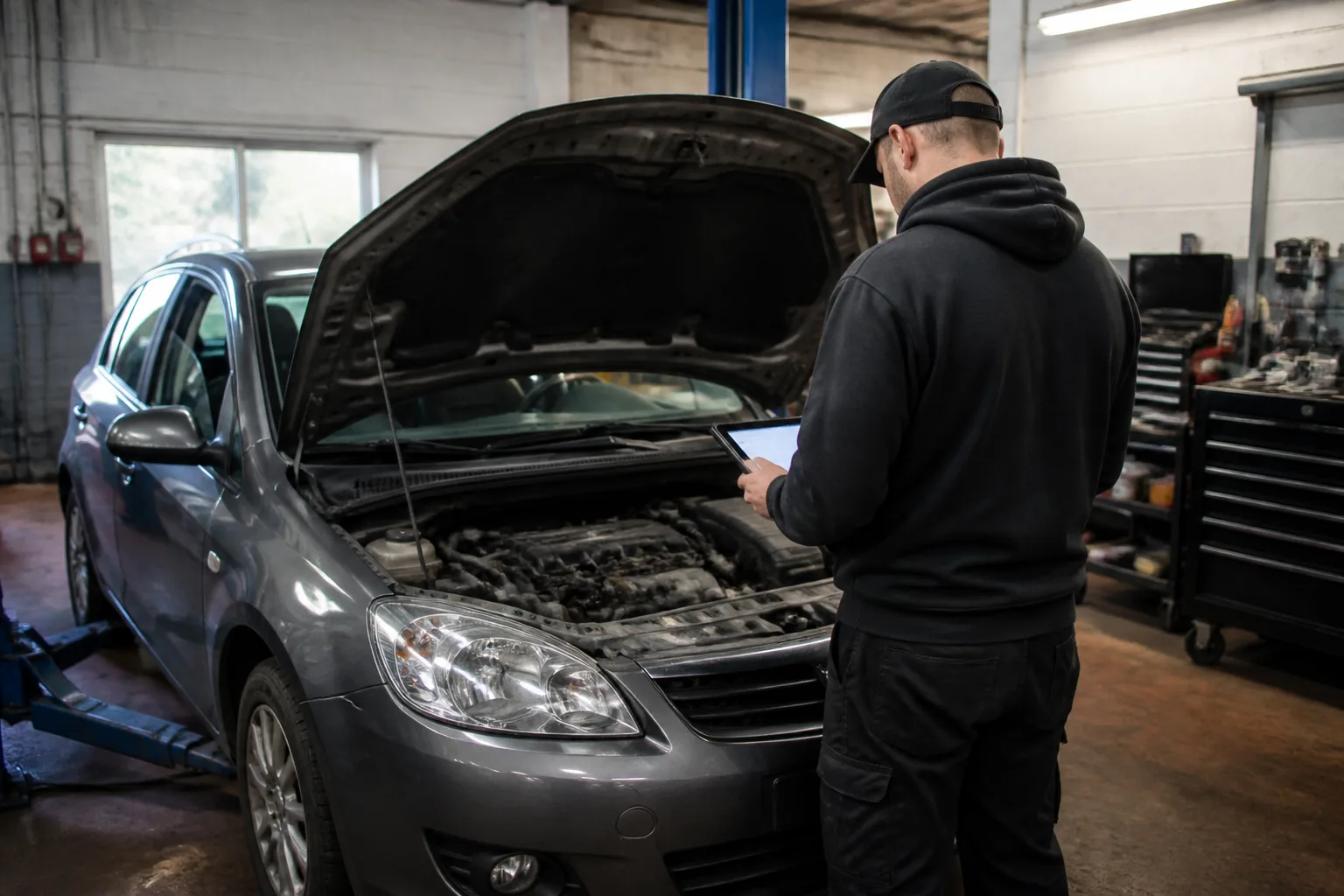
A flashing engine warning light should be treated as a prompt to act, rather than something to monitor casually. In many vehicles, it indicates that the engine is misfiring or that the engine control system has detected a fault that could cause further damage if you continue driving.
The exact meaning varies between vehicles, engines and manufacturers, so it is not possible to identify the failed part from the warning light alone. However, a flashing light is generally more urgent than a steady amber engine management light. If the car is running roughly, losing power, producing unusual smoke or smells, or showing signs of overheating, stop in a safe place and arrange professional help.
What is the flashing engine warning light trying to tell you?
The engine warning light is connected to the vehicle's engine management system. This system monitors items such as fuel delivery, ignition, emissions equipment, air intake and exhaust gases. If readings fall outside expected limits, it stores a fault code and illuminates the warning light.
A flashing light commonly points to an active misfire. A misfire happens when one or more cylinders do not burn the fuel and air mixture correctly. You may notice a shaking engine, uneven idle, hesitation when accelerating, reduced performance or a popping sound from the exhaust.
Unburnt fuel from a misfiring cylinder can pass into the exhaust system. This may overheat and damage the catalytic converter, which is an important and expensive emissions component. That is why driving for a long distance with a flashing light can turn a fault that needs diagnosis into a much larger repair.
Common possible causes
A flashing engine warning light does not identify one particular problem. Possible causes include:
- A worn or faulty spark plug on a petrol engine.
- A problem with an ignition coil, which supplies high voltage to the spark plugs.
- A fuel injector that is not delivering fuel correctly.
- An air leak or another fault affecting the fuel and air mixture.
- A sensor or wiring problem affecting the engine management system.
- Low fuel pressure or a fuel supply issue.
- A mechanical engine fault affecting compression or valve operation.
Diesel vehicles can also experience misfires and engine management faults, although the likely systems and symptoms may differ. A diesel particulate filter, exhaust gas recirculation system, turbocharger or fuel system may be involved in some cases. These are possibilities, not a diagnosis. A proper assessment normally requires a visual inspection, a scan of the stored fault codes and further testing where needed.
Can you drive with a flashing engine light?
It is generally unwise to continue a normal journey with the light flashing. If the engine is misfiring, continued driving may cause more damage to the exhaust system and could leave you with a vehicle that is difficult to control in traffic because of reduced or unpredictable power.
Find a safe place to stop as soon as it is practical. Avoid hard acceleration, high engine speeds and carrying on simply because the car still moves. If the vehicle is shaking badly, has very little power, is making loud mechanical noises, smells strongly of fuel, is producing smoke or is overheating, switch it off and arrange recovery or professional assistance. Do not put yourself or other road users at risk by trying to reach a garage under those conditions.
If the light stops flashing after you slow down or stop, that does not necessarily mean the problem has gone away. The vehicle may have stored a fault code, and the underlying issue could return under load or at a particular engine temperature. Arrange an inspection rather than assuming the car is fixed.
What should you do when it starts flashing?
1. Reduce speed and find a safe place
Move away from fast-moving traffic where possible and avoid putting the engine under unnecessary load. If you are on a motorway or another dangerous road, follow the relevant breakdown safety guidance and prioritise your position and personal safety.
2. Pay attention to the symptoms
Make a note of whether the engine is shaking, whether the light is flashing continuously or intermittently, and whether other warning lights have appeared. Also note any recent change, such as difficulty starting, poor acceleration, unusual smells or increased exhaust smoke. This information can help a technician, but it cannot replace testing.
3. Do only safe basic checks
Once parked safely, you can check whether there is an obvious loose fuel filler cap or a visible leak beneath the vehicle. Do not touch hot engine components, remove a hot coolant cap or work near belts, fans and moving parts. If the engine is overheating or there is a strong fuel smell, leave the vehicle switched off and seek assistance.
4. Arrange a proper diagnosis
A diagnostic scan can identify fault codes recorded by the engine control unit, but the code is usually a starting point rather than proof that a particular component needs replacing. A technician may need to inspect the ignition, fuel, air intake, sensors, wiring and mechanical condition before confirming the cause.
Is a flashing light the same as a steady engine warning light?
Not necessarily. A steady amber engine warning light can relate to a stored or ongoing fault that may allow limited driving, depending on the symptoms and the vehicle manufacturer's guidance. A flashing light is normally a stronger warning, particularly when it is accompanied by rough running or loss of power.
The safest approach is to consider both the light and how the vehicle behaves. A steady light with no change in performance still deserves attention, while a flashing light with severe symptoms may mean the car should not be driven any further. Our guide to driving with the engine warning light on explains why the symptoms matter as well as the colour and behaviour of the warning light.
Why reading the fault code is not enough
It can be tempting to use a plug-in code reader, clear the warning light and see whether the issue returns. A code reader can be useful information, but clearing the code does not repair the fault. It can also remove helpful evidence about when and how the problem occurred.
For example, a code may indicate that a cylinder has misfired, but it may not prove whether the cause is a spark plug, coil, injector, wiring fault or internal engine problem. Proper diagnosis avoids replacing parts based on guesswork and helps establish whether the vehicle is safe to drive.
If the warning light has appeared alongside other dashboard warnings, it may be useful to read our guides to an ABS warning light and an airbag warning light. Those systems have different safety implications and should not be confused with an engine fault.
When should you contact a garage?
Contact a garage promptly if the engine warning light flashes, even if the car seems to settle afterwards. Professional testing is particularly important when there is rough running, poor acceleration, smoke, a fuel smell, unusual noise or any sign of overheating.
At Ashton's Garage, we can assess the symptoms, read the vehicle's diagnostic information and explain the likely next steps before repair work is undertaken. If your engine warning light is flashing, you can find information about arranging suitable help through our car repairs service in Salisbury. If the vehicle is not running safely, recovery is the better option than driving it to the garage.
Frequently asked questions
Is it safe to drive a car with a flashing engine warning light?
You should avoid continuing a normal journey. Reduce speed, stop somewhere safe and arrange professional help, especially if the engine is shaking, losing power, overheating, smoking or producing a strong fuel smell.
Can low fuel cause the engine warning light to flash?
Running very low on fuel can affect engine operation, but it should not be assumed to be the cause of a flashing warning light. If the light continues after refuelling, or the engine runs roughly, the vehicle needs proper diagnosis.
Will a flashing engine warning light reset itself?
It may stop flashing when the condition is no longer detected, but the vehicle can still have a stored fault. A change in the light does not confirm that the underlying problem has been repaired.
Does a flashing engine light always mean a misfire?
A misfire is a common reason, but warning light behaviour differs between vehicles. Other engine management or emissions faults are possible, so the cause should be confirmed with suitable diagnostic testing.
Related advice
What Does a Check Engine Fault Code Actually Tell a Mechanic?
A check engine fault code is a useful clue, not a complete diagnosis. Here is what a mechanic can learn from it, what it cannot prove, and why further testing is often needed.
Why Does My Car Idle Roughly?
A rough idle can be caused by anything from an ignition fault or air leak to a fuel, sensor or mechanical problem. Here is what the symptoms may mean and when to arrange a professional inspection.
Why Does My Car Hesitate When Accelerating?
Car hesitation under acceleration can be caused by problems with fuel, ignition, air supply, sensors or the gearbox. Here is what the symptoms may mean and when to arrange a professional inspection.