
Can You Drive With the Engine Warning Light On?
A steady engine warning light may not mean you need to stop immediately, but a flashing light, loss of power, smoke or unusual noises can make continued driving unsafe. Here is how to judge the risk and what to do next.
Whether you can drive with the engine warning light on depends on what the light is doing and how the vehicle feels. A steady amber engine-shaped light often indicates that the car has detected a fault in the engine management or emissions system. It may be possible to drive a short distance carefully, but the warning should not be ignored.
A flashing engine warning light is more urgent. It can indicate a fault that is causing the engine to misfire, which may lead to further damage and could affect the car’s safety or performance. If the vehicle is running badly, has lost power, is shaking, producing smoke or making unusual noises, stop somewhere safe and arrange professional help rather than continuing your journey.
What does the engine warning light mean?
The engine warning light, sometimes called the engine management light or check engine light, is connected to the vehicle’s electronic control system. This system monitors areas such as fuel delivery, ignition, exhaust emissions and the operation of various sensors.
When the system detects readings outside the expected range, it stores a fault code and may illuminate the warning light. The light tells you that the car has identified a problem, but it does not identify the failed component by itself. Several different faults can trigger the same warning symbol, so replacing a part based only on the light can be expensive and ineffective.
For a broader explanation of possible causes, see our guide to what the engine management light means.
Can you drive with a steady engine warning light?
If the light is steady and amber, and the car feels and sounds normal, a short, careful journey to a suitable garage may be reasonable. Keep the journey as limited as possible and avoid hard acceleration, high engine speeds and unnecessary driving until the fault has been checked.
That does not mean the car is definitely safe to use normally. A minor sensor or emissions-related issue is one possibility, but a steady light can also be linked to problems that may worsen. The warning may be the first sign of an issue affecting fuel mixture, ignition, exhaust treatment or engine operation.
Monitor the vehicle while driving. If the warning starts flashing, the engine begins to misfire, or the car loses power, pull over safely and reassess the situation. Do not assume that a steady light will remain harmless simply because the vehicle still starts.
What if the engine warning light is flashing?
A flashing engine warning light should be treated as a serious warning. One possible cause is an active misfire, where one or more cylinders are not burning the fuel mixture correctly. This can make the vehicle shake or run roughly and may allow unburnt fuel to reach parts of the exhaust system.
There can be other causes, and it is not possible to diagnose the fault remotely from the warning light alone. However, continued driving while the light is flashing may increase the risk of damage and may leave you with reduced performance when you need it.
If the light flashes, reduce speed without harsh braking, move to a safe place and switch the engine off if it is appropriate to do so. Arrange a professional inspection or recovery if the car is running badly, overheating, producing smoke, or cannot be driven safely. Our guide to a flashing engine warning light covers this situation in more detail.
When should you stop driving immediately?
The engine warning light is more concerning when it appears alongside other symptoms. Stop driving and seek professional advice if you notice:
- a flashing warning light;
- severe shaking, repeated misfires or a strong loss of power;
- smoke, a strong smell of fuel or burning, or unusual exhaust fumes;
- rising temperature or an overheating warning;
- knocking, banging or other unfamiliar engine noises;
- additional warning lights, particularly those relating to oil pressure, brakes or temperature; or
- problems with steering, braking or the vehicle’s ability to remain under control.
These symptoms can have different causes, and not all will be related directly to the engine warning light. The important point is that continued driving may be unsafe or may turn a manageable fault into a more serious repair.
What should you check before calling a garage?
There are a few safe observations you can make without dismantling anything. Check whether the light is steady or flashing and note when it appeared. Think about whether it came on during starting, acceleration, motorway driving or after refuelling. Also note any changes in starting, idle quality, fuel consumption, power, smoke or noise.
You can check that the fuel filler cap is fitted securely if your vehicle uses one, as a poor seal can sometimes be detected by the emissions system. Do not rely on this as a diagnosis, and do not repeatedly clear the warning light before inspection. Clearing it can remove useful information from the vehicle’s fault memory and may allow the underlying problem to continue unnoticed.
Do not work on hot engine components, fuel systems or electrical wiring unless you are properly qualified. Reading a fault code can help guide a diagnosis, but the code is not always proof that the named sensor or component needs replacing. A technician normally considers the code alongside live readings, symptoms and physical checks.
Will the car pass its MOT with the engine warning light on?
The warning light should not be ignored because it may indicate an emissions or engine-management fault that affects the vehicle’s condition. MOT outcomes depend on the specific fault and the checks applicable to the vehicle. An illuminated warning light is not a reliable way to predict the result, so it is sensible to have the cause investigated rather than waiting for the test.
Other warning lights can also indicate separate safety concerns. For example, an ABS warning light relates to the anti-lock braking system, not simply the engine. If you see that symbol, read our guidance on why an ABS warning light may be on. An airbag warning light should also be treated separately, as it may relate to the restraint system.
How is the fault diagnosed?
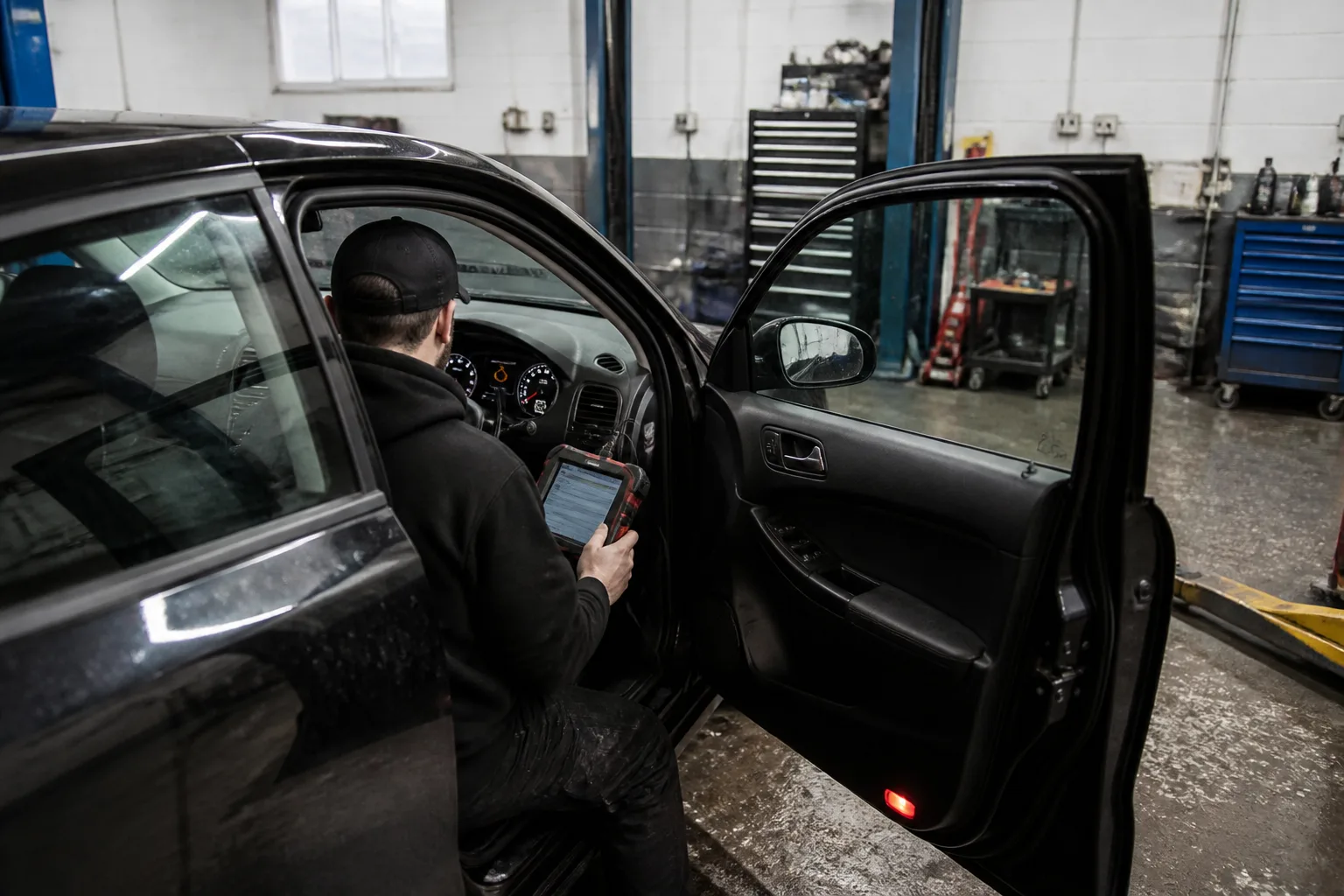
A garage will usually begin by confirming the warning light and connecting suitable diagnostic equipment to access stored fault codes. The next steps depend on the results. A proper diagnosis may include checking wiring, connectors, sensors, ignition, fuel supply, air intake and exhaust-related components.
The aim is to find the reason the system recorded the fault, rather than simply erase the warning or replace the first component mentioned by a code. Some faults are intermittent, so the vehicle’s symptoms and history can be particularly helpful.
If your engine warning light is on, Ashton’s Garage can help investigate warning-light and engine-management faults. Tell the garage whether the light is steady or flashing and describe any symptoms you have noticed. If the car is running poorly or another critical warning light is showing, ask whether it should be recovered instead of driven.
The short answer
You may be able to drive a short distance with a steady amber engine warning light if the vehicle feels completely normal, but arrange a check soon and avoid unnecessary use. Do not continue driving with a flashing light, severe misfire, overheating, smoke, major loss of power or any braking or steering concern. Stop safely and seek professional advice.
Frequently asked questions
Is it safe to drive with a solid engine warning light?
If the light is steady and amber and the vehicle feels completely normal, a short careful journey to a garage may be possible. Arrange an inspection promptly and stop if the light flashes or the vehicle develops symptoms.
How far can I drive with the engine warning light on?
There is no reliable distance that is safe for every vehicle or fault. Limit driving to what is necessary, avoid hard acceleration and seek advice. If the light is flashing or the car is running badly, do not continue driving.
Can low fuel cause the engine warning light to come on?
Running very low on fuel can affect how a vehicle runs, but an engine warning light needs proper assessment rather than being blamed on fuel level alone. A secure fuel filler cap may also be worth checking where fitted.
Will disconnecting the battery turn off the engine warning light?
Disconnecting the battery is not a suitable diagnosis or repair. It may erase useful fault information, create other vehicle settings issues and leave the underlying problem unresolved.
What is the difference between the engine warning light and the oil warning light?
The engine warning light usually relates to engine management or emissions monitoring. The oil warning light can indicate an oil-pressure problem and may require the engine to be stopped promptly. Treat each symbol according to its own warning and symptoms.
Related advice
What Does a Check Engine Fault Code Actually Tell a Mechanic?
A check engine fault code is a useful clue, not a complete diagnosis. Here is what a mechanic can learn from it, what it cannot prove, and why further testing is often needed.
Why Does My Car Idle Roughly?
A rough idle can be caused by anything from an ignition fault or air leak to a fuel, sensor or mechanical problem. Here is what the symptoms may mean and when to arrange a professional inspection.
Why Does My Car Hesitate When Accelerating?
Car hesitation under acceleration can be caused by problems with fuel, ignition, air supply, sensors or the gearbox. Here is what the symptoms may mean and when to arrange a professional inspection.