What Does the Tyre Pressure Warning Light Mean?
The tyre pressure warning light usually means one or more tyres may be under-inflated, but it can also indicate a fault with the monitoring system. Here is what to check and when to arrange a professional inspection.
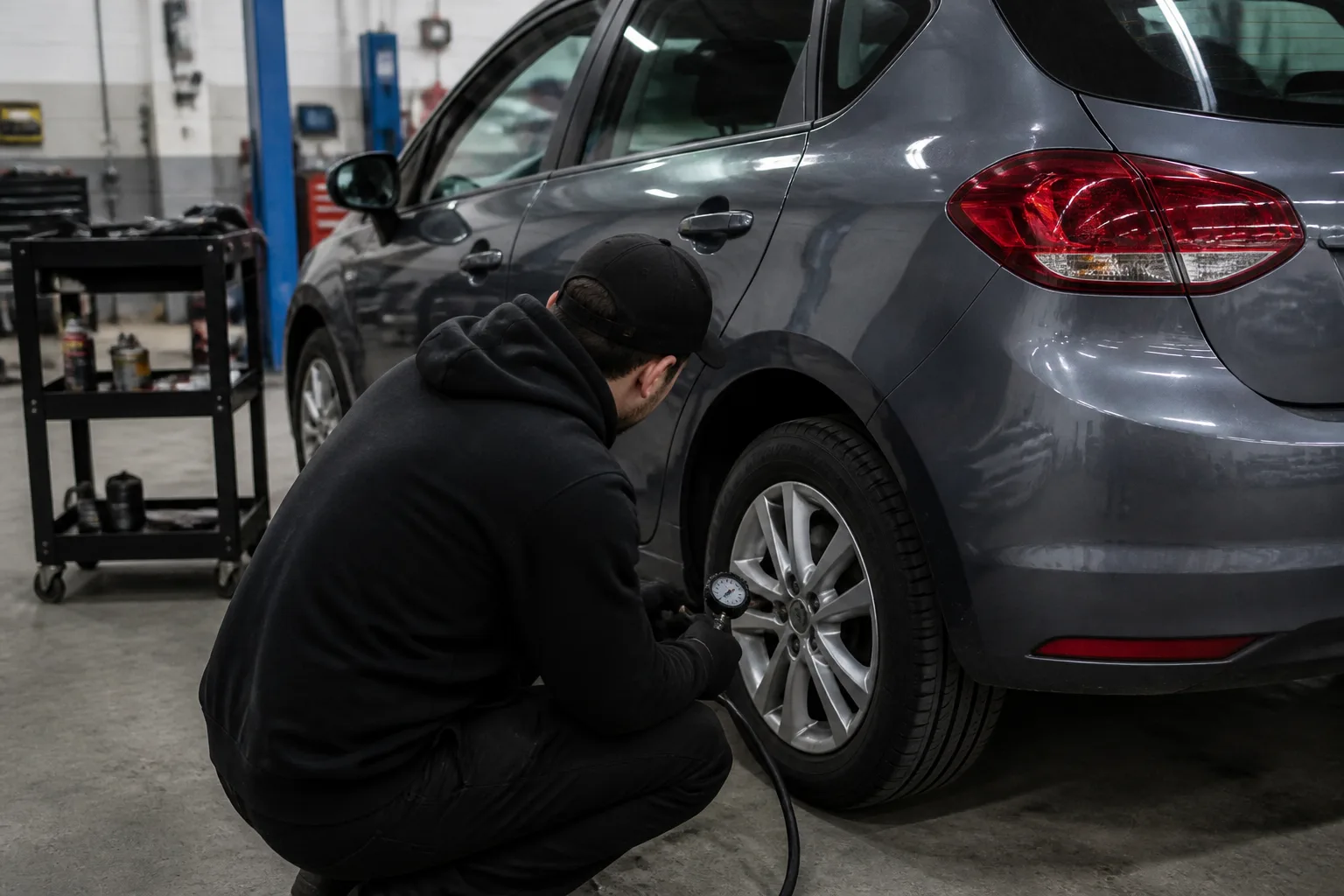
If the tyre pressure warning light appears on your dashboard, it usually means the car has detected that one or more tyres may not be at the correct pressure. The warning should not be ignored, even if the vehicle still feels normal to drive.
Tyre pressure monitoring systems, commonly called TPMS, are fitted to many modern cars. They help alert you to pressure loss, which can affect grip, braking, handling and fuel consumption. The warning light does not identify the exact cause by itself, so a few possibilities need to be considered.
What the tyre pressure warning light looks like
The symbol is usually an amber or yellow shape resembling a tyre cross-section, with an exclamation mark in the middle. It may appear briefly when you switch the ignition on as part of the normal dashboard check, then go out after the engine starts.
If it stays illuminated, the system has detected a pressure issue or needs attention. Some cars display a more detailed message showing which tyre may be affected, while others only show the general warning symbol. Your vehicle handbook will explain the exact warning lights and reset procedure for that model.
Common reasons the warning light comes on
One or more tyres are under-inflated
This is the most common explanation. A tyre can lose pressure gradually through normal seepage, a valve issue or a small puncture. A noticeable temperature change can also alter the pressure enough to trigger a warning, particularly if a tyre was already close to the lower limit.
Do not judge pressure by looking at the tyre alone. A tyre can be significantly under-inflated without appearing obviously flat. Check all four road tyres, and include the spare if your car has one and the handbook says it is monitored.
A tyre has a puncture or is losing pressure
A nail, screw, damaged valve or impact with a pothole can cause a slow or rapid leak. If the warning appeared while driving and the car is pulling to one side, feels unstable, or makes unusual noises, reduce speed carefully and stop somewhere safe. Driving on a badly deflated tyre can damage the tyre casing and may make the vehicle unsafe to control.
Look for obvious damage, but do not put your hands near a damaged tyre or attempt a roadside repair if you are not confident it can be done safely. A tyre that has lost a substantial amount of pressure should be inspected rather than simply inflated and forgotten.
The tyres were recently changed or rotated
After a tyre change, wheel change or seasonal tyre swap, the TPMS may need to be recalibrated. Some systems learn the new readings after a period of driving, while others require a reset through the vehicle settings or a dedicated button.
It is important to set the pressures before resetting the system. Resetting a monitoring system with an incorrectly inflated tyre can make the warning appear to have cleared without correcting the underlying problem.
The monitoring system has a fault
If the light flashes for a period before remaining on, the vehicle may be reporting a TPMS fault rather than simply low pressure. The cause could involve a wheel sensor, its battery, wiring or the vehicle's control system. The exact arrangement varies between cars.
A system fault means the car may not be able to warn you reliably about pressure loss. It is therefore sensible to check pressures manually until the issue has been properly assessed.
What should you do when the light comes on?
- Reduce speed and consider how the car feels. If there is pulling, vibration, unusual noise or visible tyre damage, stop in a safe place and do not continue driving unnecessarily.
- Check the tyre pressures when the tyres are cold. Use the pressures listed on the vehicle's information label or in the handbook, not the maximum pressure printed on the tyre sidewall. The label may be inside the driver's door shut, on the fuel flap or in another location specified by the manufacturer.
- Inspect the tyres visually. Look for a screw, nail, cut, bulge or other damage. Do not remove an embedded object, as doing so may cause the tyre to deflate quickly.
- Inflate the tyres to the manufacturer's recommended pressures. If a tyre will not hold pressure, or needs topping up repeatedly, it needs further investigation.
- Reset or recalibrate the system only as described in the handbook. If the light returns, remains on or flashes, arrange a professional inspection.
Some cars use sensors inside the wheels to measure pressure directly. Others compare wheel rotation speeds through the anti-lock braking system and infer that one tyre is smaller because it has lost pressure. This difference affects how the warning system behaves and how it is reset, which is why a generic button sequence should not be assumed.
Can you drive with the tyre pressure warning light on?
That depends on the pressure, the condition of the tyres and how the vehicle behaves. A short, careful journey to an appropriate place for an air-pressure check may be reasonable if the tyres appear sound and the car is driving normally. However, the warning light alone cannot confirm that it is safe to continue.
Stop and seek professional help if a tyre looks flat, is losing pressure quickly, has a bulge or cut, or if the car feels unstable, pulls to one side or vibrates. These symptoms could indicate tyre, wheel, suspension or steering damage. Continuing to drive may increase the risk of losing control or causing further damage.
If the pressures are correct but the warning stays on, the problem may be with the sensor or the system rather than the tyres themselves. A garage can check the tyres, read the relevant fault information and establish whether the warning is caused by a pressure loss or a monitoring fault. You can find more information about related dashboard warnings in our guides to the ABS warning light and the engine management light.
Why correct tyre pressure matters
Correct pressure helps the tyre maintain its intended contact with the road. Under-inflation can affect steering response, braking and cornering, while also increasing wear on the tyre shoulders. Over-inflation can reduce the size of the contact patch and make the ride harsher.
Tyre pressures should be checked regularly, before long journeys and after the vehicle has been carrying an unusual load. Use a reliable gauge and check when the tyres are cold where possible. Do not rely solely on the warning system, as it may not alert you to every issue immediately and some vehicles only monitor pressure after the car has started moving.
When should a garage inspect the car?
Arrange an inspection if the warning light keeps returning, a tyre repeatedly loses pressure, the system flashes, or the warning appeared after a pothole or kerb impact. The cause may be straightforward, but it cannot be diagnosed accurately from the dashboard symbol alone.
Ashton's Garage can check the tyres and investigate a persistent tyre pressure warning as part of a wider vehicle repair assessment. If the light is accompanied by damage or worrying handling symptoms, avoid driving the vehicle until you have received appropriate advice. For a sensible next step, you can contact Ashton's Garage about a tyre pressure warning or related vehicle repair.
Related warning light guides
Frequently asked questions
Can I reset the tyre pressure warning light myself?
Often, yes, but the correct process varies by vehicle. Check and set all tyre pressures first, then follow the reset or recalibration instructions in the handbook. If the light returns or flashes, the system or a tyre may need professional inspection.
Why is the tyre pressure light on when the tyres look fine?
A tyre can be under-inflated without looking flat. Other possibilities include a slow puncture, a recent wheel change, incorrect calibration or a fault with a TPMS sensor. Check the pressures with a reliable gauge rather than relying on appearance.
What does a flashing tyre pressure warning light mean?
On many vehicles, a flashing light followed by a steady warning indicates a fault with the tyre pressure monitoring system. The exact meaning depends on the manufacturer, so check the handbook and arrange an inspection if the warning remains.
Should I drive if the tyre pressure warning light comes on?
Only consider a short, careful journey to a safe place for checks if the tyres appear undamaged and the vehicle feels normal. Stop and seek help if a tyre is flat or damaged, pressure is dropping quickly, or the car pulls, vibrates or feels unstable.
How often should I check my tyre pressures?
Check them regularly, before long journeys and after carrying an unusual load. Use the vehicle manufacturer's recommended pressures and check when the tyres are cold where possible.
Related advice
What Does the Engine Management Light Mean?
The engine management light can point to anything from a loose fuel cap to an engine or emissions fault. Learn what the warning light means, when it is safe to continue and when your car needs professional attention.
Why Is My ABS Warning Light On?
An ABS warning light can have several causes, from a wheel-speed sensor fault to a problem with the braking system. Here is what the light means, what you should check and when to stop driving.
What Does the Oil Pressure Warning Light Mean?
The oil pressure warning light needs prompt attention. Learn what the red oil can symbol means, what you can safely check and when to stop driving.