What Does the Coolant Temperature Warning Light Mean?
A coolant temperature warning light usually means the engine is too hot or the cooling system needs attention. Learn what to do safely, what the different symbols can mean and when professional inspection is needed.
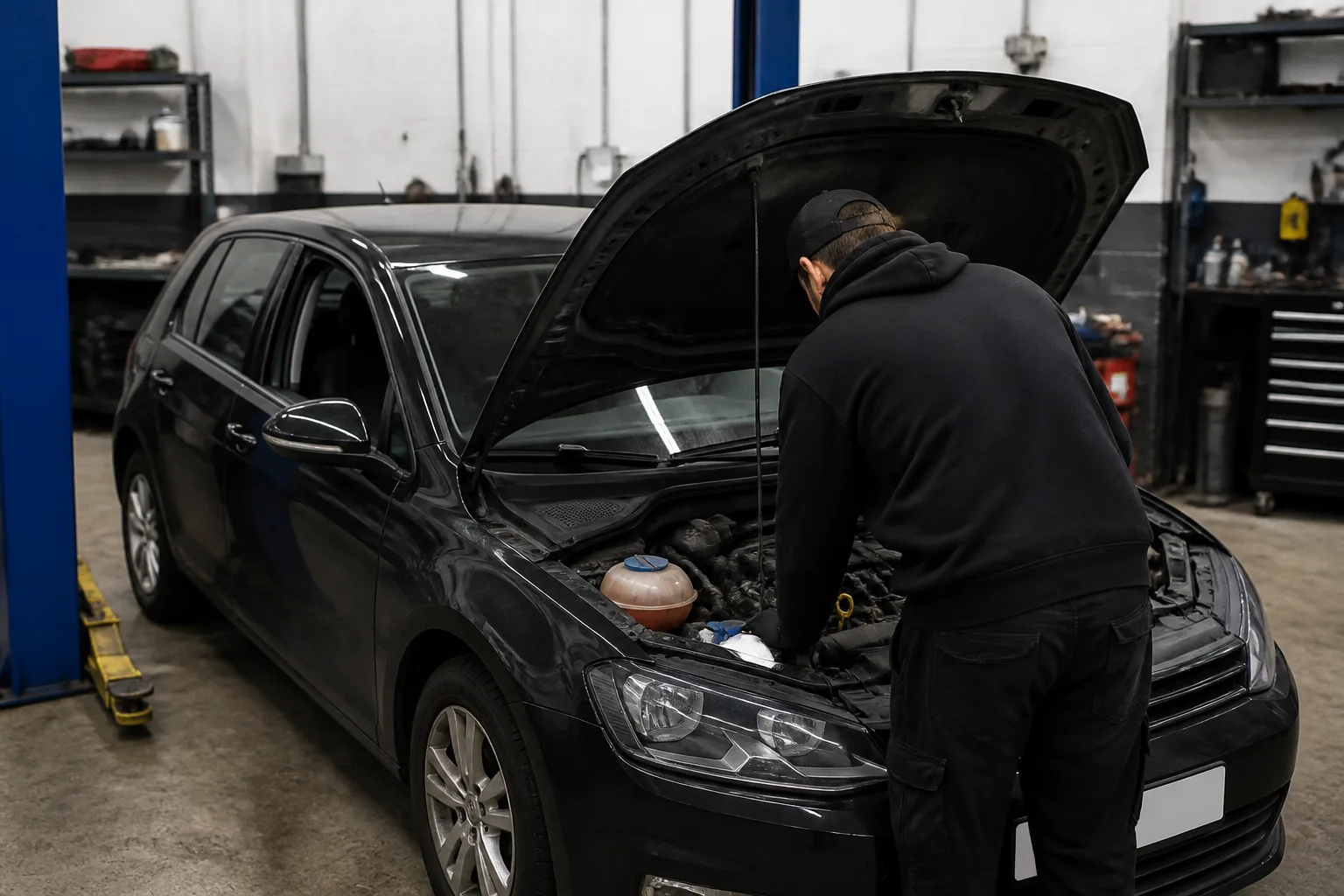
If the coolant temperature warning light appears on your dashboard, the engine may be running hotter than it should. In many cars, this is shown as a red thermometer symbol above wavy lines. It can also appear alongside a temperature gauge that has moved into the red zone.
This warning should be taken seriously. An overheated engine can suffer expensive damage if you continue driving, particularly if the cause is a coolant leak, a failed cooling fan, a faulty thermostat or a problem with the water pump. The warning light alone cannot identify the fault, so the safest response is to stop in a suitable place and assess the situation rather than guessing.
What does the coolant temperature warning light mean?
Most commonly, a red coolant temperature warning light means that the engine coolant is too hot or that the engine temperature is outside its normal operating range. Coolant absorbs heat from the engine and transfers it to the radiator, where the heat can be released. If that process is interrupted, the engine temperature can rise quickly.
Some vehicles use a temperature gauge instead of, or as well as, a warning light. Under normal conditions, the needle usually settles around the middle of the gauge once the engine has warmed up. A reading that moves towards the red area needs attention, especially if it is accompanied by a warning message, a loss of power, unusual smells or steam.
Dashboard symbols and warning strategies differ between manufacturers. Check the vehicle handbook if you are unsure whether the symbol is a high-temperature warning, a low coolant warning or a cold-engine indicator.
What should you do when the light comes on?
If the warning appears while you are driving, reduce speed and look for a safe place to pull over. Avoid continuing a journey simply because the car still seems to be running normally. Switch off the engine once you are safely stopped and allow it to cool.
Do not remove the coolant expansion tank cap or radiator cap while the engine is hot. The cooling system can be pressurised, and hot coolant or steam may escape and cause serious burns. Keep away from visible steam and do not put your hands near belts, fans or other moving parts.
Once the engine has cooled sufficiently, you may be able to look for obvious signs of trouble without dismantling anything. Check whether there is a pool or trail of coolant beneath the vehicle, a split-looking hose, a strong sweet smell or a coolant level below the marked range in the expansion tank. Only check the level when the engine is cool, and follow the vehicle handbook for the correct procedure and fluid.
If the warning returns, the coolant level is very low, there is a visible leak, or the engine has produced steam or severe overheating symptoms, do not drive on. Arrange professional assistance or recovery. Adding coolant may only provide temporary relief and does not repair the underlying fault.
Why might the coolant temperature warning light come on?
Low coolant or a leak
A low coolant level can prevent the system from carrying heat away from the engine properly. Coolant can be lost through a leaking hose, radiator, water pump, expansion tank or another part of the system. A leak is not always obvious, as it may only occur when the engine is hot and the system is pressurised.
A cooling fan problem
The electric fan helps move air through the radiator, especially when the vehicle is stationary or moving slowly. A failed fan motor, fuse, relay, wiring fault or temperature sensor can cause the engine to overheat in traffic while appearing less affected at higher road speeds.
A thermostat fault
The thermostat controls the flow of coolant as the engine warms up. If it sticks closed, coolant may not circulate through the radiator as it should. This can lead to overheating, although the exact symptoms vary between vehicles.
A water pump or circulation problem
The water pump circulates coolant around the engine and cooling system. If it is worn, damaged or not being driven correctly, coolant flow can be reduced. Some water pump faults are connected with the timing system, so inspection should be left to a suitably equipped technician.
A sensor, wiring or dashboard fault
In some cases, the engine may not actually be overheating. A faulty coolant temperature sensor, wiring issue or instrument fault can trigger an inaccurate warning. However, it is not safe to assume that the warning is false without checking the vehicle and measuring the temperature properly.
What is the difference between a red and blue coolant light?
A blue temperature symbol commonly indicates that the engine is still cold after starting. It normally goes out as the engine reaches its usual operating temperature. This is different from a red temperature warning, which generally indicates overheating or a serious cooling-system concern.
Some cars use a flashing light, a text warning or a different symbol for low coolant. The meaning can vary, so the handbook is the best reference for the exact dashboard display. If a warning is red, the temperature gauge is in the red zone, or the vehicle is showing signs of overheating, treat it as urgent regardless of the precise symbol.
Can you drive with the coolant temperature warning light on?
It is generally not advisable to continue driving with a red coolant temperature warning light on. A short distance to a safe stopping place may be necessary, but continuing to a destination can turn a manageable cooling-system fault into major engine damage.
Stop as soon as it is safe if you notice steam, a strong coolant smell, a rapidly rising temperature gauge, an unusual knocking or tapping noise, loss of power, or coolant leaking from the vehicle. Do not restart the engine repeatedly to see whether the warning has cleared. If the engine has overheated, professional inspection is the sensible next step.
For more information about dashboard warnings, see our guides to what the engine management light means and whether you can drive with the engine warning light on. A flashing engine warning light is covered separately in our guide to flashing engine warning lights.
How a garage checks an overheating warning
A garage will normally start by confirming the warning and checking the vehicle's coolant level, temperature readings and visible condition. The technician may inspect hoses, the radiator, cooling fan operation, the thermostat, the water pump and the system for signs of leaks. Electronic diagnostic equipment can also help identify sensor or control faults, but a fault code is not always the same as a confirmed failed part.
The important point is to identify why the engine became too hot before replacing components or sending the vehicle back onto the road. If your car has shown the coolant temperature warning light, Ashton's Garage can inspect the cooling system and advise on the appropriate repair. Drivers in and around Salisbury can contact the garage for practical guidance if they are unsure whether the vehicle is safe to move.
In summary
A red coolant temperature warning light usually means the engine is overheating or that the cooling system needs urgent attention. Pull over safely, switch off the engine and never open a hot coolant cap. Once the vehicle is cool, look only for simple visible signs such as a low coolant level or an obvious leak. If the warning persists or the car has steamed, lost coolant or entered the red zone, arrange professional inspection rather than continuing to drive.
Frequently asked questions
Can I top up coolant when the warning light comes on?
Only check or top up coolant after the engine has cooled and only according to the vehicle handbook. Never remove a coolant or radiator cap while the system is hot. If the level is very low or coolant is leaking, arrange professional help rather than relying on a top-up.
How long can I drive with the coolant temperature warning light on?
You should only move the vehicle as far as necessary to reach a safe stopping place. Continuing to drive with a red temperature warning can cause serious engine damage, particularly if the engine is already overheating or losing coolant.
What does a blue coolant temperature light mean?
A blue symbol usually means the engine is cold after starting and has not yet reached its normal operating temperature. It should normally go out as the engine warms up. The exact meaning can vary, so check the vehicle handbook.
Why is my coolant temperature warning light on when the coolant level looks normal?
Possible causes include a cooling fan problem, thermostat fault, water pump issue, temperature sensor fault, restricted coolant flow or an inaccurate dashboard reading. A normal visible level does not rule out a cooling-system problem, so the vehicle should be checked if the warning remains.
Related advice
What Does the Engine Management Light Mean?
The engine management light can point to anything from a loose fuel cap to an engine or emissions fault. Learn what the warning light means, when it is safe to continue and when your car needs professional attention.
Why Is My ABS Warning Light On?
An ABS warning light can have several causes, from a wheel-speed sensor fault to a problem with the braking system. Here is what the light means, what you should check and when to stop driving.
What Does the Oil Pressure Warning Light Mean?
The oil pressure warning light needs prompt attention. Learn what the red oil can symbol means, what you can safely check and when to stop driving.