
What Does a Red Dashboard Warning Light Mean?
A red dashboard warning light usually means that your car needs prompt attention. Learn what common red symbols can indicate, when to stop driving and what to check safely.
Seeing a red warning light on the dashboard can be unsettling, particularly if it appears while you are driving. In most cases, red is used to indicate a problem that could affect safety or cause mechanical damage if it is ignored. That does not mean every red light has exactly the same level of risk, but it does mean you should take it seriously.
The exact meaning depends on the symbol, the vehicle and what else is happening. Your owner’s handbook is the most reliable reference for the car you are driving. If a red light appears alongside unusual noise, smoke, a burning smell, loss of power, overheating or a change in braking or steering, stop somewhere safe and do not continue until the vehicle has been assessed.
What does a red dashboard warning light mean?
A red dashboard warning light normally indicates one of three things:
- a safety-related system may not be working correctly;
- a fluid pressure, temperature or charging problem needs attention; or
- a condition has been detected that could lead to further damage if you keep driving.
Some red lights are reminders rather than signs of a mechanical fault. For example, a door, boot or seatbelt warning may simply mean that something has not been closed or fastened properly. Even then, it should be dealt with before setting off because an unsecured door or unrestrained occupant is a safety concern.
Colour coding is helpful, but it is not a substitute for identifying the actual symbol. Amber commonly means that a system needs checking soon or that a function may be limited. A red symbol generally calls for more immediate action.
Common red warning lights and what they can indicate
Red oil pressure warning light
This is often shown as an oil can symbol. It usually relates to oil pressure rather than simply the oil level. Low oil pressure can prevent important engine components from being lubricated properly, which may cause serious damage.
If the oil pressure light stays on after the engine starts, or comes on while you are driving, pull over safely and switch off the engine as soon as it is safe to do so. Do not assume that adding oil will solve the problem. A low level, a leak, a faulty sensor or a fault with the lubrication system are all possible explanations, and they cannot be distinguished reliably without proper checks.
Red coolant temperature warning light
A thermometer symbol, sometimes shown over wavy lines, can indicate that the engine is too hot. You may also notice steam, a sweet smell, a temperature gauge moving into the red or reduced engine performance.
Overheating can result from a coolant leak, a cooling fan problem, a thermostat fault or another issue. Stop in a safe place and switch off the engine. Do not remove a coolant cap while the engine is hot, as the system may be pressurised and could release hot coolant. Allow the vehicle to cool before any basic visual check, and arrange professional assistance if the warning remains or coolant is visibly leaking.
Red brake system warning light
A red circle with an exclamation mark, or a similar brake symbol, may mean that the handbrake is applied. If the light remains on after the handbrake is fully released, it can indicate low brake fluid or a fault in the braking system. Some vehicles use a separate warning for brake pad wear or electronic brake functions.
Brake problems should not be treated as a minor dashboard nuisance. If the brake pedal feels soft, sinks unusually far, the car pulls to one side, stopping distances seem longer or you hear grinding, stop driving when it is safe and arrange an inspection. You can read more about warning signs in our guide to why the ABS warning light may be on.
Red battery or charging warning light
The battery-shaped symbol usually relates to the charging system rather than the battery alone. A failing alternator, damaged belt, wiring problem or battery fault may prevent the vehicle from charging correctly.
The car may continue running for a limited time from stored battery power, but it could then lose electrical assistance or stop altogether. Turn off non-essential electrical equipment and find a safe place to stop. If the light remains on, professional assistance is sensible rather than relying on the vehicle to complete the journey.
Red power steering warning light
A steering wheel symbol can indicate a problem with the electric or hydraulic power steering system. The steering may suddenly feel heavier, particularly at low speeds. Heavy steering affects your ability to control the car, so do not continue driving simply because the vehicle still starts and moves.
Stop safely and seek advice if the warning remains on or the steering feels different. If steering becomes difficult or unpredictable, the car should be recovered for inspection rather than driven to a garage.
Red door, bonnet or seatbelt warning
These warnings are often caused by a door, boot or bonnet that is not fully closed, or by a seatbelt that has not been fastened. Check the relevant item before moving off. A bonnet that is not securely closed can obstruct your view, while an unlatched door can open during a journey.
Can you drive with a red warning light on?
There is no single answer because the symbol and the symptoms matter. A red door warning may be resolved by closing the door correctly. A red oil pressure, overheating, brake or steering warning can make continued driving unsafe or risk expensive damage.
Use this approach:
- Stay calm and reduce speed smoothly.
- Find a safe place to stop, away from moving traffic where possible.
- Identify the symbol and check the owner’s handbook.
- Look for obvious symptoms such as smoke, leaks, unusual noises, overheating or changes in braking and steering.
- Do not continue if the warning remains, the car feels unsafe or the handbook advises stopping.
Never place yourself in danger to inspect a vehicle at the roadside. If you have stopped on a motorway or another fast road, follow the relevant breakdown safety guidance and seek assistance.
What if the red light goes out?
A warning light that disappears does not always mean the underlying issue has gone away. Some faults are intermittent, and some warning lights only appear when a particular condition occurs, such as low engine speed, high temperature or a change in electrical load.
Make a note of the symbol, when it appeared and whether anything else changed. This information can help a technician investigate the fault. Do not deliberately recreate a warning by continuing to drive if the vehicle is showing unsafe symptoms.
Red warning lights should not be confused with the engine management light, which is commonly amber but can flash or be accompanied by other symptoms. Our guides explain what the engine management light can mean, whether it is safe to drive with it on and why a flashing engine warning light needs prompt attention.
How a garage investigates a red warning light
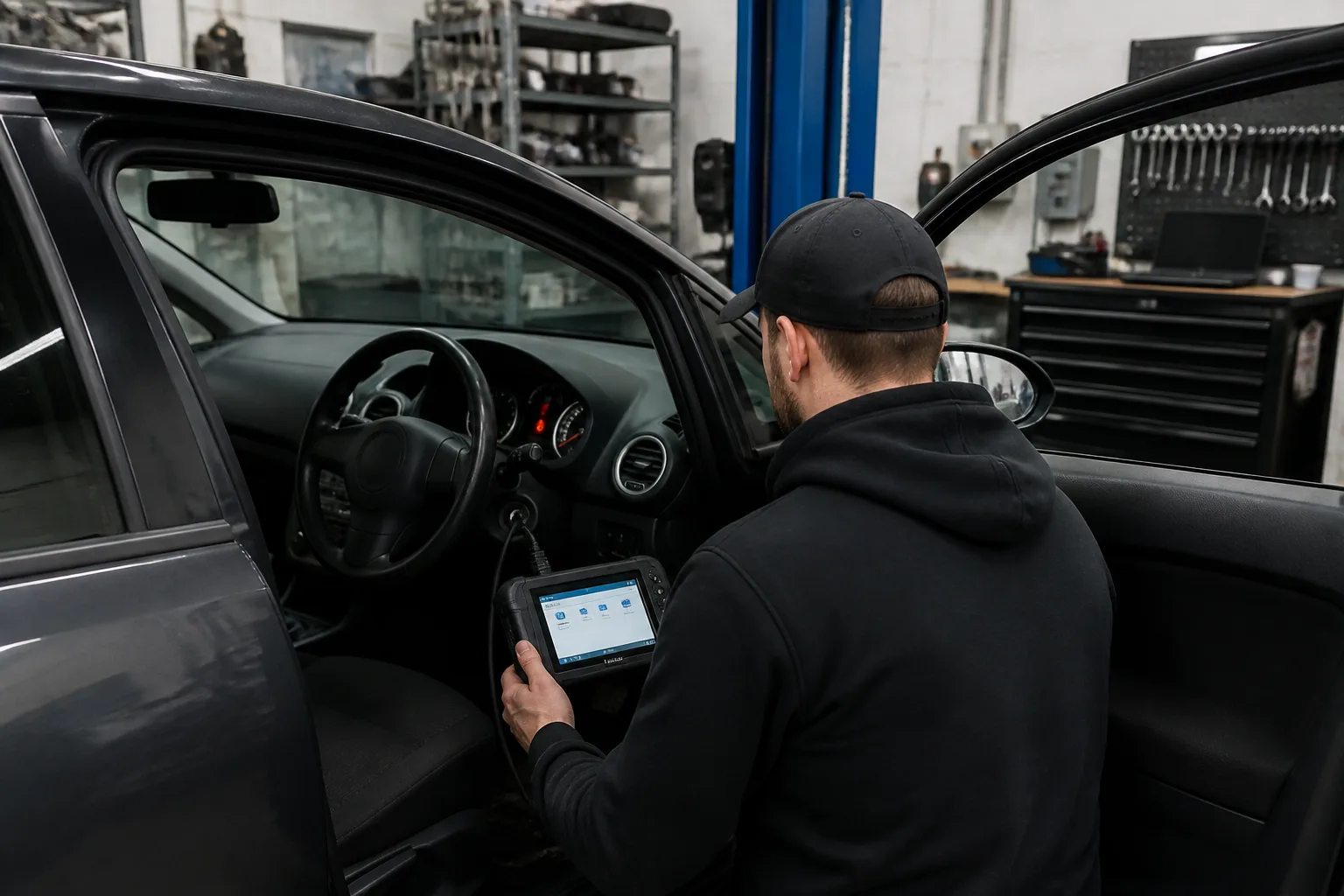
A professional inspection normally starts with the vehicle’s symptoms and warning-light history, followed by checks appropriate to the system involved. Diagnostic equipment may help identify stored fault information, but a code is not automatically a failed component. It is evidence that must be interpreted alongside physical checks and the vehicle’s behaviour.
For example, a battery warning may require checks of charging voltage, wiring and belt condition. A brake warning may require inspection of fluid level, leaks, pads, discs and the associated warning system. The correct investigation depends on the symbol and the vehicle.
If you are unsure what a red dashboard warning light means, or it remains illuminated after a safe basic check, Ashton’s Garage can inspect the fault and explain the sensible next step. We will not pretend to diagnose a vehicle from a dashboard symbol alone, but a proper assessment can establish whether it is safe to continue using the car and what attention it may need.
In summary
A red dashboard warning light generally means that the vehicle needs prompt attention. Some warnings are simple reminders, but red oil, temperature, brake, battery and steering symbols can relate to faults that make driving unsafe or cause further damage. Stop safely, consult the handbook and avoid continuing if the light remains or the vehicle behaves differently.
Frequently asked questions
Should I stop driving if a red warning light appears?
Usually, you should stop somewhere safe and identify the symbol before continuing. Red oil pressure, overheating, brake, battery or steering warnings may make continued driving unsafe or risk further damage.
Is a red dashboard light always serious?
Not always. A red door or seatbelt light may be a reminder, but it still needs resolving before you drive. The symbol, the vehicle handbook and any changes in how the car feels are all important.
Can low oil cause a red warning light?
It can, but a red oil symbol often relates to oil pressure rather than oil level alone. A low level, leak, sensor fault or lubrication problem are possible, so do not assume topping up is enough.
Why did the red warning light disappear?
Some faults are intermittent or only occur under particular conditions. Note when the light appeared and arrange advice if it returns, especially if the vehicle also showed unusual noise, heat, smells or changes in braking or steering.
Can a garage diagnose a warning light without replacing parts immediately?
A garage can investigate the warning using the vehicle symptoms, physical checks and, where suitable, diagnostic equipment. A stored fault code does not automatically prove that a particular component needs replacing.
Related advice
What Does a Check Engine Fault Code Actually Tell a Mechanic?
A check engine fault code is a useful clue, not a complete diagnosis. Here is what a mechanic can learn from it, what it cannot prove, and why further testing is often needed.
Why Does My Car Idle Roughly?
A rough idle can be caused by anything from an ignition fault or air leak to a fuel, sensor or mechanical problem. Here is what the symptoms may mean and when to arrange a professional inspection.
Why Does My Car Hesitate When Accelerating?
Car hesitation under acceleration can be caused by problems with fuel, ignition, air supply, sensors or the gearbox. Here is what the symptoms may mean and when to arrange a professional inspection.