How Often Should an Oil Filter Be Changed?
Most cars should have their oil filter replaced whenever the engine oil is changed. Find out why the filter matters, what affects the interval and when to ask a garage for advice.
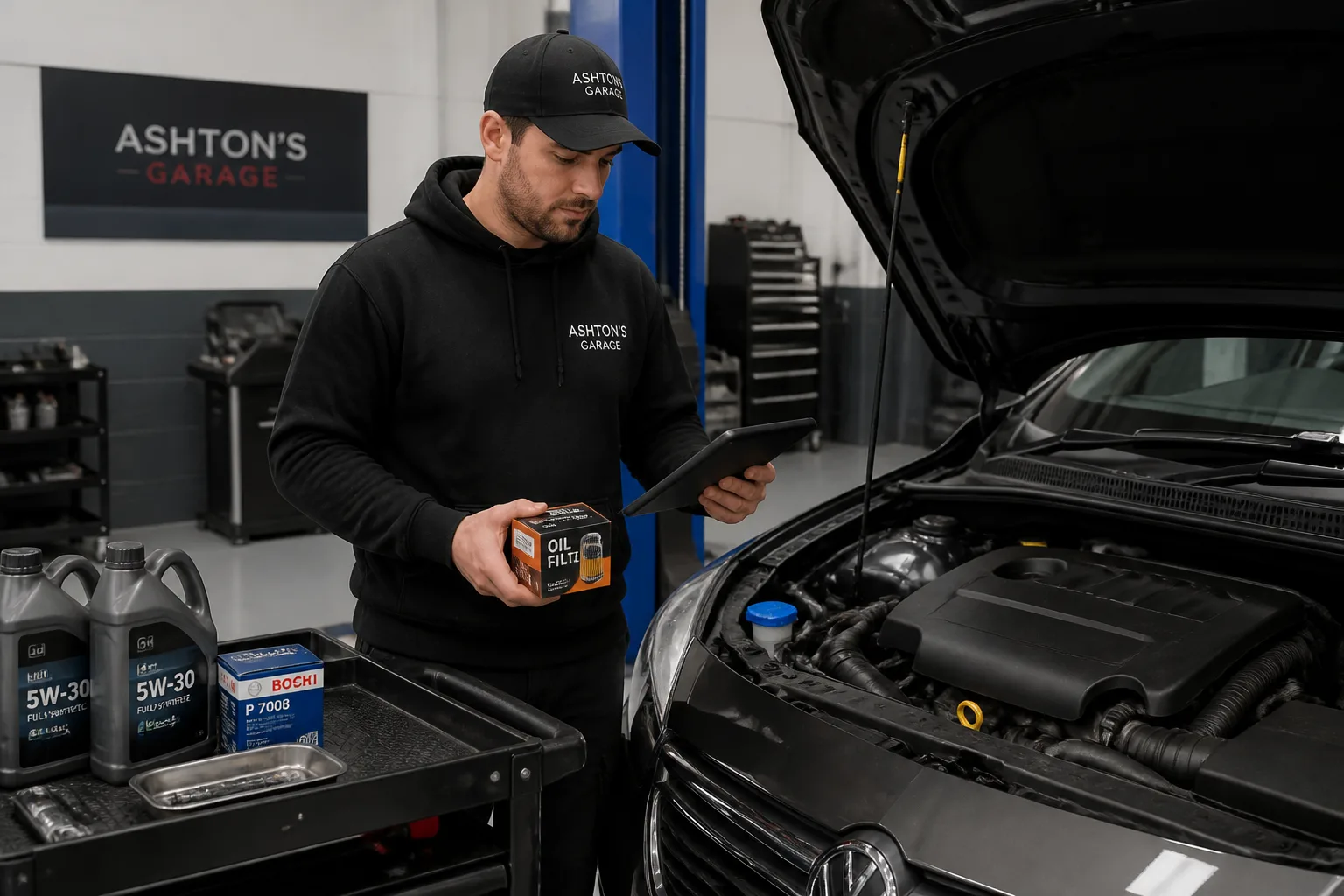
Most cars should have their oil filter changed at the same time as the engine oil. This is normally carried out during a scheduled service, although the exact interval depends on the vehicle, the engine, the type of oil used and how the car is driven.
If you are asking, “how often should an oil filter be changed?”, the safest general answer is to follow the interval in your vehicle handbook and replace the filter whenever the manufacturer specifies an oil change. Fitting a fresh filter with fresh oil helps the engine’s lubrication system work as intended and avoids leaving old contaminants in the system.
What does an oil filter do?
Engine oil lubricates moving components inside the engine, helps carry heat away and holds small particles in suspension. Over time, the oil can collect soot, metal particles and other contaminants created by normal engine operation.
The oil filter is designed to remove much of this debris before the oil reaches sensitive engine components. It contains a filtering material inside a sealed housing. As oil passes through, unwanted particles are trapped rather than being circulated around the engine.
Filters do have a limited capacity. As the filter becomes loaded with contaminants, the flow of oil can be affected. Filters include safety features to help maintain oil flow in certain conditions, but these are not a substitute for regular replacement. An old filter may also contain contaminated oil, so changing the filter while leaving the old oil in place would not be a sensible service approach.
How often should an oil filter be changed?
For most petrol and diesel cars, the oil filter should be changed at every engine oil change. Your handbook or servicing schedule may specify a time period, a mileage interval or whichever comes first. Some vehicles use a fixed service schedule, while others calculate service requirements from driving conditions and usage.
There is no single interval that applies to every car. A small petrol hatchback, a diesel van and a hybrid vehicle may all have different requirements. The correct filter must also match the engine and the manufacturer’s specification.
As a practical rule, check the following:
- the vehicle handbook and servicing schedule
- the date and mileage of the last oil and filter change
- whether the vehicle is on a fixed or variable servicing plan
- the oil grade and specification required for the engine
- whether the car is used in conditions that place extra demands on the engine
If the service history is incomplete, a garage can check the vehicle details and advise what maintenance is appropriate. It is usually better to establish a reliable starting point than to guess what work may or may not have been done previously.
Why the recommended interval can vary
Short journeys and stop-start driving
Frequent short trips can be harder on engine oil than longer journeys. The engine may not spend enough time at its normal operating temperature, and repeated starting can increase moisture and fuel contamination in the oil. Heavy traffic and regular idling can also mean the engine is working for longer than the mileage alone suggests.
High mileage or demanding use
Towing, carrying heavy loads, driving in dusty conditions, extensive motorway use or repeated journeys on steep roads can affect servicing requirements. Some manufacturers provide a separate schedule for severe or demanding usage. If your driving falls into this category, the handbook is particularly important.
Diesel engines and vehicles with exhaust after-treatment
Many modern diesels use systems such as diesel particulate filters to control emissions. Certain driving patterns can affect how these systems operate, and the engine oil must meet the correct specification. Do not assume that any oil labelled for diesel engines is suitable. The required specification should come from the handbook or a trusted garage using the vehicle’s technical information.
Age, condition and service history
An older vehicle, a car with an uncertain history or one that has developed an oil-related concern may need more careful assessment. A filter change is routine maintenance, but it will not repair an underlying issue such as an oil leak, abnormal oil consumption or a mechanical fault.
Should the oil and filter always be changed together?
In normal servicing, yes. The filter and oil work as part of the same lubrication system, so replacing both gives the engine clean oil and a fresh filtering element. Changing only the oil can leave the old filter full of trapped contaminants. Changing only the filter leaves old oil in the engine and does not provide the intended maintenance benefit.
There can be exceptions for unusual maintenance situations, but these should be based on the manufacturer’s instructions or professional advice. The filter also needs to be the correct type and fitted properly. A filter that is unsuitable, damaged or incorrectly sealed can cause leaks or lubrication problems.
What happens if an oil filter is not changed?
A neglected filter may become restricted or less effective at trapping contaminants. Depending on the vehicle and the condition of the oil, this can contribute to poor lubrication and increased wear over time. It does not follow that every overdue filter has caused engine damage, but postponing routine maintenance removes an important part of the engine’s protection.
Warning signs such as an oil pressure warning light, a sudden oil leak, unusual engine noise or a strong smell of burning oil should not be treated simply as a reminder to change the filter. These symptoms can have several possible causes and cannot be diagnosed reliably from a description alone. If an oil pressure warning light appears while driving, stop as soon as it is safe to do so and seek professional advice before continuing, because low oil pressure can lead to serious engine damage.
Can you check whether your oil filter needs changing?
There is no dependable visual check that tells an owner whether the filter material has reached the end of its service life. The most useful basic checks are to look at the service records, confirm the current mileage and check the manufacturer’s maintenance information.
Checking the engine oil level may also be sensible if your handbook explains how to do so safely. This is different from judging the oil filter’s condition. Dark oil alone does not provide a reliable diagnosis, particularly on diesel engines, and topping up oil does not replace an oil and filter service.
A garage can check the correct service interval, oil specification and filter application using the vehicle’s registration or technical details. It can also look for leaks or other issues that may be relevant instead of assuming that a filter change is the complete answer.
How oil filter replacement fits into servicing
An oil and filter change is commonly one part of an interim or full service. Other checks may include fluid levels, brakes, tyres, lights, steering, suspension and the condition of belts or other service items, depending on the vehicle and the service level selected.
Our guide to how often you should service your car explains why time and mileage both matter. You can also read what is included in a full car service and compare an interim service with a full service if you are unsure which appointment is appropriate. Even cars that cover very little mileage still need attention over time, as explained in our guide to servicing a car that is driven very little.
The practical answer
For most vehicles, replace the oil filter whenever the engine oil is changed, following the manufacturer’s time and mileage schedule. Short trips, demanding driving, an uncertain service history or a vehicle-specific requirement may mean the schedule needs closer attention.
Ashton's Garage can check the servicing information for your vehicle, use the correct oil and filter specification, and explain any additional work that appears necessary rather than relying on guesswork. If your oil and filter service is due, you can find more information about vehicle servicing in Salisbury and decide whether professional advice would be useful.
Frequently asked questions
Is an oil filter changed during every service?
It is normally changed whenever the engine oil is changed, but the exact work depends on the vehicle manufacturer’s schedule and the type of service being carried out. Check the service record or ask the garage to confirm what is included.
Can I change the oil without changing the filter?
It may be technically possible, but it is not normally the best maintenance approach. The old filter can still contain trapped contaminants, which is why oil and filter changes are generally carried out together.
Does a dirty-looking oil filter mean the engine is damaged?
Not necessarily. The filter is designed to collect contaminants, so its condition alone does not diagnose engine damage. If you have low oil pressure, unusual noise, an oil leak or another warning sign, arrange a professional inspection.
Do short journeys affect oil filter replacement intervals?
They can affect the condition of engine oil and may count as demanding usage under some manufacturer schedules. Check the handbook for the severe-use interval rather than relying only on mileage.
How do I know which oil filter my car needs?
The correct filter depends on the engine and vehicle specification. A garage can identify the appropriate part using the registration or manufacturer technical information and fit it as part of the correct oil service.
Related advice
What Is Brake Fluid and Why Does It Need Changing?
Brake fluid transfers pressure from the pedal to the brakes, but it can absorb moisture over time. Here is why changing it matters and what warning signs to take seriously.
How Often Should Engine Coolant Be Changed?
Engine coolant does more than stop your car freezing in winter. Find out how often it usually needs changing, why the interval varies, and which warning signs should be checked by a garage.
What Is a Timing Belt and When Does It Need Replacing?
A timing belt keeps your engine’s internal parts moving in sync. Learn what it does, how often it may need replacing and why relying on symptoms alone can be risky.