Do Number Plate Lights Matter for an MOT?
A failed number plate light can affect your MOT result. Find out what the light does, what you can check safely and when a garage should investigate the fault.
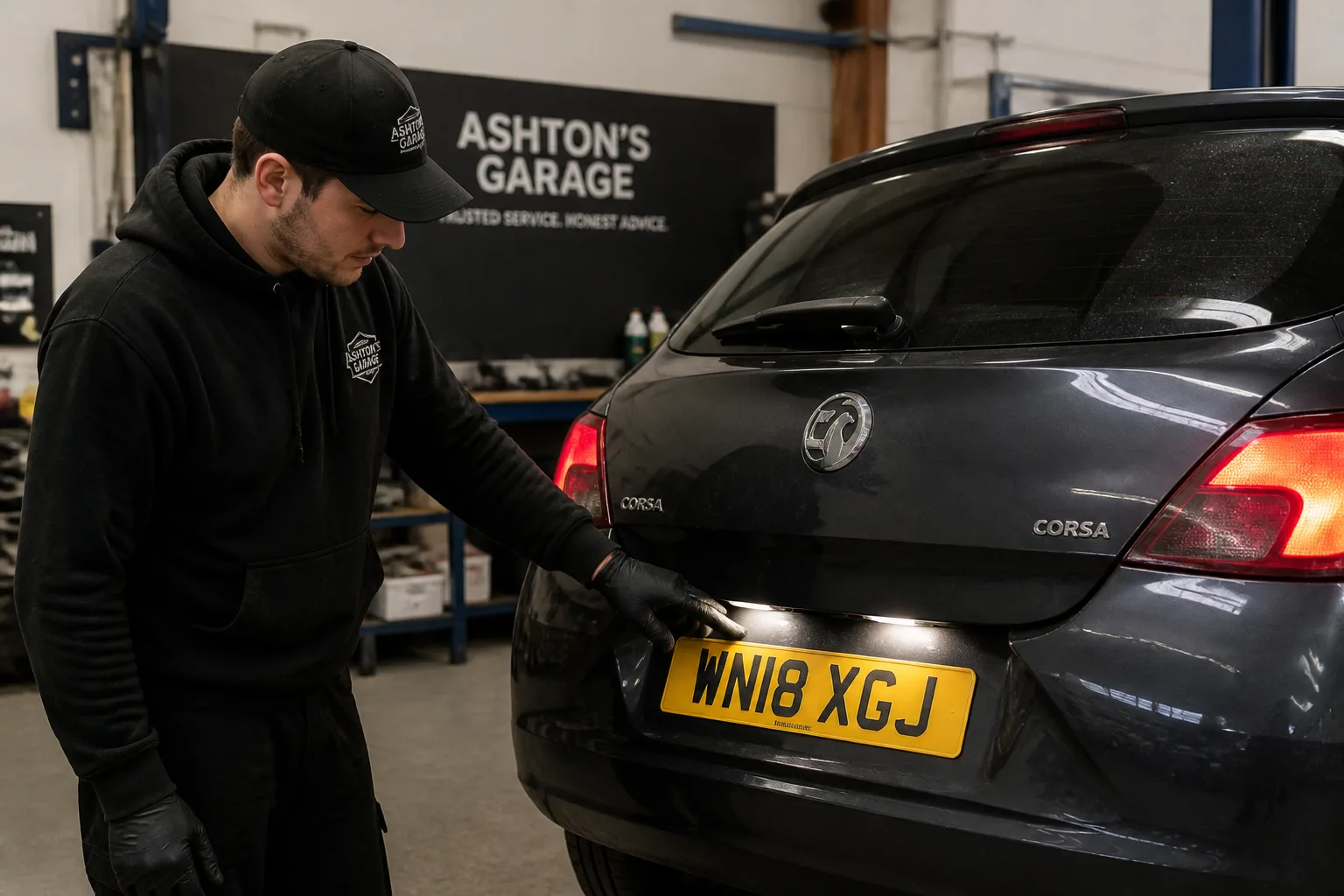
Yes, number plate lights matter for an MOT. They are not fitted simply to make the rear of your car look tidy. Their job is to illuminate the registration plate so it can be read when the vehicle is being used in poor light or at night.
As part of an MOT, the vehicle’s lighting and electrical equipment are checked against the relevant test requirements. A number plate lamp that is not working, is poorly secured or does not illuminate the plate properly can cause a problem with the test. The exact outcome depends on what the tester finds, but it is sensible to treat a failed number plate light as something worth sorting before the MOT rather than assuming it will be ignored.
What does a number plate light do?
Number plate lights are usually fitted above or beside the rear registration plate. They come on with the vehicle’s sidelights or headlamps and cast light across the plate. On some cars there is one lamp, while others use two or more.
The lamp does not need to make the plate brightly visible from a long distance. It does, however, need to provide suitable illumination. A dirty lens, a failed bulb, water inside the lamp or a wiring fault can all reduce or prevent the light from doing its job.
This is why the condition of the registration plate itself can also be relevant. If the plate is heavily obscured by dirt, a cover or damage, the light may not be able to make the characters clear. Number plate lights are only one part of the wider requirement for the registration plate to be visible and readable.
Can a number plate light cause an MOT failure?
It can. If a number plate light is not illuminating the registration plate, the vehicle may fail its MOT. A tester will also consider whether the lamp is securely fitted and whether the surrounding equipment is in an acceptable condition.
It is not possible to guarantee the result from a description alone. For example, a lamp that appears dim might have a simple bulb issue, but it could also point to corrosion in a connector, damaged wiring, a poor earth or water getting into the housing. The tester’s inspection determines how the defect is recorded.
A small exterior lamp can therefore have a bigger effect than many motorists expect. If it is noticed before the test, dealing with it in advance may avoid an unnecessary failure and a second visit.
What can you check before the MOT?
There are a few safe, basic checks you can make without taking the light apart:
- Turn on the sidelights or headlamps and look at the rear of the car in a safe place.
- Check whether the number plate is being illuminated evenly.
- Clean dirt from the plate and the outside of the lamp lens.
- Look for obvious cracks, loose parts or condensation inside the lens.
- Check whether the lamp works intermittently when the lights are switched on.
Do not work around live wiring or dismantle a lamp housing if you are unsure what you are doing. Some modern lamp units use LED modules rather than a straightforward replaceable bulb, and a fault may need proper electrical testing. Your vehicle handbook may explain whether a bulb can be replaced by the owner, but it is not necessary to attempt a repair simply to investigate the problem.
Why does the number plate light stop working?
A blown bulb is one possibility, but it is not the only one. Common causes can include:
- A worn or failed bulb.
- A damaged LED light unit.
- Corrosion or moisture in the lamp holder.
- A loose connector or broken wire in the tailgate or boot lid.
- A fuse or wider lighting circuit fault.
- A cracked lens allowing water into the unit.
If both number plate lights stop working at the same time, that may suggest a shared electrical problem rather than two bulbs failing together. If the light works when the boot or tailgate is moved, wiring in that moving section may need investigation. These are possibilities rather than a remote diagnosis, so the vehicle needs to be checked before anyone can say what repair is required.
Is it safe to drive with a number plate light out?
A number plate light is not usually the same immediate safety concern as a brake light, steering fault or damaged tyre. Even so, it should not be dismissed. The registration plate needs to remain visible, particularly in darkness, and an unlit plate can create a legal or roadworthiness concern as well as an MOT issue.
If the lighting fault is accompanied by other electrical problems, exposed wiring, a burning smell, repeated fuse failures or water entering the vehicle, stop using the affected equipment and arrange a professional inspection. Do not continue driving if you believe the fault affects other essential lights or the vehicle’s wider roadworthiness.
If you are unsure about what an MOT result means, our guide to MOT advisories explains why some findings are recorded as advice rather than an immediate failure. It is also useful to understand that an MOT result does not replace regular maintenance.
Should you replace the bulb before an MOT?
If your car has an accessible, replaceable bulb and you are confident that you can follow the handbook without damaging the fitting, it may be a simple owner maintenance job. However, replacing a bulb is not always the complete answer. If the new bulb does not work, fails again quickly or the housing contains moisture, the underlying fault still needs attention.
A garage can test the circuit rather than guessing. That helps identify whether the issue is the bulb, the fitting, the wiring, a fuse or a control component. It also reduces the risk of fitting an unsuitable part or damaging a sealed lamp unit.
Plan the MOT with the lighting check in mind
Checking the number plate lights a few days before the test gives you time to deal with a straightforward fault. It is also worth checking the brake lights, indicators, headlights and rear fog lamp, provided you can do so safely. These checks will not replace an MOT inspection, but they can highlight obvious problems before the appointment.
If your MOT has already failed because of a number plate light, the next step is to understand the failure item and have the cause corrected. Our guide to driving after an MOT failure covers why the result and the vehicle’s condition both matter. If you are arranging the test in advance, you may also find our advice on how early you can book an MOT useful.
At Ashton’s Garage, we can inspect lighting faults properly and explain what needs attention before your MOT, rather than replacing parts without checking the cause. If your number plate light is out or you are unsure whether the vehicle is ready, you can arrange an MOT with Ashton’s Garage and discuss the issue with the team.
Frequently asked questions
Can a broken number plate light fail an MOT?
Yes. A number plate light that does not illuminate the registration plate properly can cause an MOT failure. The tester will assess the lamp and its condition as part of the inspection.
Can I check my number plate light myself?
You can safely switch on the sidelights or headlamps and check whether the rear registration plate is illuminated. Clean visible dirt from the plate and lens, but avoid dismantling the unit if you are not confident doing so.
What if a new bulb does not fix the number plate light?
The fault could involve the lamp holder, wiring, connector, fuse or a sealed LED unit. Further testing is usually needed to identify the cause rather than repeatedly replacing bulbs.
Is it legal to drive with a number plate light out?
An unlit registration plate can create a visibility, roadworthiness or legal concern, especially in darkness. It is best to have the fault checked promptly, particularly if other lights or electrical systems are also affected.
Related advice
MOT Retest Rules: What Happens After a Failure?
Failed your MOT? Learn what the result means, when a retest may be free or reduced-price, what happens if repairs are needed, and when it may be unsafe to drive.
How to Prepare Your Car for an MOT
A few sensible checks before your MOT can help you spot obvious problems, avoid preventable failures and understand when your car needs professional attention.
What Does a Major MOT Defect Mean?
A major MOT defect means the vehicle has failed because the tester found a problem that could affect safety, the environment or compliance. Here is what the result means and what to do next.