When Should a Fuel Filter Be Changed?
Find out how often a fuel filter should be changed, what symptoms may point to a restriction and why the correct interval depends on your car.
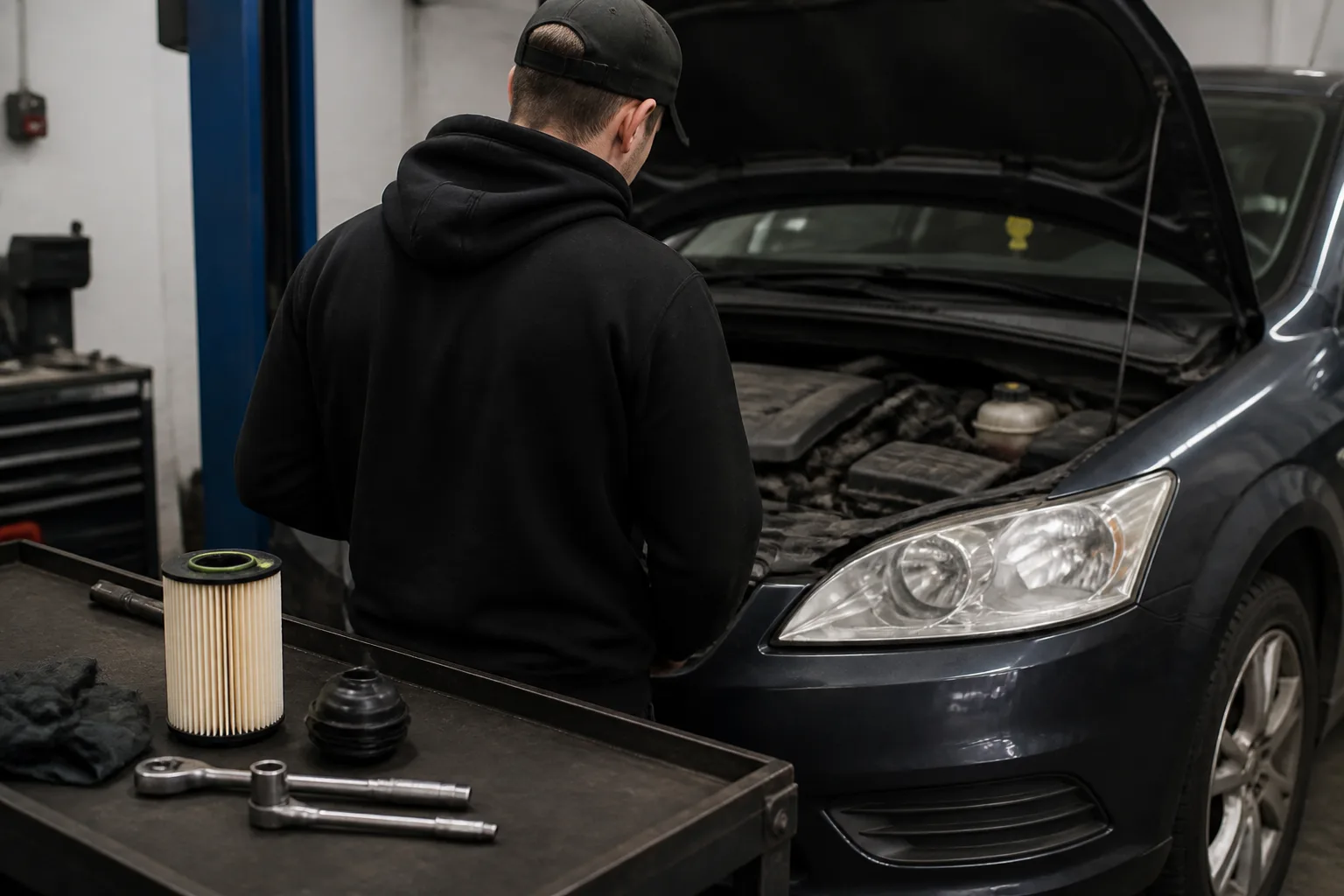
A fuel filter removes dirt, rust, water and other contaminants before fuel reaches the engine. Over time, the filter can become restricted, making it harder for the fuel system to deliver the correct amount of fuel.
So, when should a fuel filter be changed? The safest answer is to follow the service schedule for your specific car, van or engine. Some vehicles have a clearly stated replacement interval, while others use a filter designed to last for many years or incorporate it into the fuel tank and pump assembly. Diesel vehicles often have more frequent fuel filter requirements than petrol cars because diesel fuel systems can be particularly sensitive to contamination and water.
How often should a fuel filter be changed?
There is no single interval that applies to every vehicle. The recommended timing can depend on the make and model, engine type, age of the vehicle and the design of the fuel system.
On some cars, the fuel filter is replaced as part of a scheduled interim or full service. On others, the manufacturer may specify a time or mileage interval, such as a particular number of years or thousands of miles. Some modern petrol vehicles have a filter inside the fuel tank, with no routine replacement listed in the normal service schedule.
It is worth checking the handbook, service schedule or manufacturer maintenance information rather than relying on a general rule found online. If you are unsure which service your car is due, our guide to how often you should service your car explains why time matters as well as mileage.
Why does a fuel filter need changing?
Fuel can contain small particles and, in some circumstances, traces of water or corrosion from storage and delivery systems. The filter is there to trap these contaminants before they reach sensitive components such as injectors, the fuel pump or the high-pressure fuel system used by many modern diesel engines.
As the filter collects debris, its filtering material can become restricted. The engine may then struggle to receive enough fuel, particularly when it is working hard or when the vehicle is accelerating. A filter that is overdue for replacement may also place extra demand on the fuel pump.
Changing the filter at the correct service interval is preventative maintenance. It does not necessarily mean that a car has a fault, and replacing it should not be treated as a guaranteed cure for every engine or performance problem.
What are the signs of a blocked or restricted fuel filter?
A restricted fuel filter can produce symptoms that overlap with several other faults. Possible signs include:
- hesitation or a lack of power, particularly under acceleration
- difficulty starting, especially after the vehicle has been parked
- an engine that cuts out or struggles to keep running
- uneven running or misfiring
- poor performance when climbing hills or carrying a heavy load
- an engine warning light, depending on the vehicle and the fault detected
These symptoms are not proof that the fuel filter is blocked. Similar problems can be caused by a weak battery, faulty sensors, ignition faults on petrol engines, air leaks, injector problems, a failing fuel pump or issues with the engine management system. Modern diesel vehicles can also be affected by problems elsewhere in the fuel or emissions system.
That is why it is usually better to have the cause assessed rather than simply fitting a filter and assuming the problem has been solved.
Do petrol and diesel cars use different fuel filters?
Petrol and diesel engines both use fuel filters, but the filter design and service requirements can differ. Diesel fuel systems commonly use a filter that also helps separate water from the fuel. This is important because water can damage high-pressure diesel components.
Diesel filters may also need careful priming after replacement so that air does not remain in the fuel system. The exact procedure varies between vehicles. Some systems can be damaged by incorrect handling, particularly where high-pressure fuel equipment is involved.
Petrol vehicles also vary widely. Some have an accessible filter fitted in the fuel line, while others have the filter integrated with the in-tank fuel pump or sender unit. Access and replacement requirements should therefore be confirmed for the individual car.
Can a fuel filter last the life of the car?
Some manufacturers describe an in-tank fuel filter as a long-life or non-service item. That does not mean the component can never become restricted or that a fuel system fault should be ignored. It means the manufacturer does not necessarily expect it to be replaced at regular service intervals.
If a vehicle has starting, running or power-loss symptoms, the fuel filter may be one possibility, but it should be considered alongside the rest of the fuel and engine systems. A diagnostic assessment can help identify whether fuel pressure, electrical control, air supply or another issue is involved.
Should the fuel filter be changed during a service?
It should be changed when the manufacturer's service schedule calls for it, or when inspection and testing indicate that it is contaminated, damaged or restricted. It may be included in a particular type of service, but it is not automatically part of every service on every car.
When comparing service options, check what is included for your exact vehicle. Our explanation of what is included in a full car service can help, while this guide to interim and full services explains why the checks and replacement items can differ.
It is also worth mentioning the fuel filter if the car has been filled with contaminated fuel, has been stored for a long period or has developed a problem soon after refuelling. Keep any relevant warning messages and note when the symptoms occur, as that information can help with diagnosis.
When is it unsafe to continue driving?
A suspected fuel filter problem is not always an immediate roadworthiness issue, but an engine that loses power or cuts out can create a serious risk in traffic. If the car is stalling, repeatedly losing power, struggling to accelerate into traffic or showing other severe symptoms, avoid continuing to drive it until it has been checked.
If the engine stops while you are moving, steer to a safe place when possible and arrange appropriate assistance. Do not work on fuel system components at the roadside. Fuel may be flammable, and diesel high-pressure systems must be treated with particular care.
How can a garage check the problem?
A garage can check the vehicle's service history and manufacturer requirements, inspect the relevant fuel system and carry out appropriate diagnostic tests. Depending on the vehicle, this may include checking fuel pressure, fault codes, signs of water or contamination, fuel delivery and the condition of related components.
The aim is to establish whether the filter is due for routine replacement, is visibly contaminated or is only one part of a wider fault. If your fuel filter is due according to the service schedule, or your car is showing possible fuel-delivery symptoms, Ashton's Garage can advise on the appropriate servicing and inspection without assuming the cause in advance.
In summary
The right time to change a fuel filter depends on the vehicle manufacturer's schedule and the design of its fuel system. Diesel filters often have more specific maintenance requirements, while some petrol filters are built into the tank and are not listed as routine service items.
Difficulty starting, hesitation, loss of power and stalling can be associated with a restricted filter, but they can also point to other faults. Follow the service schedule, do not ignore serious running problems and arrange a professional inspection if the vehicle is losing power or cannot be relied upon to keep running safely.
Frequently asked questions
How do I know if my fuel filter needs changing?
Check the manufacturer's service schedule first. Difficulty starting, hesitation, loss of power or stalling can be associated with a restricted filter, but these symptoms have several possible causes and need proper assessment.
Is a fuel filter included in a full service?
It may be included if the vehicle's service schedule calls for replacement at that interval. The exact items depend on the make, model, engine and mileage, so the service schedule should be checked.
Do diesel fuel filters need changing more often than petrol filters?
They often have more specific replacement intervals because diesel fuel systems can be sensitive to water and contamination. The correct interval still depends on the individual vehicle.
Can I drive with a blocked fuel filter?
If the vehicle is running normally, arrange an inspection rather than ignoring the issue. Do not continue driving if it is stalling, repeatedly losing power or struggling to accelerate safely, as an unexpected loss of power can be hazardous.
Related advice
What Is Brake Fluid and Why Does It Need Changing?
Brake fluid transfers pressure from the pedal to the brakes, but it can absorb moisture over time. Here is why changing it matters and what warning signs to take seriously.
How Often Should Engine Coolant Be Changed?
Engine coolant does more than stop your car freezing in winter. Find out how often it usually needs changing, why the interval varies, and which warning signs should be checked by a garage.
What Is a Timing Belt and When Does It Need Replacing?
A timing belt keeps your engine’s internal parts moving in sync. Learn what it does, how often it may need replacing and why relying on symptoms alone can be risky.