What Is Brake Fluid and Why Does It Need Changing?
Brake fluid transfers pressure from the pedal to the brakes, but it can absorb moisture over time. Here is why changing it matters and what warning signs to take seriously.
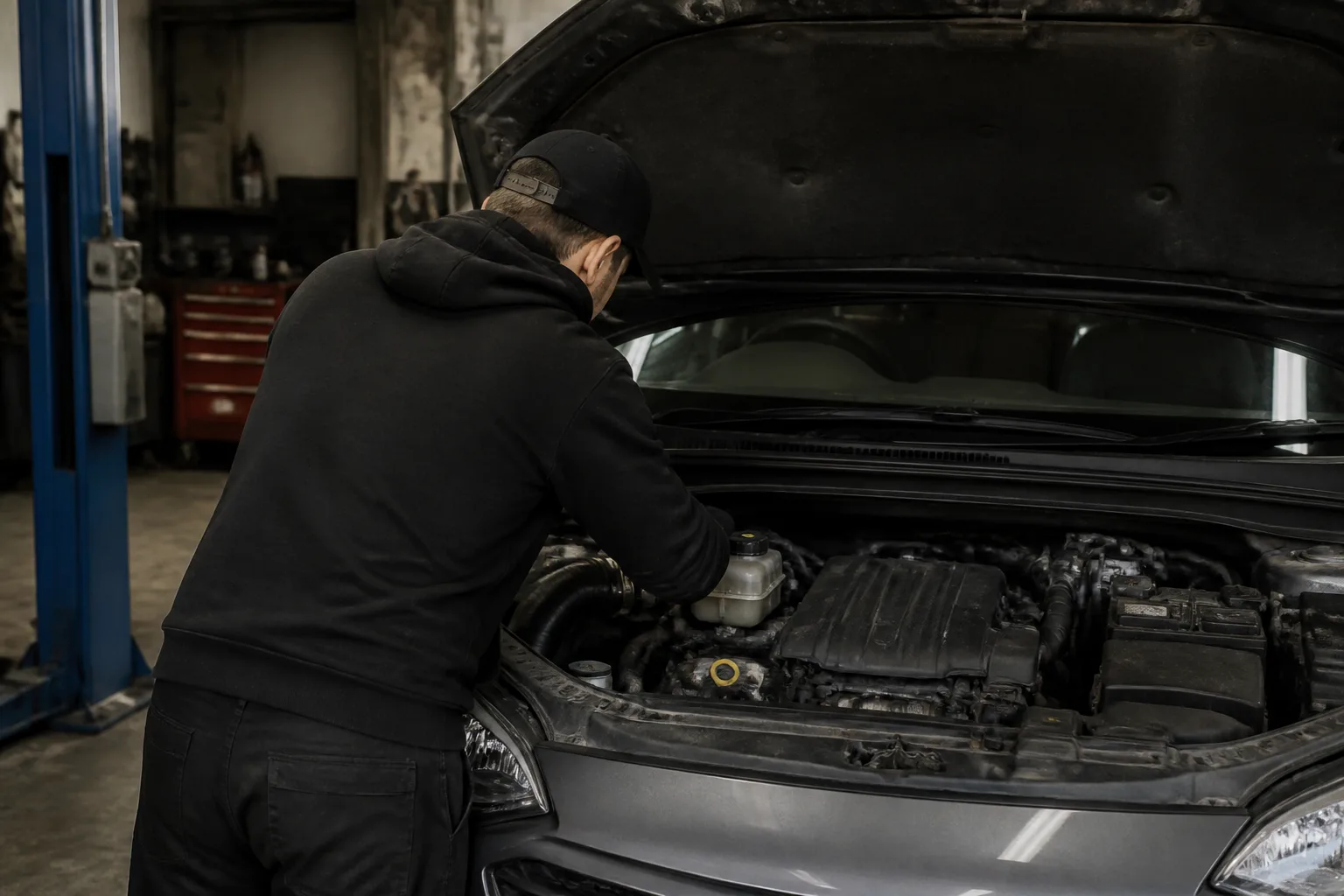
Brake fluid is a hydraulic fluid that transfers the pressure you apply to the brake pedal to the braking components at each wheel. In simple terms, it helps turn movement at your foot into the force that slows and stops the car.
Unlike engine oil, brake fluid is not mainly there to lubricate moving parts. Its important job is to transmit pressure reliably through the brake system. Because braking is safety-critical, the fluid needs to remain in good condition and free from air or excessive contamination.
Brake fluid does not usually need changing as frequently as engine oil, but it does not last indefinitely. It gradually absorbs moisture from the surrounding air, even when there is no obvious leak. This can reduce its performance and may affect how the brakes behave, particularly when they become hot.
How does brake fluid work?
Most modern cars use a hydraulic braking system. When you press the brake pedal, the master cylinder creates pressure in the brake fluid. That pressure travels through the brake pipes and flexible hoses to the callipers or wheel cylinders. The braking components then press pads or shoes against the discs or drums.
Brake fluid is suitable for this job because it is designed to carry pressure through the system without compressing significantly. Air behaves differently. It can be compressed, which is why air in the system may make the pedal feel soft or spongy.
Brake fluid also needs to cope with heat generated during braking. Its boiling point is therefore important. If fluid containing too much moisture becomes very hot, it can boil and create vapour bubbles. Vapour is compressible, so the pedal may feel less firm and braking performance may be affected.
Why does brake fluid need changing?
It absorbs moisture over time
Many common brake fluids are hygroscopic, which means they naturally absorb water from the atmosphere. Moisture can enter through microscopic gaps in seals, the fluid reservoir and the rubber brake hoses. This happens gradually as the car ages, whether it is driven every day or only occasionally.
As the water content rises, the fluid’s boiling point falls. The fluid may still look reasonably clean in the reservoir, but appearance alone is not a reliable way to judge its condition.
Heat can reduce its safety margin
Normal braking creates heat, and repeated heavy braking creates more. This might happen on long descents, during towing, or in demanding traffic. Old, moisture-affected fluid has less reserve before it reaches a temperature where vapour could form.
That does not mean an older fluid will suddenly fail every time the brakes get warm. It means its ability to cope with heat has reduced, and the margin for safe, consistent braking may be smaller.
It can contribute to corrosion
Moisture in the braking system can encourage internal corrosion in components such as brake pipes, callipers and the master cylinder. Corrosion is not always visible from outside, and it may develop alongside other age-related issues. Replacing the fluid at the interval recommended for the vehicle helps remove much of the old contaminated fluid and supports the wider condition of the system.
How often should brake fluid be changed?
There is no single interval that applies to every car. The correct recommendation depends on the manufacturer, the model, the type of fluid and the way the vehicle is used. Some manufacturers specify a time-based interval, while others include brake fluid replacement within particular service schedules.
Check the vehicle handbook or service schedule rather than relying on a general rule. If the service history is incomplete and there is no clear record of a previous change, it is sensible to ask a garage to assess the fluid and advise on the manufacturer’s recommended schedule.
Brake fluid replacement is one part of routine maintenance, alongside other checks covered in guidance such as how often your car should be serviced and what is included in a full car service. A car that covers low mileage still ages, so infrequent use does not automatically mean the fluid remains fresh.
What are the signs of a brake fluid problem?
Brake fluid condition cannot be diagnosed reliably from one symptom alone. A change in pedal feel, for example, may have several possible causes. These can include air in the system, a hydraulic leak, worn brake components or another fault that needs proper inspection.
Warning signs that should not be ignored include:
- A brake pedal that feels soft, spongy or noticeably different from usual.
- A pedal that gradually sinks while pressure is maintained.
- A brake warning light on the dashboard.
- Visible fluid around the wheels, under the bonnet or beneath the vehicle.
- A sudden change in braking performance or the distance needed to stop.
Brake fluid is usually pale yellow to amber when fresh, although colour varies by type and age. Dark or dirty-looking fluid may indicate that it needs attention, but a visual check cannot confirm its boiling point or water content.
Can you keep driving if the brake pedal feels different?
Braking concerns should be treated cautiously. If the pedal is soft, sinks, needs pumping, or the car is not stopping as it normally does, do not assume that a fluid change alone will solve the problem. There may be a leak or another fault, and continued driving could be unsafe.
Stop in a safe place and arrange professional assistance if braking performance has changed significantly. A garage can inspect the system, identify the likely cause and check whether the vehicle is safe to drive. If the warning is limited to a service reminder with normal pedal feel, arrange an inspection or fluid change in line with the service schedule, but do not ignore it indefinitely.
What happens during a brake fluid change?
A brake fluid change involves removing the old fluid from the hydraulic system and replacing it with the correct specification. The system is then checked to ensure that fresh fluid has reached the relevant parts and that air has not been left inside.
The fluid specification matters. Different vehicles require different types, and using an unsuitable fluid can damage seals or affect braking performance. A technician should also look for signs of leaks, damaged hoses, corrosion and wear elsewhere in the braking system rather than treating the fluid in isolation.
This is not a repair to carry out casually at home. Brake systems are safety-critical, and an incorrectly completed fluid change can leave air in the system or introduce contamination. If your vehicle is due a change, Ashton’s Garage can check the service requirement and braking system as part of appropriate maintenance.
Brake fluid and routine servicing
Keeping a record of brake fluid changes makes it easier to follow the vehicle’s maintenance plan and avoid guessing later. It is also worth telling the garage about any unusual pedal feel, warning lights or changes in braking behaviour, even if they seem intermittent.
Brake fluid is easy to overlook because it is not changed at every service and it may not show obvious signs of deterioration. Nevertheless, it is part of the system that allows the brake pedal to do its job. Following the manufacturer’s schedule and investigating changes promptly is a straightforward way to support safe, predictable braking.
For related guidance, you may also find our explanation of interim and full services useful, particularly if you are checking what maintenance your car is due.
Frequently asked questions
Is brake fluid the same as engine oil?
No. Engine oil lubricates and helps protect the engine, while brake fluid transfers hydraulic pressure from the brake pedal to the braking components. They have different properties and must never be substituted for one another.
Does brake fluid go off if a car is driven very little?
It can still absorb moisture over time, even when the car covers low mileage. Time, storage conditions and the vehicle manufacturer’s schedule can therefore matter as well as distance travelled.
Can I tell if brake fluid needs changing by looking at it?
Not reliably. Colour or appearance may provide a reason for further investigation, but it cannot confirm the fluid’s moisture content, boiling point or the condition of the rest of the braking system.
What should I do if my brake pedal feels spongy?
Treat a noticeably soft or spongy pedal as a potential safety concern. Stop somewhere safe if possible and arrange a professional inspection, particularly if braking performance has changed or a warning light is showing.
Related advice
How Often Should Engine Coolant Be Changed?
Engine coolant does more than stop your car freezing in winter. Find out how often it usually needs changing, why the interval varies, and which warning signs should be checked by a garage.
What Is a Timing Belt and When Does It Need Replacing?
A timing belt keeps your engine’s internal parts moving in sync. Learn what it does, how often it may need replacing and why relying on symptoms alone can be risky.
Timing Belt vs Timing Chain: What Is the Difference?
Timing belts and timing chains both keep an engine's moving parts working in the correct sequence, but they differ in construction, maintenance and possible failure risks. Here is what UK motorists need to know.