What Does the Oil Pressure Warning Light Mean?
The oil pressure warning light needs prompt attention. Learn what the red oil can symbol means, what you can safely check and when to stop driving.
If a red oil can symbol appears on your dashboard, it is important to take it seriously. The oil pressure warning light usually means the engine may not be receiving enough oil pressure to lubricate its moving parts properly.
That does not always mean the engine is already damaged, but continuing to drive with low oil pressure can cause severe and expensive damage very quickly. The sensible response is to stop safely, switch off the engine and investigate only the basic checks that are safe for you to carry out.
What does the oil pressure warning light mean?
The warning light is generally connected to an oil pressure sensor or switch. It monitors whether the engine is building and maintaining enough pressure to circulate oil through areas such as the crankshaft, bearings, camshaft and other moving components.
It is worth understanding the difference between oil pressure and oil level. A dipstick shows how much oil is in the engine. The warning light is primarily concerned with whether the oil is being circulated at sufficient pressure. An engine can sometimes have an acceptable oil level but still develop an oil pressure problem.
In many cars, the light is red and shaped like an oil can, sometimes with a drip underneath. It is normal for it to illuminate briefly when the ignition is switched on before the engine starts. It should go out shortly after the engine is running. If it stays on, comes on while driving or repeatedly flickers, it needs attention.
What should you do if the oil warning light comes on?
If the light appears while you are driving, reduce speed and find a safe place to stop as soon as possible. Switch off the engine and do not continue driving simply because the car still appears to be running normally. An engine can suffer internal damage before obvious noises or other symptoms develop.
Once the vehicle is safely parked and the engine has had time to cool, you may check the oil level if you are comfortable doing so. Park on reasonably level ground, use the dipstick in accordance with the vehicle handbook and make sure the reading is between the marked limits. If the level is low, the correct oil may be added carefully, provided you know the specification required for that engine.
Adding oil is not a complete diagnosis. If the warning light remains on after the level is corrected, do not restart the engine. The vehicle may have a leak, a failed oil pump, a blocked oil pick-up, an electrical fault or an internal engine problem. Arrange professional assistance instead.
Common reasons for an oil pressure warning light
Low engine oil level
An oil leak, neglected servicing or oil consumption can leave the engine with too little oil. When the level becomes very low, the oil pump may not be able to circulate oil reliably, particularly when the car is cornering, braking or accelerating.
Look for fresh oil beneath the vehicle or around the engine bay, but do not climb underneath a car supported only by a jack. A small mark on the ground does not tell you how serious the leak is, and some leaks only occur when the engine is running.
Oil leak or damaged component
A leaking sump, filter seal, drain plug, oil cooler or engine gasket can reduce the amount of oil available. Damage underneath the vehicle can also affect the sump or oil pick-up. These faults require proper inspection rather than guesswork.
Oil pump or oil circulation fault
The oil pump creates the pressure needed to move oil around the engine. A worn pump, blocked pick-up or restriction in the lubrication system can result in low pressure even when the dipstick reading looks satisfactory.
Incorrect, degraded or contaminated oil
Oil that is the wrong specification or viscosity for the engine may not provide the expected protection. Oil can also become contaminated or diluted, depending on the fault and the vehicle's use. The correct servicing requirements should be taken from the vehicle handbook or manufacturer information.
Faulty pressure sensor or wiring
Sometimes the warning is caused by the sensor, switch or related wiring rather than a genuine loss of oil pressure. However, it is unsafe to assume that this is the explanation before the actual pressure has been checked. A garage can test the system and measure pressure with suitable equipment.
Engine wear
Internal wear can allow oil pressure to fall as oil escapes through larger clearances than intended. This is more likely to be considered on a high-mileage engine, but mileage alone cannot confirm the cause. A warning light requires testing, not a remote diagnosis.
Can you drive with the oil pressure warning light on?
Driving should be avoided when the red oil pressure warning light stays on or appears while the engine is running. Stop in a safe place, switch off the engine and seek professional advice or recovery assistance.
A light that flickers briefly may still indicate a developing fault. It can be affected by engine speed, oil temperature, cornering or the oil level, so it should not be dismissed as a minor electrical nuisance. If the light is accompanied by tapping, knocking, rattling, smoke, a burning-oil smell or visible leakage, the need to stop is even more urgent.
If the light comes on only with the ignition switched on and goes out promptly after starting, that is normally part of the dashboard self-check. Always follow the instructions for your particular vehicle, as warning symbols and messages can vary.
Oil pressure warning light versus oil level warning light
Some newer vehicles have separate warnings for oil level, oil pressure and oil service requirements. A yellow or amber message may indicate that the oil level should be checked, while a red oil can warning generally demands more immediate action. The colour and wording are not identical across all manufacturers.
Check the owner's handbook for the exact symbol and message. If you are uncertain which warning has appeared, treat a red oil symbol as serious and avoid driving until the vehicle has been assessed.
How a garage investigates the problem
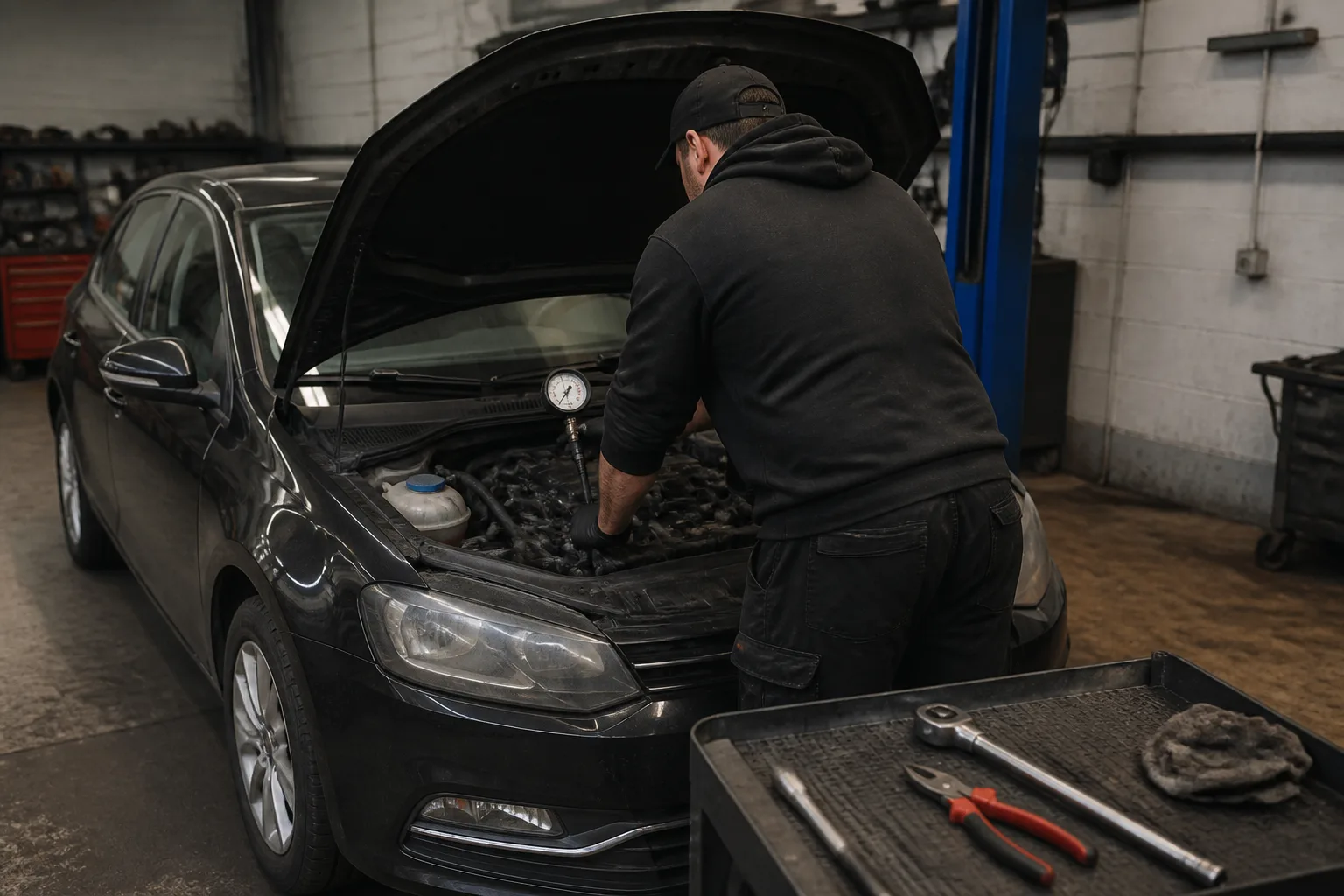
A technician will usually begin by checking the oil level, looking for evidence of leaks and confirming the warning circuit. If necessary, the engine's oil pressure can be measured with a test gauge rather than relying only on the dashboard sensor.
Further checks may include examining the oil and filter, inspecting the sump and oil pick-up, and considering the vehicle's service history and symptoms. The exact process depends on the vehicle and what the initial checks show. Avoid repeatedly starting the engine to see whether the light goes out, as that may worsen damage if pressure is genuinely low.
If your oil pressure warning light has appeared, Ashton's Garage can inspect the fault and advise on the safest next step. You can also read our guides to what the engine management light means and whether you can drive with an engine warning light on for help distinguishing other dashboard warnings.
Key points to remember
- A red oil pressure light concerns oil circulation pressure, not simply the amount of oil in the engine.
- Stop safely and switch off the engine if the light stays on or appears while driving.
- Checking and topping up the oil may be appropriate if it is safe, but it does not prove the fault is fixed.
- Do not continue driving if the light remains on, returns or is accompanied by unusual engine noises or an oil leak.
- A professional inspection is the safest way to distinguish a sensor fault from a genuine lubrication problem.
Frequently asked questions
Is it normal for the oil pressure light to come on before starting the engine?
Usually, yes. The light commonly appears when the ignition is switched on and should go out shortly after the engine starts. If it stays on or returns while the engine is running, stop safely and seek advice.
Will adding oil turn off the oil pressure warning light?
It may do so if the problem was caused by a low oil level, but there is no guarantee. A leak, pump fault, blocked oil pick-up, sensor problem or internal wear can also cause the warning. If the light remains on, do not continue driving.
What does a flickering oil pressure light mean?
Flickering can indicate a low oil level, a pressure problem that changes with engine speed or temperature, or a fault with the sensor or wiring. It should be treated as a warning requiring inspection rather than ignored.
Can an oil pressure warning light be caused by a faulty sensor?
Yes, a faulty sensor or wiring can trigger the warning. However, the vehicle should first be checked to confirm that the engine really is producing safe oil pressure before the sensor is blamed.
Related advice
What Does the Engine Management Light Mean?
The engine management light can point to anything from a loose fuel cap to an engine or emissions fault. Learn what the warning light means, when it is safe to continue and when your car needs professional attention.
Why Is My ABS Warning Light On?
An ABS warning light can have several causes, from a wheel-speed sensor fault to a problem with the braking system. Here is what the light means, what you should check and when to stop driving.
Can You Drive With the Engine Warning Light On?
A steady engine warning light may not mean you need to stop immediately, but a flashing light, loss of power, smoke or unusual noises can make continued driving unsafe. Here is how to judge the risk and what to do next.