What Does a Cabin or Pollen Filter Do?
A cabin or pollen filter helps keep dust, pollen and traffic fumes out of your car's interior. Find out what it does, when it may need changing and how it affects ventilation and demisting.
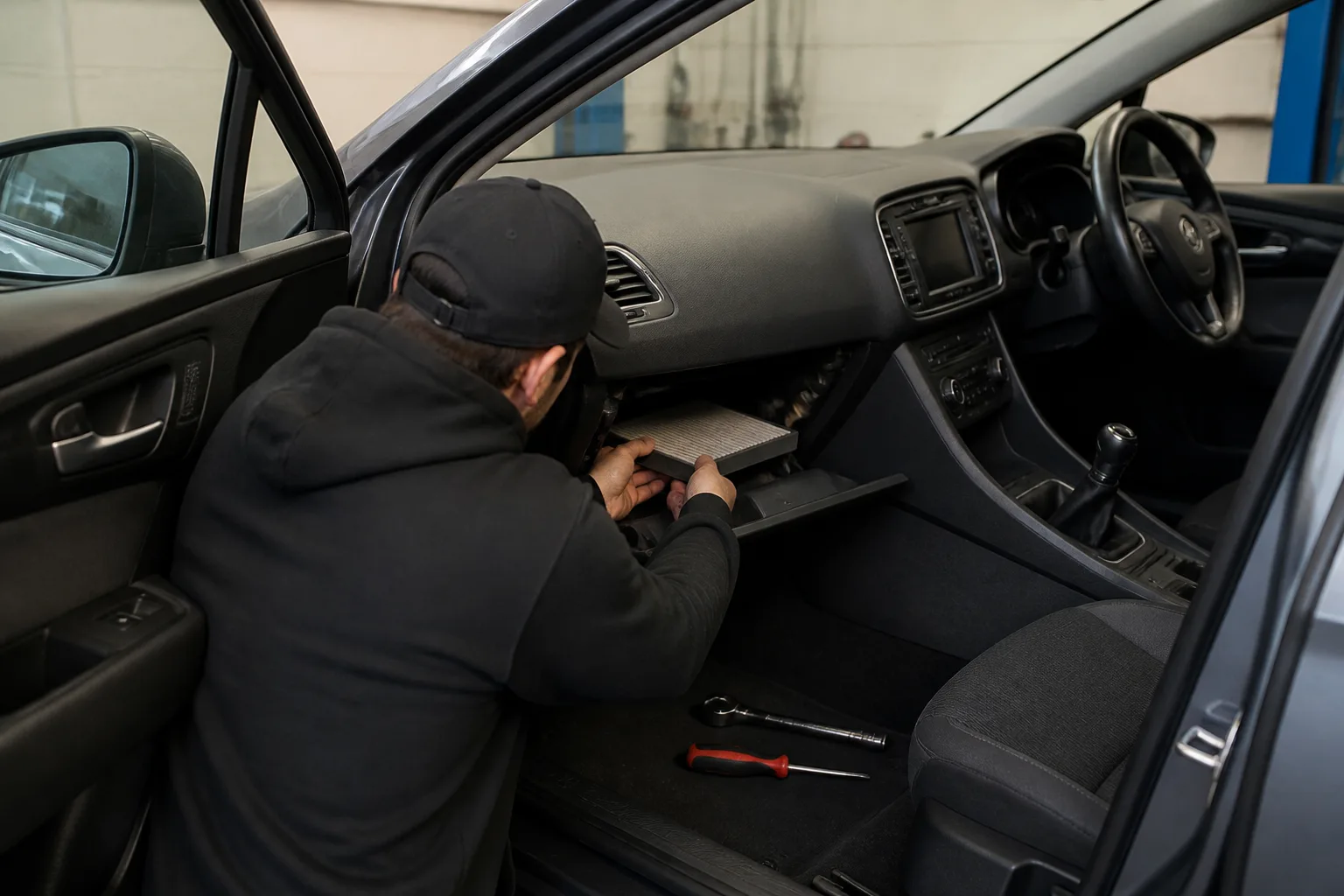
If you have heard a garage mention a cabin filter or pollen filter, you may reasonably wonder what it does and whether it is an important service item. In simple terms, this filter cleans the air being drawn into the passenger compartment through the heating, ventilation and air conditioning system.
It is a small part, but it can make a noticeable difference to the air inside the car. It may also affect how well air moves through the vents and how effectively the screen clears. Like other filters, it gradually collects material and eventually needs replacing.
What is a cabin or pollen filter?
A cabin filter sits in the ventilation system, usually somewhere between the outside air intake and the heater or air conditioning unit. Its job is to trap unwanted particles before that air reaches the cabin.
Depending on the vehicle and the type of filter fitted, it may collect:
- pollen and other plant particles
- dust and road debris
- soot and fine particles from traffic
- leaves and small airborne material
Some filters also contain activated carbon, sometimes called charcoal. These can help reduce certain smells and some gaseous pollutants, although they do not remove every odour or make the cabin completely free from outside pollution.
The names are often used interchangeably. A pollen filter is generally a type of cabin filter, rather than a separate system. The correct specification depends on the vehicle and the manufacturer's design.
Why does the filter matter?
A clean cabin filter helps the ventilation system deliver air into the car without unnecessary restriction. It can make the heater, air conditioning and fan feel more effective, particularly when the system is drawing in outside air.
It also helps improve the general comfort of the cabin. Drivers and passengers may notice less dust around the dashboard and fewer airborne particles coming through the vents. This can be particularly useful for people who are sensitive to pollen, although a cabin filter should not be treated as medical protection or a substitute for managing an allergy.
The filter is also relevant when you need to clear condensation from the windows. Demisting depends on several things, including the condition of the ventilation system, the temperature, humidity and whether the air conditioning is operating. A blocked filter can restrict airflow, which may make the system less effective, but misting can have other causes as well.
What happens when a cabin filter becomes dirty?
Over time, the filter material fills with the particles it has trapped. If it becomes heavily loaded, air may not pass through as freely. Possible signs include:
- weaker airflow from the vents even when the fan setting is unchanged
- the fan sounding louder than usual
- an increase in dust or a stale smell from the ventilation system
- the air conditioning or heater seeming less effective because airflow is restricted
- windows taking longer to clear when the ventilation system is being used
These symptoms are not proof that the filter is the cause. A ventilation fault, blocked air intake, damp interior, failing blower motor or air conditioning problem can produce similar results. That is why replacing a filter without checking the wider system may not resolve every complaint.
How often should a cabin filter be changed?
There is no single replacement interval that applies to every car. The recommended timing varies by make, model, engine, filter type and the conditions in which the vehicle is used. Your handbook or service schedule should give the manufacturer's guidance.
Cars regularly driven through dusty areas, on rural lanes or where there is a lot of leaf debris may load the filter more quickly. Frequent short journeys and heavy urban traffic can also expose the filter to more airborne contaminants. A vehicle that is used only occasionally still has a filter that can become damp, dirty or unpleasant over time.
A cabin filter is often checked or replaced during servicing, but this is not guaranteed to be part of every service level. If you are unsure what is included in your next appointment, it is worth asking the garage to check the service schedule for your particular vehicle. Our guide to how often you should service your car explains why time and mileage can both matter.
Is the cabin filter the same as the engine air filter?
No. The two filters serve different purposes.
The engine air filter cleans the air entering the engine. The cabin filter cleans air entering the passenger compartment through the ventilation system. They are usually located in different parts of the vehicle and have different specifications.
A dirty engine air filter can be relevant to engine operation, while a dirty cabin filter is more likely to affect cabin airflow, comfort and ventilation performance. Neither filter should be removed or replaced with an unsuitable material. The correct part needs to fit properly so that air does not bypass the filter.
Can you change a pollen filter yourself?
On some cars, the filter is accessible behind the glovebox or beneath a trim panel, so replacement may appear straightforward. On others, access is more awkward and the location differs considerably. Removing interior panels incorrectly can damage clips, wiring or trim, and fitting the filter in the wrong direction can reduce its effectiveness.
For that reason, a basic owner check is usually limited to looking at the vehicle handbook and asking a suitable garage to confirm the correct filter and replacement procedure. There is no need to dismantle the dashboard or ventilation system as a routine check.
If you are arranging wider maintenance, our explanation of what is included in a full car service may help you understand how filters and other service items are assessed. The distinction between an interim service and a full service is also useful when deciding what your car may need.
When should you ask a garage to investigate?
It is sensible to request an inspection if the ventilation airflow has changed suddenly, the blower is making an unusual noise, there is a persistent smell, or the windows are repeatedly difficult to clear. A replacement filter may be all that is needed, but the same symptoms can point to another problem.
Do not ignore a ventilation issue if it affects your view through the windscreen. If the glass cannot be cleared properly before driving, stop somewhere safe and do not continue until visibility is restored. A garage can check whether the filter, blower, air conditioning system, air intake or moisture inside the vehicle is contributing to the problem.
If you are in Salisbury and would like the filter checked as part of planned maintenance, you can find more information about vehicle servicing at Ashton's Garage. The team can explain what has been checked and whether a replacement is appropriate for your car, without assuming that every ventilation complaint has the same cause.
In summary
A cabin or pollen filter cleans air before it enters the passenger compartment. It can trap pollen, dust and some traffic-related particles, while carbon versions may also help with certain smells. As it becomes dirty, airflow can be reduced and the ventilation system may feel less effective.
Replacement intervals vary, so the vehicle handbook and service schedule are the best starting points. If airflow, smells or demisting performance have changed, a filter is one possibility, but a proper check is the sensible way to identify the cause.
Frequently asked questions
Does a cabin filter improve air conditioning?
A clean cabin filter can help air move through the ventilation system more freely, which may support effective heating and air conditioning. It will not repair a fault in the air conditioning system or guarantee colder air.
Does every car have a pollen filter?
Many modern cars have a cabin or pollen filter, but the location, design and replacement requirements vary. The vehicle handbook or a garage can confirm whether your car has one and which filter is suitable.
Can a dirty pollen filter cause misted windows?
A heavily restricted filter can reduce ventilation airflow and may contribute to slower demisting. However, misted windows can also result from high humidity, damp carpets, air conditioning faults or other ventilation problems.
Is a carbon cabin filter worth fitting?
A carbon filter may help reduce some outside smells and gaseous pollutants as well as trapping particles. Whether it is worthwhile depends on your vehicle, driving conditions and personal preference. It should be the correct specification for the car.
Related advice
What Is Brake Fluid and Why Does It Need Changing?
Brake fluid transfers pressure from the pedal to the brakes, but it can absorb moisture over time. Here is why changing it matters and what warning signs to take seriously.
How Often Should Engine Coolant Be Changed?
Engine coolant does more than stop your car freezing in winter. Find out how often it usually needs changing, why the interval varies, and which warning signs should be checked by a garage.
What Is a Timing Belt and When Does It Need Replacing?
A timing belt keeps your engine’s internal parts moving in sync. Learn what it does, how often it may need replacing and why relying on symptoms alone can be risky.