Timing Belt vs Timing Chain: What Is the Difference?
Timing belts and timing chains both keep an engine's moving parts working in the correct sequence, but they differ in construction, maintenance and possible failure risks. Here is what UK motorists need to know.
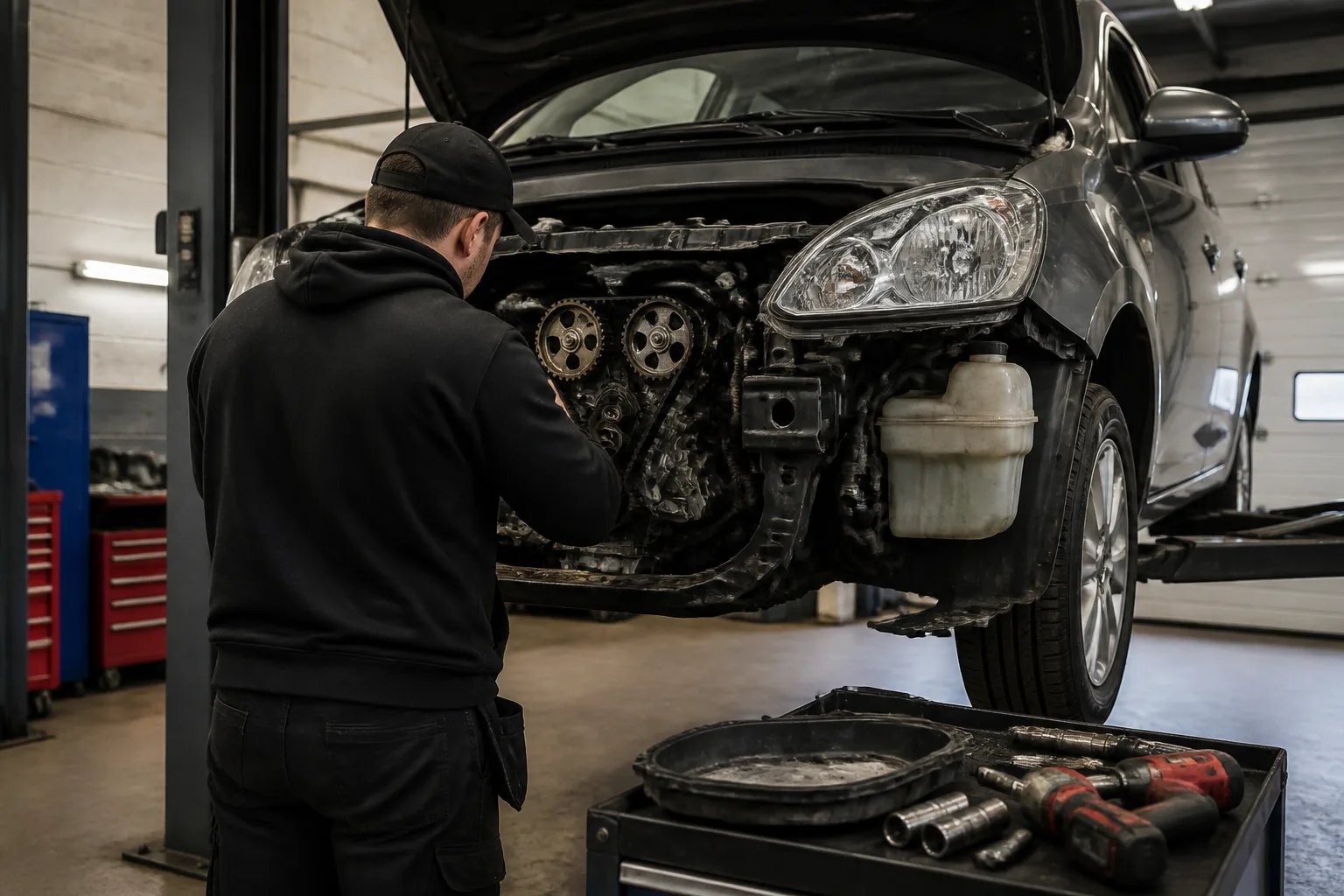
Timing belts and timing chains perform the same essential job: they keep the engine's camshaft and crankshaft turning in the correct relationship. This allows the valves to open and close at the right time as the pistons move.
Despite doing a similar job, a belt and a chain are not interchangeable in terms of maintenance. Their materials, operating environment, warning signs and replacement requirements are different. Knowing which type your car has can help you understand its servicing needs and avoid relying on assumptions such as “chains never need replacing” or “all belts need changing at the same mileage”.
What is a timing belt?
A timing belt is a reinforced toothed belt, usually made from rubber-based materials with strengthening fibres. Its teeth engage with matching gears on the crankshaft and camshaft so the two shafts remain synchronised.
On many engines, the timing belt runs behind protective covers. It may also drive the water pump or other components, depending on the engine design. The belt is generally kept under the correct tension by tensioners and guide rollers.
Although it is protected from the outside environment, a timing belt is still a service item. Heat, age, oil contamination and normal wear can gradually affect the belt and its teeth. The recommended replacement interval is set by the vehicle or engine manufacturer and may be based on both mileage and age.
What is a timing chain?
A timing chain is a metal chain that carries out the same synchronising function. It normally runs inside the engine and is lubricated by engine oil. Chain systems use components such as guides, tensioners and sprockets to keep the chain correctly positioned.
Chains are generally more resistant to environmental ageing than rubber belts, but that does not make them maintenance-free. Poor oil maintenance, incorrect oil, worn guides or a failing tensioner can allow a chain to become loose or wear over time. Some modern engines also use chain designs that are more sensitive to oil condition than older systems.
Timing belt vs timing chain: the main differences
| Feature | Timing belt | Timing chain |
|---|---|---|
| Material | Reinforced rubber-based belt | Metal chain |
| Location | Usually behind external protective covers | Usually inside the engine |
| Lubrication | Normally runs dry | Lubricated by engine oil |
| Planned replacement | Often has a specified age and mileage interval | May not have a fixed routine replacement interval, but still needs condition monitoring |
| Common causes of problems | Age, wear, contamination or incorrect tension | Oil-related wear, stretched chain, worn guides or tensioner problems |
The table gives a general comparison only. The exact arrangement varies between engines, so the vehicle handbook or manufacturer service information should take priority.
Which is better, a timing belt or a timing chain?
Neither system is automatically better for every vehicle. A belt can be quieter and may be simpler to package, while a chain can offer long service life when the engine is maintained correctly. The design choices also depend on the engine's size, layout and intended use.
For the owner, the important question is not simply whether a belt or chain is fitted. It is whether the system has been maintained in line with the engine manufacturer's requirements. A timing chain that has missed oil changes can develop problems, while a timing belt that is replaced at the correct interval may give reliable service.
Does a timing belt need replacing?
If your engine uses a timing belt, check the recommended replacement interval for the exact vehicle and engine code. The interval may differ between models that appear similar, and some manufacturers specify an age limit as well as a mileage limit. Low annual mileage does not necessarily mean the belt can be left indefinitely.
Timing belt replacement is normally a planned maintenance job rather than something to wait for a warning light to identify. The belt can fail without giving the driver a clear warning. On many engines, a failure can allow pistons and valves to move out of sequence, potentially causing serious internal engine damage.
A belt replacement may involve associated parts such as tensioners, idler rollers and, where appropriate, the water pump. The correct parts and procedure depend on the engine. This is why a service record showing when the belt was last replaced can be important when buying or running a used car.
Do timing chains last forever?
No. “Lifetime” is sometimes used informally to describe a chain, but it should not be taken to mean that the chain and its related components can never wear out. The chain, guides, tensioner and sprockets all operate under load, and the condition of the engine oil is important to their operation.
Possible signs of a timing chain problem can include a rattling noise, particularly when starting the engine, an engine warning light, poor running or difficulty starting. These symptoms can also be caused by other faults, so they do not prove that the chain is at fault. A noisy or poorly running engine should be assessed rather than diagnosed from a sound or online description.
If a chain appears to be seriously loose, the engine is making a sudden severe rattling noise, or the vehicle is misfiring or losing power, avoid continuing to drive it unnecessarily. Stopping in a safe place and arranging professional inspection can reduce the risk of further damage and is the sensible approach where an engine timing fault is possible.
What about wet timing belts?
Some engines use a timing belt that runs inside the engine and is exposed to engine oil. These are often described as wet belts. They are still belts, but their operating conditions and inspection requirements differ from those of a conventional dry belt.
Wet belts depend on the correct oil specification and suitable service intervals. The wrong oil or neglected maintenance can contribute to deterioration, and belt material in the oil system may create further problems. Owners should follow the precise oil and belt requirements for their engine rather than assuming that any suitable-looking oil will do.
How can you find out which system your car has?
The vehicle handbook may identify the system, although it may not always give a clear explanation. A manufacturer's service schedule, maintenance record or reliable technical information for the exact engine can also help. The registration number alone may not be enough for every application because one model range can use several engines.
When buying a used car, ask whether the timing belt has been replaced and look for supporting service documentation. If there is no reliable evidence that a belt replacement due by age or mileage has been completed, it is worth discussing the uncertainty with a garage before making assumptions about the car's maintenance position.
Timing systems are part of wider vehicle maintenance, so it can be useful to read our guides on how often a car should be serviced and what is included in a full car service. The difference between an interim service and a full service may also affect which checks are expected, although neither replaces a manufacturer-specified timing belt interval.
When should you ask a garage for advice?
Professional advice is sensible if the service history is incomplete, the recommended belt interval is unclear, the engine has developed a new rattling noise, or you are considering a used vehicle with an uncertain maintenance record. A garage can identify the engine specification, check available service information and explain whether planned work is due.
As an independent garage serving motorists in and around Salisbury, Ashton's Garage can help you understand the relevant servicing requirement for your vehicle without treating a general rule as a diagnosis. If you would like the timing system and wider maintenance schedule reviewed, see our vehicle servicing information and provide the vehicle's details when making an enquiry.
In summary
A timing belt is a reinforced toothed belt that normally has a specified replacement interval. A timing chain is a metal, oil-lubricated system that may last a long time but can still wear, particularly if oil servicing has been neglected. Neither system should be judged by its name alone.
Check the exact requirements for your engine, keep service records and do not ignore unusual timing-related noises or running problems. When the information is unclear, a professional inspection is a safer and more useful answer than guessing.
Frequently asked questions
Is a timing belt or timing chain more reliable?
Both can be reliable when correctly designed and maintained. A timing belt usually has a planned replacement interval, while a timing chain can still wear if oil changes are missed or its guides and tensioner deteriorate.
How often should a timing belt be changed?
The interval varies by vehicle and engine and may be based on both mileage and age. Check the manufacturer's schedule for the exact engine rather than relying on a general mileage figure.
How do I know if my car has a timing belt or chain?
Check the handbook, service schedule or reliable technical information for the exact engine. A model range may use more than one engine, so the vehicle model alone may not provide a definite answer.
Can a timing chain make a rattling noise?
It can, particularly if the chain, guides or tensioner are worn, but rattling can have other causes too. A new or severe noise should be professionally assessed, and continued driving should be avoided if the engine is running badly or appears at risk of failure.
Related advice
What Is Brake Fluid and Why Does It Need Changing?
Brake fluid transfers pressure from the pedal to the brakes, but it can absorb moisture over time. Here is why changing it matters and what warning signs to take seriously.
How Often Should Engine Coolant Be Changed?
Engine coolant does more than stop your car freezing in winter. Find out how often it usually needs changing, why the interval varies, and which warning signs should be checked by a garage.
What Is a Timing Belt and When Does It Need Replacing?
A timing belt keeps your engine’s internal parts moving in sync. Learn what it does, how often it may need replacing and why relying on symptoms alone can be risky.