How Often Should Engine Coolant Be Changed?
Engine coolant does more than stop your car freezing in winter. Find out how often it usually needs changing, why the interval varies, and which warning signs should be checked by a garage.
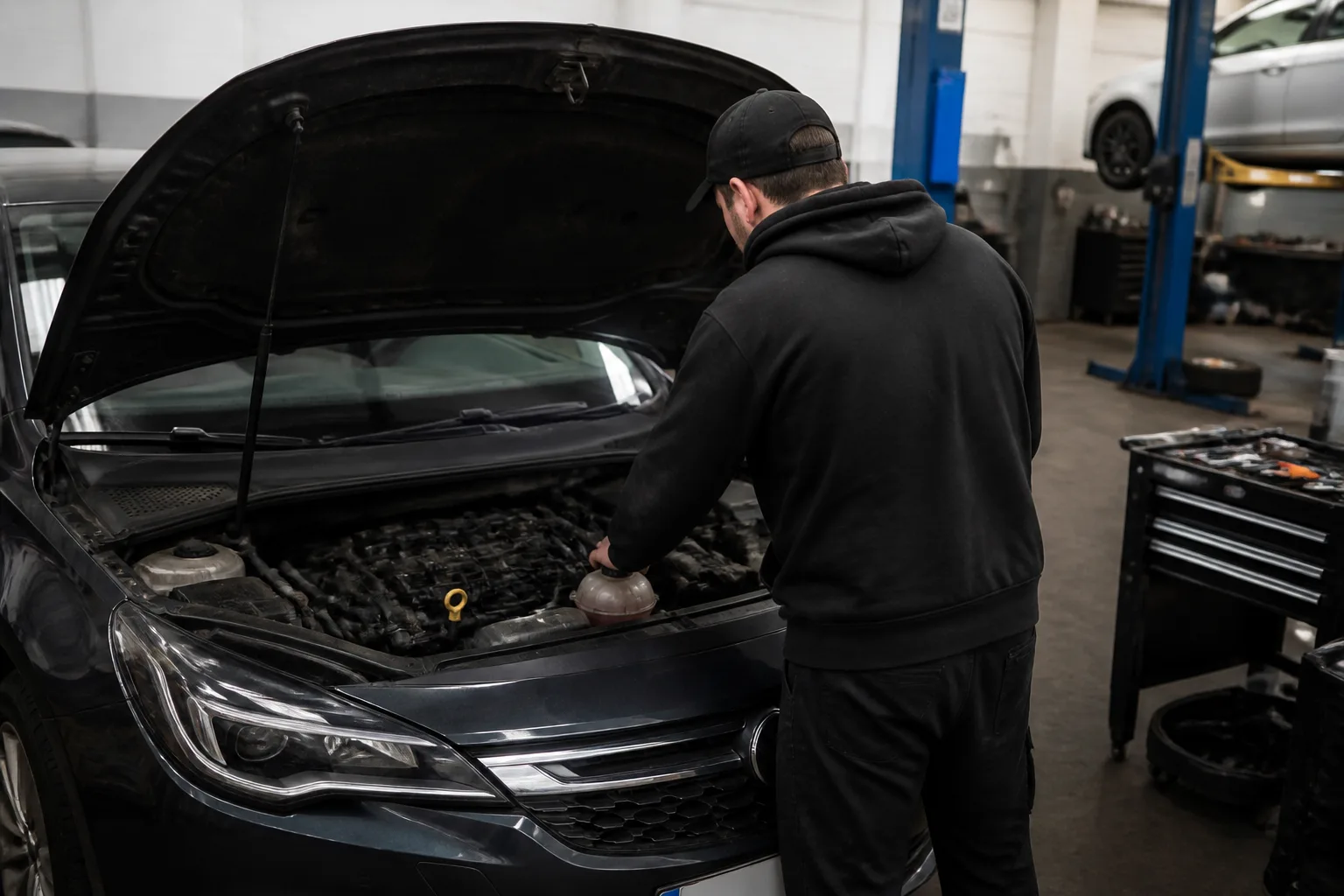
Engine coolant is easy to overlook, especially when your car starts and drives normally. However, it plays an important part in controlling engine temperature and protecting the cooling system from corrosion, freezing and deposits.
So, how often should engine coolant be changed? The dependable answer is to follow your vehicle manufacturer's schedule. There is no single interval that applies to every car. Depending on the vehicle, coolant type and manufacturer guidance, replacement may be recommended after a set number of years, a set mileage, or both. Some modern vehicles use long-life coolant that is designed to last considerably longer than older formulations.
What does engine coolant do?
Engine coolant is a mixture of water and antifreeze, with additives that help protect the engine and cooling system. It circulates through passages in the engine and radiator, carrying excess heat away so the engine can operate within its intended temperature range.
The antifreeze element lowers the temperature at which the liquid can freeze and raises its boiling protection. The additives also help reduce corrosion inside components such as the radiator, water pump and heater system. Coolant gradually loses some of this protective ability as it ages, even if the level in the expansion tank still looks correct.
This is why topping up the level is not the same as changing the coolant. A top-up replaces some lost fluid, while a coolant change removes the older mixture and refills the system with the correct specification.
How often does coolant normally need changing?
Intervals vary between vehicles, so your owner's handbook or servicing information should be the first reference. The recommended period can depend on the engine, cooling system design, coolant specification and whether the car has a fixed or flexible service schedule.
As a general guide, some vehicles specify a coolant change after a few years, while others use a long-life product with a longer interval. There are also cars where the manufacturer does not give a simple routine replacement period, instead asking for the coolant condition and protection to be checked during servicing.
Do not assume that a coolant labelled as “long life” can be left indefinitely. It still needs to be the correct product for the vehicle, and it can become contaminated or diluted if the system has been repaired or topped up incorrectly. If you do not have the handbook, a garage can usually identify the required coolant specification from the vehicle details and inspect what is already in the system.
Why the correct coolant matters
Coolants are not all the same. Different products can use different additive technologies and may not be suitable for mixing. Colour is not a reliable way to identify coolant type, because similar colours can be used for different formulations and the same type may appear in more than one colour.
Using the wrong product, or mixing incompatible coolants, can reduce corrosion protection and may contribute to deposits or cooling system problems. The safest approach is to use the specification given by the vehicle manufacturer. If the existing fluid is unknown, ask for it to be checked rather than choosing a replacement based only on its colour.
Signs that the cooling system needs attention
A coolant change may be due as part of scheduled maintenance, but some symptoms need attention sooner. These can include:
- A coolant level that repeatedly falls after being topped up
- Coloured or unusual fluid beneath the car
- A sweet smell around the engine bay or inside the cabin
- An engine temperature warning, temperature gauge rising unusually high, or a message about overheating
- A heater that changes from warm to cold unexpectedly
- Visible discolouration, sludge or contamination in the expansion tank
These signs do not prove that old coolant is the cause. A leak, failed thermostat, radiator problem, water pump fault, damaged hose or other issue could produce similar symptoms. Coolant loss should not be treated as a normal reason to keep topping up indefinitely.
Can you check the coolant yourself?
A safe basic check is to look at the coolant level when the engine is cold and the car is parked on level ground. The expansion tank usually has minimum and maximum markings. The level should sit between them, but do not remove the cap from a hot engine. The cooling system can be pressurised and hot coolant may cause serious burns.
If the level is low, consult the handbook before adding anything. The correct coolant mixture may be required, and adding plain water or an unsuitable antifreeze can alter the protection. A small emergency top-up may be appropriate in some circumstances, but a recurring low level needs investigation rather than repeated topping up.
Do not attempt to open, drain or bleed a hot cooling system. Coolant disposal also needs to be handled responsibly because antifreeze is harmful if swallowed and should not be poured down drains or onto the ground.
Should coolant be changed during a car service?
Routine servicing is a useful time to check the coolant level, condition and protection, but a standard service does not automatically mean the coolant will be replaced. The work depends on the manufacturer's schedule and the result of the inspection.
It is also worth remembering that a coolant change may be needed after work on the cooling system. For example, replacing a radiator, hose, thermostat or water pump can require the system to be drained and refilled. In that situation, the garage should use the correct coolant and make sure the system is properly filled and free from trapped air.
For wider context on service schedules, you can read our guide to how often you should service your car or see what is included in a full car service. If you are deciding between different service levels, our explanation of interim and full services may also help.
When should you stop driving?
If the temperature warning light comes on, the gauge moves into the overheating zone, or steam is coming from under the bonnet, pull over safely and switch the engine off as soon as it is safe to do so. Continuing to drive an overheating vehicle can cause expensive engine damage and may leave you stopped in an unsafe place.
Allow the engine to cool before checking anything, and do not remove the coolant cap while it is hot. If there is a substantial leak, the coolant level keeps dropping, or you are unsure whether the car is safe to move, arrange professional assistance rather than relying on repeated top-ups.
Getting the coolant checked
The best coolant interval for your car is the one specified for its engine and coolant type. If the replacement date is unclear, the fluid looks contaminated, or the level is falling, a proper inspection is more useful than guessing from the colour or age alone.
As part of a service, Ashton's Garage can check the cooling system and advise whether the coolant needs replacing. The aim is to identify the correct specification and deal with any underlying concern before it develops into an overheating problem.
Frequently asked questions
How do I know when my car's coolant needs changing?
Check the vehicle handbook for the manufacturer's interval. If the coolant is contaminated, the protection is poor, the level keeps falling or the cooling system has been repaired, it should be inspected rather than judged by colour alone.
Can I just top up coolant instead of changing it?
A top-up may restore the level, but it does not replace aged coolant or investigate why the level fell. Use only the correct specification and have repeated coolant loss checked.
Can different types of coolant be mixed?
Not necessarily. Different coolant formulations may not be compatible, and colour is not a dependable identification method. Follow the manufacturer's specification or ask a garage to identify the correct product.
Is it safe to open the coolant cap when the engine is hot?
No. The cooling system can be pressurised, and hot coolant or steam can cause serious burns. Wait until the engine has cooled fully before checking the system.
What should I do if my car is overheating?
Stop somewhere safe and switch the engine off. Do not continue driving an overheating car or remove the coolant cap while it is hot. Arrange professional assistance if the cause is not immediately clear.
Related advice
What Is Brake Fluid and Why Does It Need Changing?
Brake fluid transfers pressure from the pedal to the brakes, but it can absorb moisture over time. Here is why changing it matters and what warning signs to take seriously.
What Is a Timing Belt and When Does It Need Replacing?
A timing belt keeps your engine’s internal parts moving in sync. Learn what it does, how often it may need replacing and why relying on symptoms alone can be risky.
Timing Belt vs Timing Chain: What Is the Difference?
Timing belts and timing chains both keep an engine's moving parts working in the correct sequence, but they differ in construction, maintenance and possible failure risks. Here is what UK motorists need to know.