How Long Does an MOT Take?
Wondering how long an MOT takes? Here is what normally happens, why the timing can vary and how to plan your visit without unnecessary waiting.
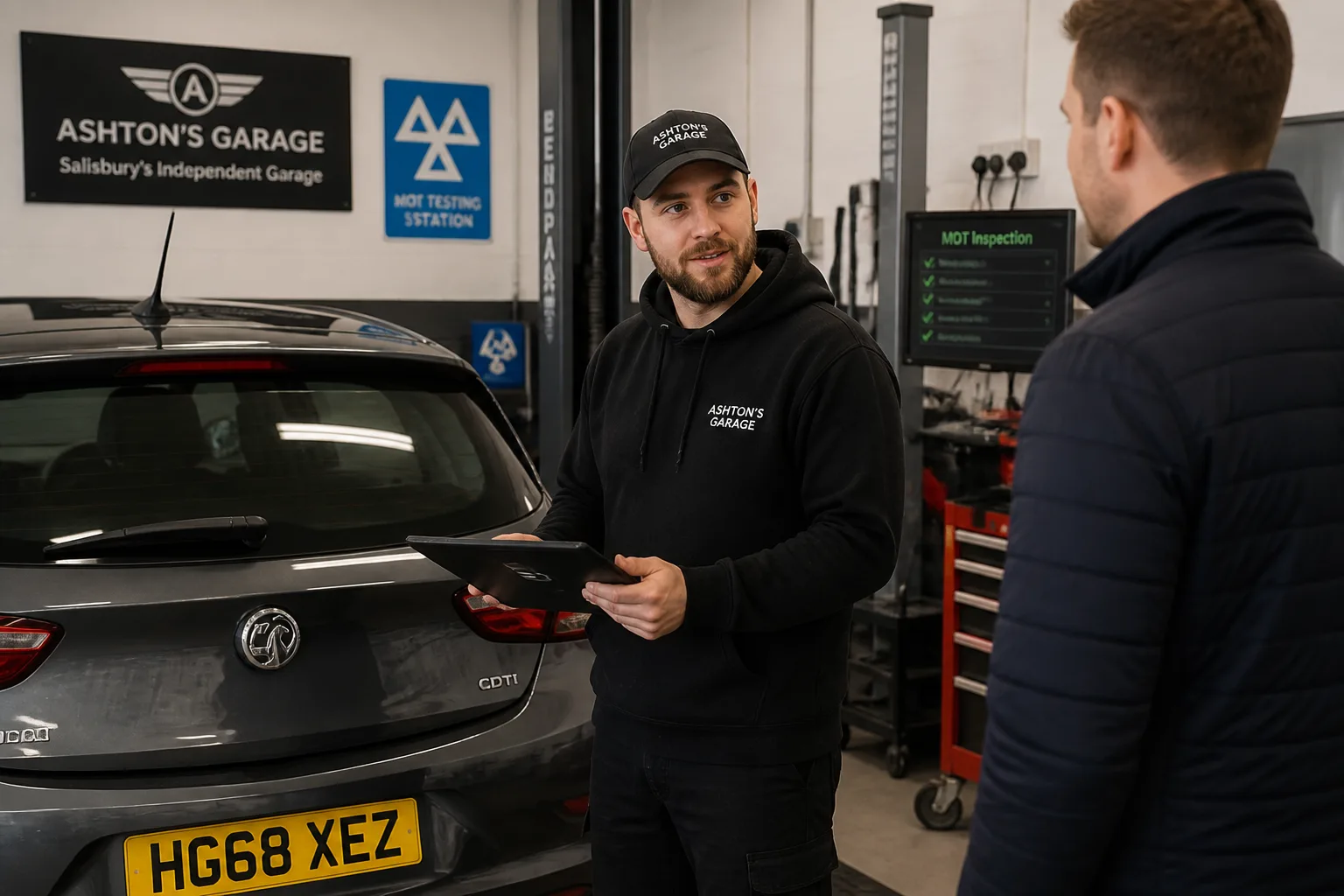
If you are arranging an MOT, it is sensible to ask how long the appointment will take. Most motorists are planning around work, school runs or other commitments, so knowing what to expect makes the visit easier.
As a general guide, the MOT test itself commonly takes around 45 minutes to an hour. That is the time needed for the authorised tester to carry out the inspection and record the result. However, the total time your car is at the garage can be longer, depending on the workshop schedule, vehicle condition and whether anything needs explaining afterwards.
How long does an MOT test take?
The inspection is not simply a quick visual check. An MOT tester examines a range of safety and environmental items, including the condition and operation of areas such as the lights, tyres, brakes, steering, suspension, seat belts, bodywork and emissions-related equipment where applicable.
The exact checks depend on the vehicle and its age, but the tester must follow the required MOT test procedure and record defects using the appropriate categories. This takes time because the assessment needs to be carried out methodically rather than rushed.
For that reason, a garage may ask you to allow about an hour for the test. It is best not to treat that as a guaranteed collection time. A busy workshop may need to manage several appointments, and the handover process can take a little longer if the result needs to be discussed.
Why can the total appointment take longer?
There are several ordinary reasons why your car may be at the garage for longer than the test itself:
- Workshop scheduling: The tester may have other booked vehicles before or after yours. A booking time is normally the time the garage expects to begin the process, not a promise that the car will be ready at a precise minute.
- Vehicle identification and paperwork: The garage needs to confirm the vehicle details and complete the MOT record accurately.
- Access or condition issues: A heavily loaded boot, damaged bodywork, very dirty number plate or other issue may make preparation or inspection less straightforward.
- A failed or advised item: If the tester finds a defect or notes a developing concern, someone should explain the result clearly rather than handing over paperwork without context.
- Additional work: An MOT is an inspection, not an automatic repair service. Repairs should only be carried out with your agreement, and they may require a separate assessment, parts and workshop time.
Some garages offer a while-you-wait appointment, while others ask customers to leave the vehicle with them for part of the day. Asking about the expected handover time when you book can prevent misunderstandings.
Does an MOT include repairs?
No. The MOT checks whether the vehicle meets the required test standard at the time of inspection. It does not include repairing faults that are found.
If a car passes with advisories, the advisories are warnings about items that may need attention in the future. They are not automatically failures, but they should not be ignored indefinitely. Our guide to what an MOT advisory means explains how to interpret this part of the result.
If the vehicle fails, the tester should be able to explain the failure items and what would be needed to address them. The time required will depend on the fault. A simple replacement may be relatively straightforward, while a problem requiring further diagnosis can take longer. The garage should discuss the findings and any proposed work with you before proceeding.
Can I wait while my car is tested?
That depends on the garage and its facilities. Some MOT stations have a waiting area and can complete suitable appointments while the customer waits. Others may prefer the vehicle to be left with them, particularly when the workshop is busy or when an outcome cannot be predicted precisely.
Even when a test normally fits into an hour, there is no guarantee that the car will be ready at exactly the end of that period. If you need the vehicle back for a specific time, mention this when making the appointment. The garage can then tell you whether that arrangement is realistic.
It is also worth remembering that an MOT test is not a full service. A car can pass its MOT and still need routine maintenance, such as an oil change or attention to a fault that is outside the test scope. If you have noticed a warning light, unusual noise or change in how the car drives, explain it when booking rather than assuming the MOT will investigate everything.
What should I check before an MOT?
Simple checks can help you avoid preventable problems, without attempting any repair work yourself. Make sure the number plates and lights are reasonably clean, remove unnecessary items from the car and check that the tyres appear correctly inflated and free from obvious damage. You can also check that the horn, washers, wipers and seat belts appear to work normally.
These checks do not guarantee a pass. Do not crawl underneath the car, dismantle components or attempt work on brakes, steering or other safety-critical systems simply to prepare for the test. If you can see serious tyre damage, a major fluid leak, a braking problem or an issue affecting steering, avoid driving the vehicle and arrange professional advice.
For more planning information, you may also find our guide to how early you can book an MOT useful. If your current MOT has already expired, the position can be different, so read what happens if your MOT expires before using the car.
How Ashton’s Garage can help
At Ashton’s Garage, we aim to make the MOT process clear from the outset. That means explaining the expected timing, carrying out the inspection properly and discussing any failure items or advisories in plain language. If a fault needs further investigation, appropriate workshop equipment and practical experience help us distinguish between a straightforward issue and one that needs more careful diagnosis.
An MOT is often completed in around an hour, but allowing extra time is the sensible approach. If you are arranging an MOT in Salisbury and want to understand the expected appointment time, you can book an MOT with Ashton’s Garage or ask the team what will suit your schedule.
Frequently asked questions
Can an MOT be completed in 30 minutes?
It may be possible in some circumstances, but you should not rely on a fixed 30-minute appointment. The time depends on the vehicle, the testing process and the garage’s schedule. Allowing around an hour is a more sensible expectation.
Can I leave my car at the garage all day for an MOT?
Many garages can accept a vehicle for part or all of the day, but arrangements vary. Ask when booking whether you can drop the car off and when it is likely to be ready.
What happens if my car fails its MOT?
The tester should explain the failure items and the garage can discuss the next steps. Repairs are separate from the MOT and should be agreed with you before work begins.
Does an MOT check everything on a car?
No. An MOT assesses specific safety and environmental items under the test procedure. It is not a complete mechanical inspection or a substitute for servicing.
Related advice
MOT Retest Rules: What Happens After a Failure?
Failed your MOT? Learn what the result means, when a retest may be free or reduced-price, what happens if repairs are needed, and when it may be unsafe to drive.
How to Prepare Your Car for an MOT
A few sensible checks before your MOT can help you spot obvious problems, avoid preventable failures and understand when your car needs professional attention.
What Does a Major MOT Defect Mean?
A major MOT defect means the vehicle has failed because the tester found a problem that could affect safety, the environment or compliance. Here is what the result means and what to do next.