Why Is My Battery Warning Light On?
A battery warning light usually points to a fault with the vehicle’s charging system rather than simply a flat battery. Here is what it can mean, what symptoms to watch for and when to stop driving.
Seeing a red battery symbol on the dashboard can be worrying, particularly if it appears while you are driving. The light is commonly described as the battery warning light, but it does not always mean that the battery itself is the only problem.
In many cases, the warning light indicates that the vehicle is not charging correctly. The charging system includes the battery, alternator, drive belt, wiring and electronic controls. If the system cannot maintain the correct electrical supply, the car may eventually lose power and stop.
What does the battery warning light mean?
When you switch on the ignition before starting the engine, it is normal for several dashboard warning lights to illuminate briefly. The battery symbol should normally go out once the engine is running.
If it stays on, comes on while driving or appears intermittently, the vehicle has detected a possible charging fault. The exact cause cannot be confirmed from the warning light alone. A charging-system test is normally needed to identify what is happening.
This is different from a simple message telling you that the battery is weak. Some vehicles display separate messages for low battery voltage or battery-saving functions, while others use the red battery symbol for a wider range of electrical faults. The meaning can vary between makes and models, so your handbook is worth checking.
Common reasons the battery warning light comes on
Alternator fault
The alternator generates electricity while the engine is running and helps keep the battery charged. A fault with the alternator, its internal regulator or another component can cause the warning light to appear.
If the alternator is no longer producing enough charge, the car may continue running for a while using energy stored in the battery. Once that reserve is used, the engine may stop and the vehicle may not restart.
Damaged, loose or slipping drive belt
The alternator is usually driven by a belt connected to the engine. If that belt is worn, loose, damaged or slipping, the alternator may not turn correctly.
On some engines, the same belt drives other important components. A belt problem can therefore be more serious than a charging fault alone. You may hear squealing or chirping, notice a burning-rubber smell or see other warning lights. If the temperature gauge rises or an overheating warning appears, stop in a safe place and switch the engine off.
Battery problem
A failing battery can contribute to charging-system warnings, especially during starting or when the battery has internal damage. However, replacing the battery without testing the rest of the system may not solve the underlying fault.
A battery that repeatedly goes flat could be suffering from poor charging, an electrical drain while parked, damaged connections or simply age-related deterioration. Testing helps separate these possibilities.
Loose or corroded connections
Electrical current must travel through the battery terminals, earth connections and charging cables. Loose, damaged or corroded connections can interrupt that flow and trigger a warning light.
Modern vehicles also have more electronic control systems than older cars. A wiring or communication fault can sometimes produce a warning even when the battery appears to be in reasonable condition.
What symptoms might appear with the warning light?
The battery warning light may be the first sign of a problem, but you could also notice:
- headlights or interior lights becoming dimmer or flickering;
- the radio, ventilation fan or heated screens behaving unusually;
- difficulty starting the engine after stopping;
- multiple warning lights appearing at the same time;
- an unusual noise from the belt area; or
- loss of electrically assisted steering on some vehicles.
Electrical systems can behave differently as voltage falls, so several warning lights do not necessarily mean that several unrelated parts have failed. They may be consequences of the same charging problem.
Can I drive with the battery warning light on?
It is best not to treat a battery warning light as something that can be ignored until your next routine service. If it appears while you are on the road, reduce unnecessary electrical demand, such as heated screens and non-essential accessories, and find a safe place to stop.
Do not rely on switching off the engine and restarting it as a solution. The car may restart once, but the fault may remain and the battery may have less energy available afterwards. Continuing to drive could leave you stranded in an unsafe position, particularly at night or in heavy traffic.
Take extra care if the warning light is accompanied by a rising temperature gauge, steam, a strong burning smell, unusual belt noise, loss of steering assistance or other major changes in how the vehicle feels. In those circumstances, stop when safe, switch off the engine and arrange appropriate professional assistance. The cause cannot be safely diagnosed from the dashboard light alone.
What can I check safely?
There are a few basic observations you can make without dismantling anything:
- Check whether the light is on only with the ignition switched on, or whether it remains on after the engine starts.
- Notice whether the light is steady or intermittent.
- Look for other warning lights, unusual noises, dimming lights or a burning smell.
- If the vehicle is parked and the engine is switched off, look for obvious signs of a loose or damaged belt, but do not put your hands near moving parts.
- Check the handbook for the meaning of the warning symbol on your particular model.
Avoid touching electrical connections, testing around a running belt or attempting repairs at the roadside. Batteries can deliver very high currents, and modern vehicles may include sensitive electronic systems. A visual check cannot prove that the alternator is charging correctly.
How is a charging fault diagnosed?
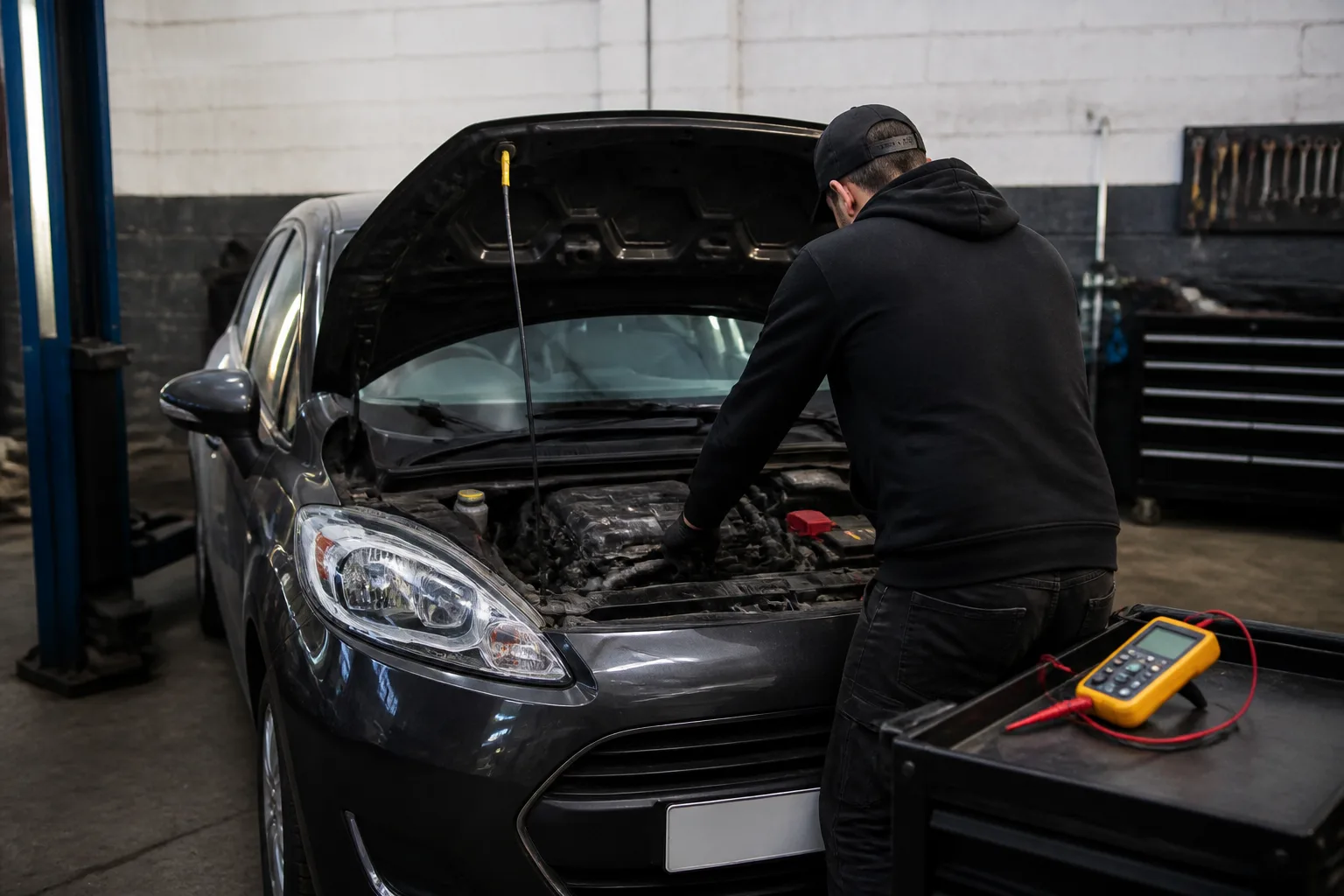
A garage will usually begin by confirming the warning and checking the vehicle’s symptoms. Testing may include the battery’s condition, charging output, electrical connections, belt condition and stored fault information where appropriate.
The result might point to a battery replacement, alternator repair, belt or tensioner issue, damaged wiring or another electrical fault. It is important to identify the cause rather than fitting parts based only on the warning symbol.
If other dashboard lights are present, it may help to understand the difference between systems. Our guide to what the engine management light means covers a separate type of warning. You can also read about why the ABS warning light may be on, although a battery or charging fault can sometimes cause several electronic warnings together.
If the light has appeared or the vehicle has started showing charging symptoms, Ashton’s Garage can inspect the charging system and advise on the next sensible step. That may be particularly useful if the battery has gone flat more than once or the warning returns after starting.
The main point
The battery warning light usually means that the vehicle’s charging system needs attention. The battery may be involved, but the alternator, belt, wiring or electronic control system could also be responsible.
A car may continue running for a limited time after the warning appears, but that does not mean it is safe to carry on normally. If the light stays on while the engine is running, arrange a professional assessment and stop driving if the vehicle shows signs of overheating, steering assistance loss, burning smells or other potentially unsafe changes.
Frequently asked questions
Is the battery warning light always caused by a bad battery?
No. It can be caused by the alternator, drive belt, wiring, electrical connections or charging controls as well as the battery. Testing the complete charging system is the best way to identify the cause.
Why does the battery light come on when I start the car?
The light normally appears with the ignition before the engine starts and should go out shortly afterwards. If it remains on once the engine is running, the vehicle may not be charging correctly.
Can a battery warning light cause the car to stop?
Yes. If the alternator is not charging the battery, the vehicle may eventually use up its available electrical power and stop. It may also fail to restart.
Should I replace the battery if the warning light is on?
Not without checking the cause first. A new battery may not cure a fault with the alternator, belt or wiring, and the replacement could become discharged again.
Related advice
What Does the Engine Management Light Mean?
The engine management light can point to anything from a loose fuel cap to an engine or emissions fault. Learn what the warning light means, when it is safe to continue and when your car needs professional attention.
Why Is My ABS Warning Light On?
An ABS warning light can have several causes, from a wheel-speed sensor fault to a problem with the braking system. Here is what the light means, what you should check and when to stop driving.
What Does the Oil Pressure Warning Light Mean?
The oil pressure warning light needs prompt attention. Learn what the red oil can symbol means, what you can safely check and when to stop driving.