What Is Included in a Vehicle Health Check?
A vehicle health check is a practical visual and functional inspection designed to identify developing problems before they become more expensive or affect safety. Here is what a typical check may cover, how it differs from an MOT or service, and when professional advice is sensible.
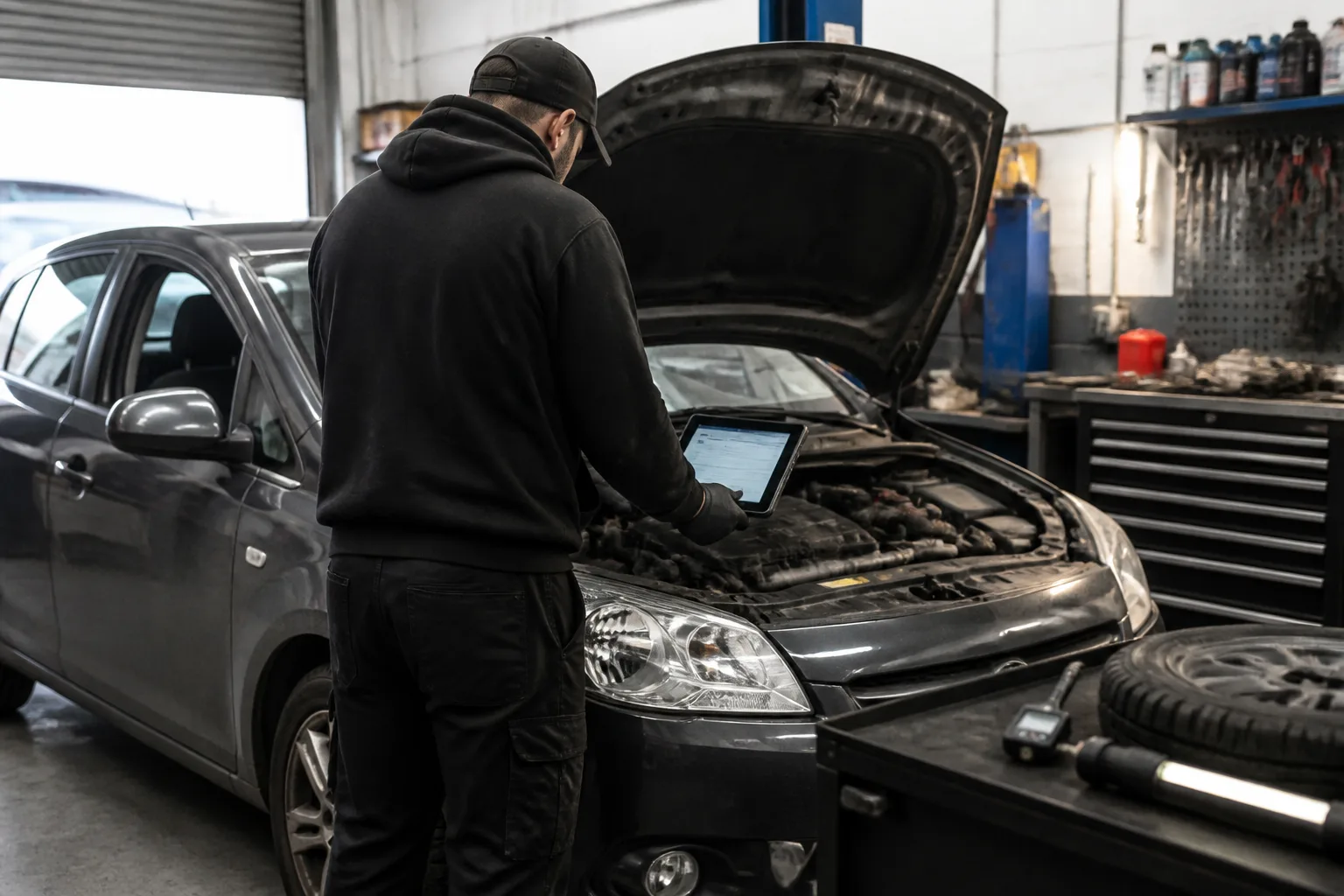
A vehicle health check is a general inspection of a car’s condition. It is intended to highlight obvious wear, damage, leaks or developing faults so they can be considered before they turn into a breakdown, a larger repair or a road safety concern.
The exact checks vary between garages and may depend on the vehicle, its age and anything you have noticed while driving. A health check is not a formal diagnosis and it is not a replacement for an MOT or scheduled service. Instead, it gives you a useful overview of areas that may need attention.
What does a vehicle health check usually include?
A competent garage will normally inspect several important areas rather than concentrating on one symptom. The vehicle may be checked on a ramp, from ground level, through the engine bay and during basic functional tests. Some checks are visual, while others involve measuring or testing a component.
Tyres and wheels
The tyres may be checked for tread condition, uneven wear, visible cuts, bulges and damage to the sidewalls. Uneven wear can sometimes suggest a problem with wheel alignment, suspension or tyre pressures, although further investigation may be needed to establish the cause.
Tyre pressures, valve condition and the general state of the wheels may also be considered. A spare wheel, space-saver or tyre repair kit can be checked where fitted. It is sensible to mention any vibration, pulling to one side or changes in handling, as these details can help the technician decide whether a closer inspection is appropriate.
Brakes
Brake pads, discs, drums and visible brake components may be inspected for signs of wear or damage. A garage may also look for fluid leaks and assess the operation of the brakes during a controlled test.
A health check cannot always identify every brake problem without additional testing or removing parts. If the brake pedal feels unusually soft, the car pulls when braking, there is grinding or the braking performance has changed, do not assume it is a minor issue. Arrange professional inspection promptly, and avoid driving if the vehicle may not be safe to control or stop.
Lights, visibility and bodywork
Exterior lights, indicators, brake lights, hazard lights and the horn may be checked for operation. The condition of the windscreen, wiper blades and washer system is also relevant because clear visibility is essential in poor weather and at night.
The inspection may note damaged mirrors, loose trim, cracked lenses, corrosion or bodywork damage. Not every cosmetic defect requires immediate repair, but damage around structural areas, suspension mounting points or safety systems should be assessed by a professional rather than judged by appearance alone.
Fluids and the engine bay
Fluid levels and visible condition may be checked, including engine oil, coolant, brake fluid, screenwash and, where applicable, power steering fluid. A technician may look for signs of leaks, damaged hoses, loose wiring, worn belts or contamination.
Fluid checks are useful indicators, but they do not prove that an engine or system is healthy. For example, a correct oil level does not rule out internal wear, and a normal coolant level does not guarantee that the cooling system is working correctly. Unusual smells, warning lights, smoke or signs of overheating should be reported clearly.
Battery and charging system
The battery may be examined for visible damage, secure mounting and corrosion around the terminals. A battery or charging test can help assess whether the battery is holding charge and whether the alternator is supplying the expected electrical output.
Starting difficulty, dimming lights, electrical faults or repeated flat batteries should be mentioned. These symptoms can have more than one possible cause, so a test is more useful than replacing parts based only on guesswork.
Suspension, steering and underneath the vehicle
Where suitable, the vehicle may be raised so that the technician can inspect visible suspension components, steering joints, driveshafts, exhaust sections and underbody areas. They may look for worn bushes, damaged springs, insecure components, leaks or corrosion.
Some wear is not obvious during a basic visual inspection. Knocking noises, excessive bouncing, steering play, a change in ride height or difficulty keeping the vehicle straight should be treated seriously. Steering and suspension faults can affect control, so professional assessment is important if these symptoms are present. Do not continue driving if the vehicle feels unsafe or difficult to control.
Warning lights and basic electronic checks
A technician may check the dashboard for warning lights and use diagnostic equipment where appropriate. A diagnostic scan can identify stored fault codes from electronic control units, but a code is not always a complete diagnosis. It points towards an area for further testing rather than automatically identifying the failed component.
It is helpful to tell the garage when a warning light appeared, whether it is constant or intermittent, and whether the car’s performance changed at the same time.
What is not usually included?
A health check is generally a broad inspection rather than a full strip-down or detailed fault-finding exercise. It may not include replacing parts, removing brake components, testing every electronic system, checking internal engine condition or carrying out a full road test.
It also does not normally include the scheduled replacement work associated with a service. A service follows a maintenance schedule and may include tasks such as replacing filters, changing engine oil and carrying out manufacturer-specific checks. The scope depends on whether it is an interim, full or manufacturer service. You can read more about the difference in our guide to interim and full car servicing.
How is a health check different from an MOT?
An MOT is a legally required test for eligible vehicles that assesses whether the vehicle meets minimum standards at the time of the test. A vehicle health check is a wider, informal condition check intended to help identify maintenance needs. It does not replace an MOT, and passing an MOT does not mean that every component is in excellent condition or that no maintenance will be needed before the next test.
The two checks can complement one another. A health check before a long journey, after buying a used car or when a vehicle has been unused for a period may give useful information. If your MOT is due, you can find more information through our MOT service.
When might a vehicle health check be useful?
- Before a long trip: it can provide an opportunity to identify visible issues with tyres, fluids, lights and brakes.
- After buying a used car: it may help you understand its condition and plan maintenance, although it is not a substitute for a proper pre-purchase inspection.
- After a period off the road: tyres, battery, brakes and fluids may need particular attention after extended standing.
- When a warning sign appears: new noises, smells, vibrations, warning lights or changes in handling should be explained to the technician.
- Between scheduled services: it can be useful when you want an overview but the vehicle is not yet due for its next planned service.
Can you carry out any checks yourself?
There are a few safe basic checks most owners can make. You can look at the tyre pressures recommended for your vehicle, check that exterior lights work, inspect the tyres for obvious damage and check fluid levels according to the handbook. Keep the vehicle parked safely, allow hot components to cool and never place yourself underneath a car supported only by a jack.
Do not dismantle brakes, investigate suspected steering or suspension faults, or work around a hot cooling system unless you are suitably trained and have the correct equipment. If you see a fluid leak, damaged tyre, exposed wiring or an important warning light, professional advice is the safer option.
What happens after the check?
The garage should explain any findings in straightforward terms and separate items that need prompt attention from those that can be monitored or planned. Ask what was observed, how certain the finding is, what risk it presents and whether further testing is needed before deciding on a repair.
A good health check is not about recommending work without explanation. It should help you make an informed decision about the vehicle’s condition. Keeping records of checks, servicing and repairs can also make it easier to monitor recurring issues over time. Our guide to how often a car should be serviced explains why routine maintenance remains important even when a vehicle appears to be driving normally.
Getting sensible advice about your car
If you are unsure whether a health check, service or specific repair is most suitable, describe the symptoms and how long they have been present. At Ashton's Garage, a technician can inspect the relevant areas and explain whether further testing or planned maintenance is appropriate. You can learn more about vehicle servicing in Salisbury before deciding what your car needs.
For any concern involving braking, steering, overheating, tyre damage or a major warning light, safety comes first. Stop driving if the vehicle may be unsafe and arrange professional inspection or recovery where necessary.
Frequently asked questions
How long does a vehicle health check take?
The time depends on the vehicle and the scope of the inspection. A basic check may be relatively quick, while a concern involving brakes, suspension, warning lights or unusual noises may require additional testing.
Is a vehicle health check the same as an MOT?
No. An MOT assesses minimum legal and safety standards at the time of the test. A health check is a broader condition inspection intended to identify maintenance needs and possible developing faults.
Does a vehicle health check include a service?
Usually not. A health check identifies the vehicle’s apparent condition, while a service involves scheduled maintenance tasks defined by the vehicle manufacturer or service plan.
Should I have a health check before a long journey?
It can be useful, particularly if the car has been unused, has an upcoming service or has shown symptoms such as warning lights, unusual noises or changes in handling. It cannot guarantee that a fault will not develop during the journey.
What should I do if my car feels unsafe during the check period?
Do not continue driving if braking, steering, overheating, tyre damage or another issue could affect roadworthiness. Stop somewhere safe and arrange professional advice, inspection or recovery as appropriate.
Related advice
What Is Brake Fluid and Why Does It Need Changing?
Brake fluid transfers pressure from the pedal to the brakes, but it can absorb moisture over time. Here is why changing it matters and what warning signs to take seriously.
How Often Should Engine Coolant Be Changed?
Engine coolant does more than stop your car freezing in winter. Find out how often it usually needs changing, why the interval varies, and which warning signs should be checked by a garage.
What Is a Timing Belt and When Does It Need Replacing?
A timing belt keeps your engine’s internal parts moving in sync. Learn what it does, how often it may need replacing and why relying on symptoms alone can be risky.